Sometimes saving an animal does not begin with an elaborate rescue operation. It begins with someone noticing that something is wrong and deciding to make a phone call.
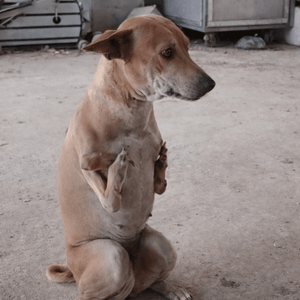
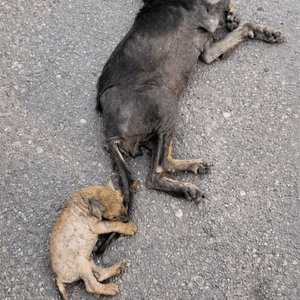
That simple kind of compassion changed the lives of two stray dogs who faced very different emergencies. One was a young female dog who became seriously unwell after reportedly ingesting something toxic. The other was a male dog found near a roadside after being struck by a vehicle.
Neither journey was easy.
Yet both dogs received something that every vulnerable animal deserves: timely attention, professional veterinary care, and an opportunity to recover.
Video From Toxic Trauma to Triumph How Two Stray Dogs Found Second Chances Through Timely Compassion
A Stray Dog Suddenly Needs Urgent Help
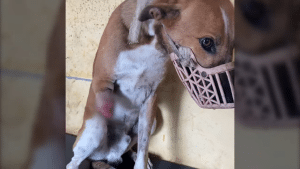
The first rescue began in Sacramento, California, where a young female dog was found in concerning condition.
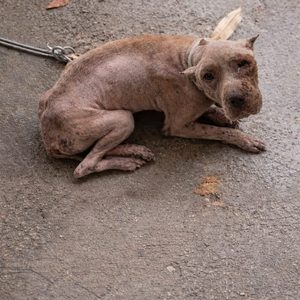
According to the rescue account, she had ingested a toxic substance and became weak, unsteady, and unable to move normally.
People nearby recognized that she needed professional help.
Instead of waiting to see whether she would improve on her own, they contacted rescuers, who transported her to an animal clinic.
That decision mattered.
Suspected poisoning or toxin exposure can require urgent veterinary attention. The substance involved, amount consumed, animal’s size, and time since exposure can all affect the situation. Trying to diagnose or treat a suspected poisoning without professional guidance may delay appropriate care.
For this dog, reaching a clinic became the first major step toward recovery.
Veterinary Care Focuses on Stabilization
At the clinic, the veterinary team began treatment.
The rescue account states that the dog received fluids and medication as professionals worked to stabilize her condition.
Initially, her future remained uncertain.
The team monitored her closely during the critical early period, watching for signs that her body was responding to treatment.
Then improvement began.
Her trembling gradually eased.
Her breathing became steadier.
As the days passed, she regained enough strength to begin eating independently.
By the end of the week, even her behavior started changing. Gentle tail movements offered an encouraging sign that the frightened dog was becoming more alert and comfortable.
Recovery rarely arrives like flipping a switch.
More often, it resembles sunrise. At first the changes are almost invisible, but slowly the entire picture begins to look different.
That was the pattern here.
A Return to Familiar Surroundings
Once the female dog recovered, rescuers faced an important question: what should happen next?
The account describes her as a community dog who had already been living within a neighborhood where local people knew her and sometimes looked out for her.
Rather than presenting adoption as the only possible outcome, the rescue team reportedly decided to return her to her familiar environment after recovery, with greater community awareness surrounding her welfare.
This part of the story highlights an important point.
Animal rescue does not always follow a single formula.
Different animals live under different circumstances, and decisions about release, foster care, adoption, sanctuary placement, or other arrangements should consider local conditions, animal welfare, veterinary guidance, and applicable regulations.
For this particular dog, the rescue account describes returning to her familiar community as the chosen outcome.
Her second chance was not defined by a completely different life.
It was defined by returning healthier and with people paying closer attention.
Then Another Dog Needs Help
Soon afterward, rescuers received another urgent call.
This time, the animal in need was a male dog found near a roadside after reportedly being struck by a passing vehicle.
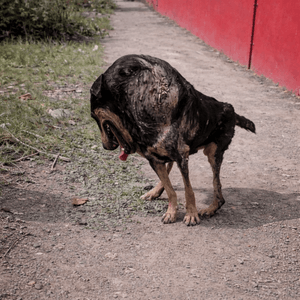
He had suffered a significant injury to one of his front legs and could not move comfortably.
Again, speed mattered.
The team transported him to the clinic for evaluation.
Veterinary professionals examined the affected limb and, according to the rescue account, determined that the damage was too extensive for the leg to be preserved.
Amputation was recommended.
It may sound frightening to imagine a dog losing a limb, but in situations where a limb cannot be safely preserved, veterinary surgeons may recommend amputation to address ongoing medical concerns and support future mobility.
For this dog, surgery offered a path forward.
Recovery Begins After Surgery
The procedure was reportedly successful.
But surgery was only the beginning.
The dog now needed to adapt to moving with three legs.
At first, even basic movements required adjustment. His center of balance had changed, and he needed time to understand how to distribute his weight differently.
Caregivers supported him throughout the rehabilitation process.
His early steps were cautious.
Then they became steadier.
With appropriate rehabilitation and repeated opportunities to practice moving safely, the dog gradually gained confidence.
What once required intense concentration slowly became more natural.
This is where recovery often becomes less dramatic but more meaningful.
A successful operation may take only hours.
Learning to live confidently afterward can take weeks or months.
Two Months of Rehabilitation Build Confidence
The male dog’s rehabilitation reportedly continued for approximately two months.
During that period, caregivers helped him adjust to his changed mobility.
Progress came through repetition.
Stand.
Balance.
Step.
Rest.
Try again.
Over time, his movements became increasingly confident.
He learned how to navigate the world on three legs rather than focusing on what was no longer there.
His experience also illustrates why follow-up care matters.
Medical treatment does not necessarily end when an animal leaves the operating room. Recovery may involve wound monitoring, appropriate activity, veterinary follow-up, rehabilitation, nutrition, and adjustments to the animal’s environment.
Each part contributes to the larger goal of helping the animal regain a comfortable and functional daily life.
A Second Return Marks Another New Beginning
After approximately two months of rehabilitation, the male dog was considered ready for the next stage of his life.
Like the female dog before him, he reportedly returned to the area he knew.
But he returned differently.
The dog who had once struggled near the roadside could now move confidently on three legs.
His circumstances had changed, but his ability to engage with life had returned.
The rescue did not erase everything that happened.
It gave him the medical care and rehabilitation necessary to move forward.
That distinction is important.
Second chances are not always about returning an animal to exactly the condition it had before an emergency.
Sometimes they are about helping an animal adapt successfully to a new reality.
Why Fast Action Can Matter
These two rescues began with different emergencies, yet they shared an important element.
Someone acted.
In the female dog’s case, people recognized signs of serious illness and contacted help.
In the male dog’s case, rescuers responded after he was found injured near the road.
Neither situation could have been properly resolved through good intentions alone.
Compassion opened the door.
Professional veterinary care provided the next step.
This combination matters whenever an animal appears seriously ill or injured.
A person does not need to know the diagnosis before seeking assistance.
In fact, guessing can sometimes create unnecessary delays.
If an animal appears to have consumed a potentially harmful substance, experienced significant trauma, developed breathing difficulties, become unusually weak, or shown other severe symptoms, contacting a veterinarian or qualified animal welfare professional can help determine the appropriate response.
Sometimes the most valuable thing a bystander can do is recognize that a problem requires expertise.
Rescue Is More Than a Dramatic Transformation
There is another reason these stories stand out.
Neither dog needed an artificially dramatic ending for the rescue to matter.
Their victories were practical.
One dog recovered enough to eat again and return to familiar surroundings.
The other adapted to life on three legs after weeks of rehabilitation.
These may sound like simple outcomes, but that simplicity is exactly what makes them powerful.
Animal welfare is often built from ordinary necessities.
Clean water.
Appropriate nutrition.
Medical treatment.
Safe transportation.
Recovery time.
Consistent monitoring.
Responsible community support.
None of those things needs sensational language to demonstrate its importance.
The goal of rescue is not to create the most dramatic story.
The goal is to improve the animal’s welfare.
Compassion Works Best With Responsibility
It can be tempting to imagine compassion as purely emotional.
In reality, effective compassion is practical.
It notices a problem and asks what can responsibly be done next.
For the female dog, that meant transportation to a veterinary clinic rather than waiting.
For the male dog, it meant professional evaluation, surgery, and a structured recovery period.
Different circumstances required different solutions.
That is why responsible rescue often involves collaboration between community members, rescuers, veterinary professionals, foster caregivers, and others who can support an animal’s recovery.
One person may notice.
Another may provide transportation.
A veterinarian may provide treatment.
Someone else may monitor recovery.
Small actions connect like links in a chain, creating an outcome no single action could achieve alone.
Two Dogs, Two Journeys, One Shared Lesson
The female and male dogs faced different challenges.
One needed urgent care after suspected toxin exposure.
The other required major treatment and rehabilitation following a roadside injury.
Yet their stories eventually reached the same destination: another opportunity to live their lives.
Neither journey depended on spectacle.
People noticed.
People responded.
Veterinary professionals provided care.
Recovery received the time it required.
And eventually, both dogs moved forward.
That is what a second chance can look like.
Summary
Two stray dogs received timely assistance after facing separate medical emergencies.
The first, a young female dog in Sacramento, reportedly became seriously unwell after ingesting something toxic. Community members contacted rescuers, and she was transported to a veterinary clinic, where she received supportive treatment. Her condition gradually improved, and she began eating independently again before eventually returning to her familiar community.
Soon afterward, rescuers responded to a male dog found near a roadside following a vehicle-related injury. Veterinary examination reportedly determined that one front leg could not be saved, making amputation necessary.
After successful surgery, the dog spent approximately two months adapting to life on three legs. With rehabilitation, patience, and consistent care, his balance and confidence improved before he too returned to familiar surroundings.
Their stories demonstrate an important principle of animal welfare: rescue does not always require a spectacular ending.
Sometimes it begins with noticing.
Sometimes it means making a phone call.
Sometimes it means transportation, veterinary care, rehabilitation, and simply giving an animal enough time to recover.
Small actions can become life-changing when they happen at the right moment.
For these two dogs, compassionate attention became the bridge between an emergency and a second chance.