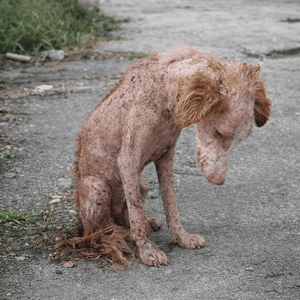
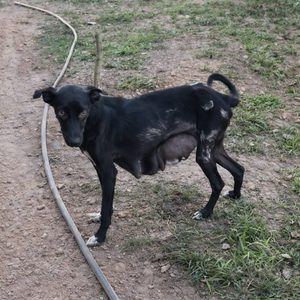
When rescuers first discovered Valiente, he was a lonely stray dog struggling through each day with a severely tilted neck. His thin body, patchy coat, and exhausted appearance revealed just how difficult life had become.
But his most noticeable feature was the unusual position of his head.
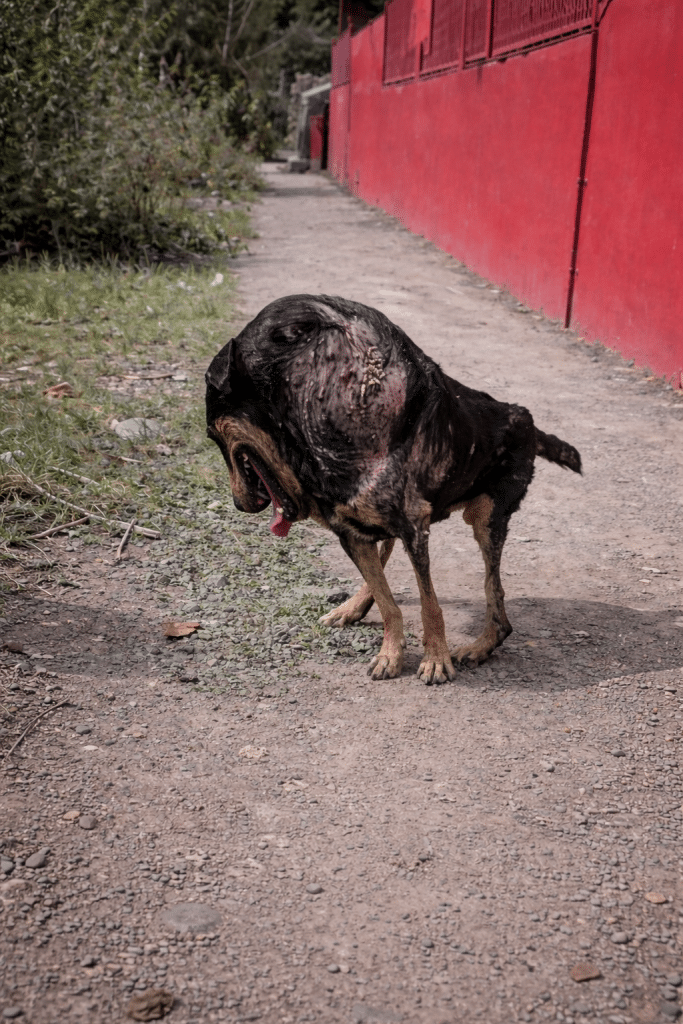
Valiente’s neck leaned sharply to the left, making ordinary movement appear uncomfortable. People often overlooked him, and some children reportedly mocked his appearance.
Instead of approaching strangers, he preferred hiding in quiet corners.
He had grown accustomed to being ignored.
Video His Neck Bent in Pain, But His Spirit Never Did Valiente’s 100 Days Journey of Courage
Fortunately, compassionate rescuers recognized that Valiente needed more than food and temporary shelter. He needed professional veterinary care, patience, and an opportunity to enjoy life despite his physical condition.
Over the following 100 days, his remarkable transformation would demonstrate that recovery does not always mean becoming physically perfect.
Sometimes it means discovering happiness exactly as you are.
A Lonely Stray Dog Struggles to Survive
Before his rescue, Valiente wandered alone without reliable food, shelter, or medical attention.
His body was severely underweight, and numerous ticks covered his skin. Several areas of his coat had thinned, leaving irritated skin exposed.
His unusual neck position created additional challenges.
Walking required effort, and his movements appeared strained.
The dog often avoided people, retreating into dark spaces where he could remain unnoticed.
His behavior suggested that unfamiliar attention had become something he preferred to avoid.
When rescuers finally approached him, they saw an animal who urgently needed help.
They arranged to bring him to a veterinary clinic, where specialists could investigate his condition and develop an appropriate treatment plan.
Veterinarians Discover a Permanent Spinal Condition
During the first five days, Valiente underwent extensive medical examinations.
Veterinary professionals performed CT scans and other diagnostic tests to understand the cause of his unusual posture.
Neurology and orthopedic specialists reviewed the findings.
Their assessment identified a post-traumatic spinal deformity, meaning an earlier injury had permanently changed the structure of his spine.
The damage was not recent.
His neck had developed a lasting curvature that could not easily be corrected.
Veterinarians considered surgery, but the potential risks outweighed the limited likelihood of improvement.
Rather than exposing Valiente to an invasive procedure with uncertain benefits, the medical team chose supportive treatment.
Their goal was to improve his comfort, mobility, and overall quality of life.
A Recovery Plan Focused on Comfort
Valiente’s treatment involved several important elements.
Veterinarians recommended physical therapy, specialized nutrition, gentle handling, and ongoing supportive care.
The team understood that his spinal deformity would remain.
However, that did not mean his condition prevented him from enjoying a meaningful life.
Appropriate rehabilitation could help him use his available mobility more comfortably.
Nutrition would support his recovery from prolonged inadequate feeding.
Regular veterinary monitoring would allow caregivers to respond to changes in his condition.
Most importantly, a stable environment would give him time to regain confidence.
The treatment plan focused on helping Valiente feel better rather than attempting to change his appearance.
For a dog who had spent so long hiding from the world, this represented an important new beginning.
The First Ten Days Bring Encouraging Changes
As Valiente adjusted to the rescue facility, small improvements began appearing.
Regular meals helped support his nutritional recovery.
Clean surroundings offered relief from the difficult conditions he had experienced outdoors.
Volunteers approached him gently and spoke in calm voices.
At first, Valiente remained cautious.
He watched unfamiliar people carefully and needed time to become comfortable with their presence.
Gradually, his behavior changed.
By approximately day ten, he appeared more relaxed around caregivers.
He began recognizing familiar routines and responding more positively to attention.
His physical condition still required considerable care, but his adjustment to the new environment was encouraging.
For the rescue team, these early improvements demonstrated the value of patience and consistency.
An Unexpected Medical Concern Requires Further Testing
Around day fifteen, veterinarians identified another concern.
A follow-up X-ray revealed a suspicious mass near Valiente’s esophagus, along with enlarged lymph nodes.
The findings required additional investigation.
The medical team needed to determine whether the changes were related to inflammation or another underlying condition.
On day thirty-one, Valiente underwent a biopsy to gather more information.
The supplied rescue account does not provide a confirmed diagnosis from that procedure.
Nevertheless, the additional testing demonstrated how carefully the team monitored his health.
Despite repeated examinations, Valiente continued cooperating with his caregivers.
His calm behavior helped the veterinary team provide the attention he needed.
His recovery remained a gradual process, with medical monitoring playing an essential role.
Physical Therapy Helps Improve His Mobility
As the weeks progressed, physical therapy became a regular part of Valiente’s routine.
His rehabilitation included carefully managed stretching exercises and mobility assessments.
Veterinarians also used medication to help ease muscle tension and support more comfortable movement.
These interventions did not straighten his spine.
Instead, they focused on helping him move within the limits of his permanent condition.
The team monitored his responses and adjusted care according to his needs.
Gradually, Valiente began moving more smoothly.
His body also became stronger as his nutritional condition improved.
The combination of veterinary attention, appropriate exercise, and consistent daily care helped him make meaningful progress.
His tilted neck remained visible, but his ability to participate in everyday activities improved.
A Remarkable Transformation Between Days 45 and 75
By day forty-five, Valiente looked noticeably different.
His coat had begun growing back, becoming darker and healthier in appearance.
His body was no longer as thin, and his overall condition had improved considerably.
Yet the most exciting change involved his personality.
Valiente began playing.
The dog who once hid in dark corners started exploring the shelter yard.
He moved around with growing confidence and interacted with other dogs.
Sometimes he even ran in short bursts, enjoying the freedom of movement his improved condition allowed.
His permanent neck curvature remained part of his appearance.
But it no longer dominated every moment of his life.
For the caregivers who had watched his early struggles, seeing Valiente enjoy playful activities was an encouraging milestone.
Learning That Happiness Has No Perfect Shape
Valiente’s journey offers an important perspective on animals living with permanent physical differences.
A visible disability does not automatically prevent a dog from enjoying companionship, play, or a comfortable daily routine.
Every animal’s abilities and medical needs are different.
Some require mobility assistance or environmental adjustments.
Others benefit from rehabilitation, medication, or carefully supervised exercise.
The most appropriate approach depends on veterinary assessment and the individual animal’s condition.
For Valiente, the goal was never to force his body into a position it could no longer achieve.
Instead, his caregivers helped him become stronger and more comfortable while respecting his physical limitations.
His increasing confidence showed that quality of life involves much more than outward appearance.
Day 88 Reveals a Confident New Personality
By day eighty-eight, Valiente had undergone an impressive transformation.
He no longer resembled the exhausted stray who had initially arrived at the clinic.
His coat appeared healthier.
His body had regained strength.
His movements had become more confident.
Perhaps most importantly, he appeared increasingly comfortable around people and other dogs.
Instead of avoiding attention, Valiente participated in everyday shelter activities.
He explored his surroundings and responded positively to familiar caregivers.
The changes reflected months of patient work rather than a sudden miracle.
His progress had developed through regular meals, veterinary monitoring, physical therapy, and dependable companionship.
Every small improvement contributed to the confident dog he was becoming.
One Hundred Days Later, Valiente Enjoys Life Again
By day one hundred, Valiente’s transformation was unmistakable.
His neck still leaned to one side because the underlying spinal deformity was permanent.
However, he could move around, wag his tail, and enjoy playful moments with other dogs.
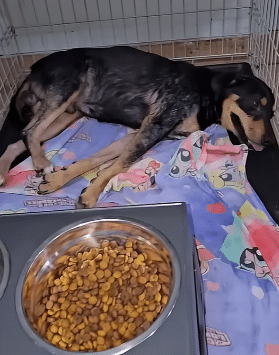
He also rested comfortably near the people who cared for him.
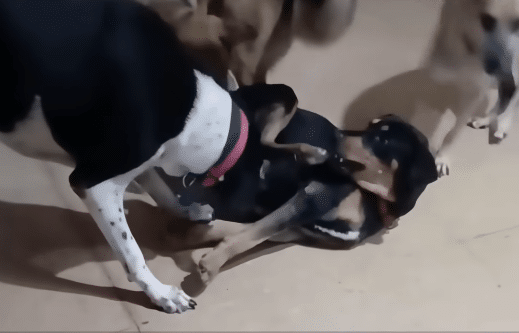
The rescue account describes him surrounded by human and canine companions, participating in daily life despite his physical condition.
His journey did not end with a completely straight spine.
It ended with a much healthier, more confident dog who had learned to enjoy his surroundings.
That distinction matters.
Successful animal rescue does not always involve eliminating every medical problem.
Sometimes the greatest achievement is helping an animal live comfortably with a condition that cannot be reversed.
Why Compassionate Care Matters for Dogs With Disabilities
Valiente’s experience highlights the importance of individualized veterinary treatment.
Dogs with spinal abnormalities or mobility limitations may need ongoing medical attention, rehabilitation, and adjustments to their environment.
Caregivers should work closely with qualified veterinarians to understand an animal’s abilities and limitations.
Physical therapy may support mobility in suitable cases, while appropriate nutrition helps maintain strength and overall health.
Equally important is emotional well-being.
Dogs benefit from predictable routines, positive social interactions, comfortable resting areas, and opportunities for appropriate activity.
Valiente received these essential forms of support.
His caregivers recognized that his permanent condition did not make him less deserving of attention or affection.
By focusing on his quality of life, they helped him develop confidence and enjoy experiences that had once seemed beyond his reach.
A Second Chance Built on Patience and Understanding
Valiente’s story began with a dog who preferred remaining unnoticed.
He was thin, exhausted, and struggling with a severely tilted neck.
People often overlooked him because of his appearance.
Then rescuers intervened.
Veterinary specialists identified his permanent spinal condition and developed a treatment plan focused on comfort.
Caregivers provided nutritious meals, physical therapy, and gentle attention.
Over the following weeks, his health improved.
His coat grew back.
His movements became smoother.
And his personality gradually emerged.
By the end of the 100-day journey, Valiente was playing, exploring, and enjoying companionship.
His transformation was not about becoming a different dog.
It was about finally receiving the opportunity to live well.
Summary
Valiente was a severely underweight stray dog discovered with a permanently tilted neck, irritated skin, and a coat affected by neglect and parasites.
During his first five days of veterinary care, CT scans and specialist examinations revealed a post-traumatic spinal deformity.
Because surgery carried significant risks and offered limited prospects for improvement, veterinarians recommended supportive treatment instead.
His care included physical therapy, specialized nutrition, medication, and regular monitoring.
Around day fifteen, an X-ray revealed an additional concern near his esophagus, prompting further investigation and a biopsy on day thirty-one.
As treatment continued, Valiente gradually regained strength and confidence.
Between days forty-five and seventy-five, his coat improved, his body became healthier, and he began playing with other dogs.
By day one hundred, he could enjoy daily activities and companionship despite his permanent neck curvature.
Valiente’s journey demonstrates that physical differences do not determine an animal’s worth or ability to experience happiness.
With appropriate veterinary care, patience, and a supportive environment, dogs living with permanent conditions can enjoy meaningful improvements in their quality of life.
Valiente may always carry the visible effects of his past injury, but his future is no longer defined by neglect.
Today, his story represents resilience, compassionate animal rescue, and the simple joy of being given a chance to thrive.