The afternoon seemed completely ordinary. Warm sunlight covered the quiet street, and nothing suggested that the next few minutes would become unforgettable.
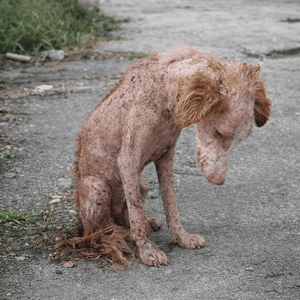
Then a small dog appeared.
He stood unusually still, almost frozen in place. From a distance, his posture seemed strange. As someone moved closer, however, the reason became clear: a rope had been secured tightly around the dog’s muzzle, limiting his normal movement and leaving him visibly exhausted and uncomfortable.
There was no dramatic noise drawing attention to him.
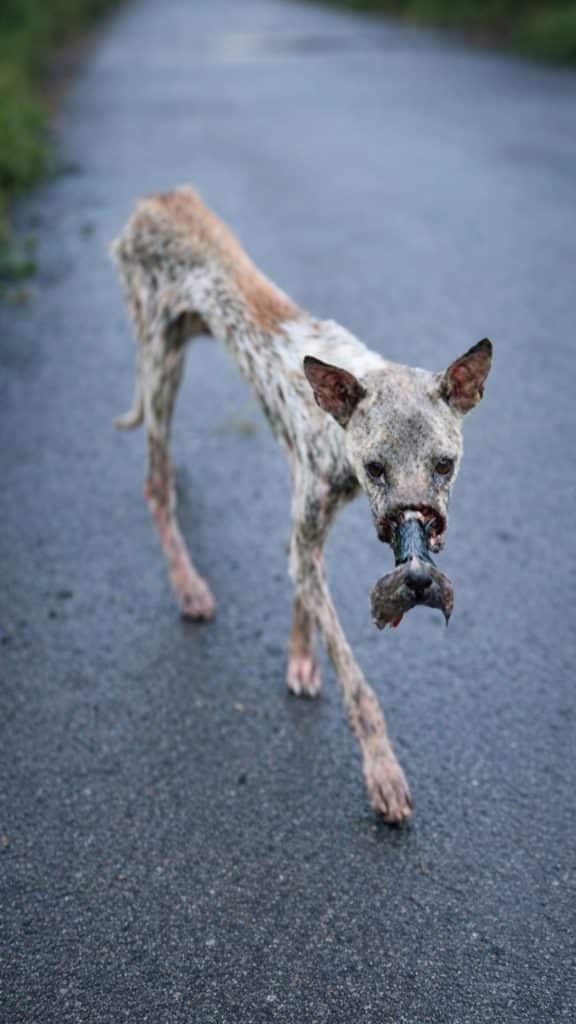
The dog simply stood there.
Sometimes an animal in need does not have the ability to make its situation obvious. Someone has to notice the smaller signs.
Fortunately, on this afternoon, someone did.
Video From Despair to Hope: How One Act of Kindness Transformed a Dog’s Life
A Careful Approach Instead of a Sudden Reaction
The first instinct when seeing an animal in a troubling situation may be to rush forward. But an unfamiliar dog can react unpredictably when frightened or uncomfortable, so the person approaching chose patience instead.
Movements remained slow.
The voice stayed calm.
Nothing was done suddenly.
The dog’s owner was nearby, and according to the account, initially seemed unconcerned about the situation. Rather than immediately turning the encounter into an argument, the person who had noticed the dog explained the concern and why the restraint needed attention.
The conversation took time.
Those minutes felt much longer because the dog’s comfort depended on what happened next.
Eventually, permission was given to help.
A Small Action Brings Immediate Relief
With careful hands, the rope was loosened and removed.
It was a simple action, but its effect was immediately noticeable.
The dog took a deeper breath and began relaxing. The tension that had kept his body rigid slowly eased.
There was no dramatic celebration.
There did not need to be.
A small dog could finally move his mouth normally and breathe without the same restriction.
That quiet moment carried a powerful lesson: meaningful intervention does not always look heroic from the outside.
Sometimes it is simply recognizing that something is wrong and responding calmly enough to improve the situation.
But removing the rope solved only the most immediate problem.
The dog still needed care.
Trust Could Not Be Rushed
Physical comfort began returning quickly, but emotional confidence required more time.
The dog remained cautious around people. Sudden movements caused him to react nervously, and he initially preferred keeping some distance.
Instead of demanding affection, his helper respected those boundaries.
They sat nearby.
They spoke quietly.
And they waited.
That approach gave the dog something important: control over the interaction.
Minutes passed before subtle changes appeared.
Rather than moving farther away, the dog remained nearby. Eventually, he allowed gentle contact.
These might sound like insignificant steps, but trust often develops exactly this way.
You cannot explain your intentions to a frightened animal with words alone. Your actions have to become the explanation.
Every calm movement tells the animal there is no immediate threat. Every respected boundary makes the next interaction slightly easier.
For this dog, patience became the bridge between uncertainty and trust.
Professional Care Becomes the Next Priority
Compassion helped the dog through the immediate situation, but kindness alone could not determine his overall health.
He needed professional evaluation.
A veterinary visit followed, allowing trained professionals to look beyond what was visible on the street.
According to the account, the examination identified weakness and signs consistent with inadequate care over an extended period. His behavior also suggested that he was experiencing considerable stress.
Still, there were encouraging signs.
The dog responded positively to quiet voices and steady reassurance. Even though he remained cautious, he was capable of relaxing when people treated him gently.
That responsiveness became an important part of what followed.
Instead of expecting him to immediately behave like a carefree companion animal, those helping him recognized that recovery would require time.
Recovery Becomes a Daily Routine
The next stage was far less dramatic than the initial encounter.
There were no instant transformations.
Instead, the dog began rebuilding his life through routine.
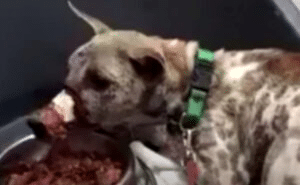
Nutrition was introduced carefully to support his physical recovery. His days became more predictable, and interactions happened without unnecessary pressure.
Some days brought obvious improvements.
Other days were quieter.
A curious look toward a caregiver became progress.
A small tail movement mattered.
Resting comfortably around people mattered too.
These changes were easy to overlook individually. Together, they showed a dog slowly becoming more comfortable with his surroundings.
Recovery often works this way.
It resembles building a house brick by brick rather than raising one overnight. Each positive experience creates another small piece of stability.
Why Predictability Matters for a Cautious Dog
For an animal that has experienced uncertainty, a predictable environment can make everyday life easier to understand.
Meals arrive at familiar times.
A resting place remains available.
Walks follow recognizable patterns.
The same people appear without demanding constant interaction.
Gradually, the unfamiliar becomes familiar.
The dog in this story began experiencing that consistency. As his routine settled, his behavior changed along with it.
Fear slowly made room for curiosity.
Walks became more relaxed.
Rest came more easily.
He no longer needed to treat every movement around him as something potentially concerning.
This did not happen because someone forced him to trust.
It happened because he repeatedly experienced situations in which trust became possible.
Responsible Help Goes Beyond Good Intentions
This story also highlights an important distinction between wanting to help an animal and knowing how to help safely.
An unfamiliar dog that appears frightened, restrained, injured, or unusually weak may react defensively when approached. Even a gentle animal can behave differently when experiencing discomfort or fear.
When possible, contacting local animal welfare professionals, veterinary services, or experienced rescue organizations can provide appropriate guidance.
Professional veterinary evaluation is also important when an animal shows signs of physical weakness or has experienced potentially harmful restraint.
The goal should always be to protect both the animal and the people involved.
Compassion works best when paired with patience, good judgment, and appropriate professional support.
Small Moments Can Change a Direction
Looking back, the turning point in this dog’s story was remarkably simple.
Someone noticed.
That person could have continued walking.
Instead, they stopped long enough to understand what they were seeing.
Then came another important decision: choosing calm communication rather than immediately escalating the situation.
That approach eventually allowed the rope to be removed and opened the door to further care.
One decision led naturally to another.
Notice.
Approach carefully.
Address the immediate concern.
Seek appropriate care.
Provide consistency.
Allow recovery to happen gradually.
None of those actions alone explains the dog’s transformation. Together, however, they created a completely different direction for his life.
A Different Dog Begins to Emerge
As time passed, the cautious dog started experiencing everyday life differently.
Walks were no longer dominated by tension.
He could rest comfortably.
Curiosity replaced some of his earlier hesitation.
And the people around him became familiar rather than unpredictable.
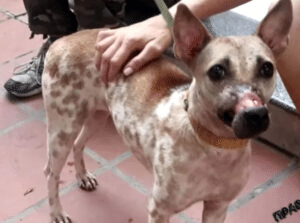
Eventually, his life included something that once seemed uncertain: a family that valued his comfort and treated him as a companion.
His days became filled with ordinary things.
Meals.
Walks.
Rest.
Attention.
A safe place to sleep.
There is nothing spectacular about those things, and perhaps that is precisely why they matter.
For a companion animal, a good life does not need to be extraordinary. It needs to be safe, stable, and appropriately cared for.
The Power of Stopping Long Enough to Notice
Animal rescue stories often focus on the final transformation: the relaxed dog, the comfortable home, the wagging tail.
But none of those moments happen without the first one.
Someone has to notice.
The small dog on that warm afternoon was not making a dramatic scene. He was standing quietly, restricted by a rope and unable to change the situation himself.
One person’s attention interrupted that moment.
What followed was not built on a single grand gesture. It came through calm intervention, veterinary attention, nutrition, routine, patience, and repeated experiences that allowed the dog to become comfortable again.
That is what makes the story memorable.
Compassion was not merely something someone felt.
It became something someone did.
Summary
A small dog was noticed standing unusually still on a quiet street with a rope secured tightly around his muzzle. Rather than approaching suddenly, the person who found him remained calm and spoke with the nearby owner until permission was given to remove the restraint.
Once the rope was loosened, the dog visibly relaxed, but his cautious behavior showed that immediate physical relief was only the beginning.
A veterinary examination followed, revealing weakness and signs that he needed sustained care. His recovery therefore focused on appropriate nutrition, predictable routines, gentle interactions, and patience.
Progress appeared gradually. The dog became more curious, rested more comfortably, accepted human contact, and grew increasingly relaxed during everyday activities.
Eventually, stability replaced uncertainty, and the dog began enjoying a safer life with people who valued his well-being.
His journey carries a simple message: meaningful change does not always begin with an extraordinary rescue. Sometimes it starts when an ordinary person stops long enough to notice that an animal needs help and chooses to respond with patience, responsibility, and compassion.