Every dog deserves regular meals, a comfortable place to sleep, and the reassurance that someone cares. For Kong, however, these ordinary comforts had been missing for far too long.
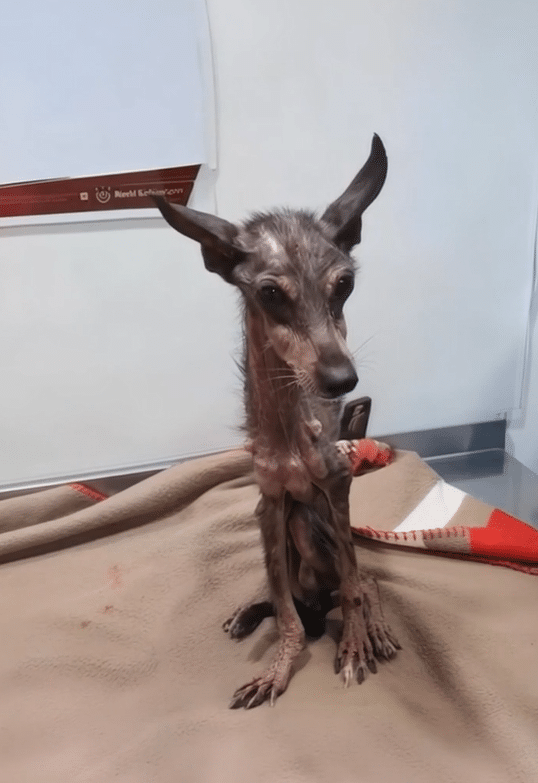
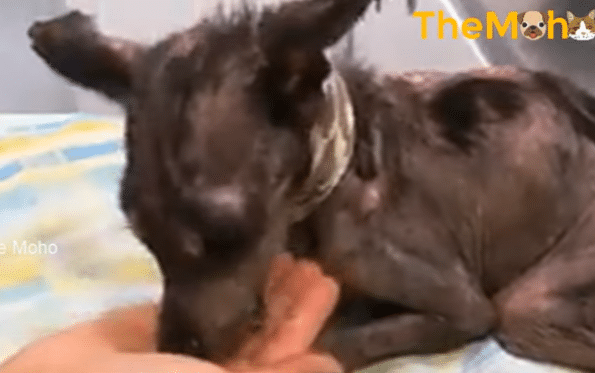
When rescuers discovered him, he was extremely thin and barely able to move. He lay quietly in a neglected space, showing little interest in the world around him. His body had become so weak that even basic activities required enormous effort.
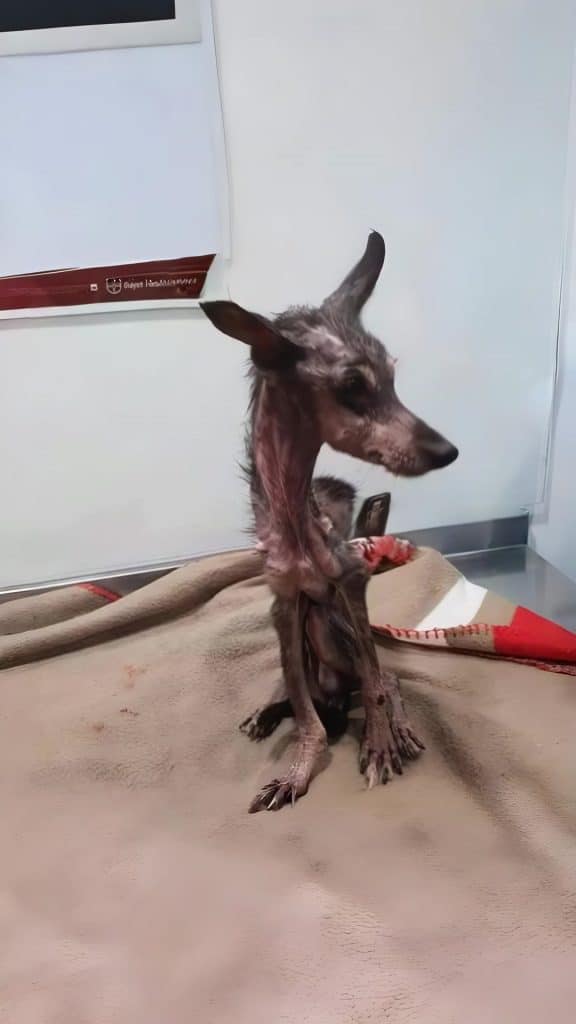
He did not struggle when someone approached. He simply remained still, watching the unfamiliar people who had finally come to help.
His condition reflected the consequences of prolonged deprivation, but his story would not end there.
With professional veterinary treatment, carefully managed nutrition, rehabilitation, and patient companionship, Kong gradually began rebuilding his strength. What followed was an inspiring animal rescue journey that demonstrated how consistent care can transform a vulnerable dog’s quality of life.
Video When Hunger Silenced His Strength, Hope Gave Him a Second Chance
A Quiet Discovery That Changed Everything
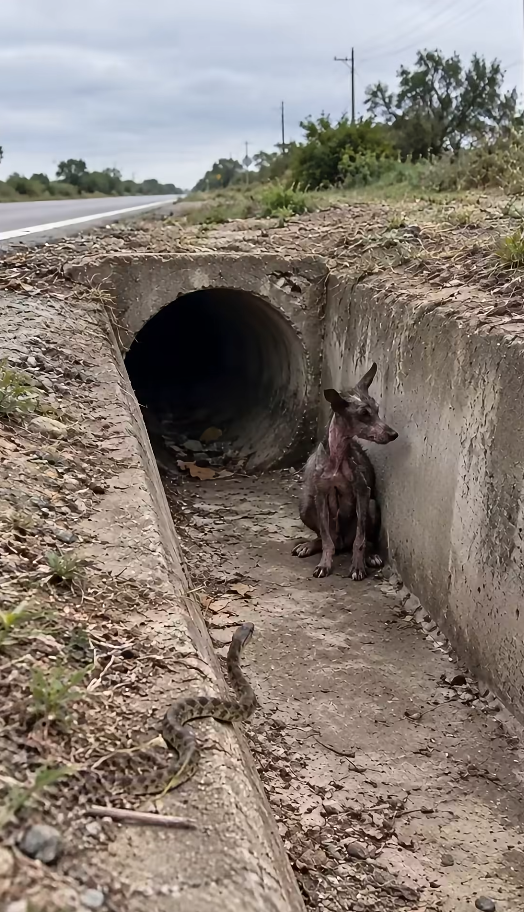
Kong had spent a long period living alone in a small, neglected environment where food and appropriate care were scarce.
Over time, his physical condition deteriorated.
By the time rescuers arrived, his body had lost considerable weight, and his movements were slow and uncertain. Even when food appeared nearby, he struggled to respond.
His lack of activity was particularly concerning.
Dogs experiencing prolonged nutritional deprivation may develop significant weakness, reduced muscle mass, and difficulty performing ordinary movements.
Kong needed more than a meal and a comfortable bed. He required professional medical attention and a carefully managed recovery plan.
The rescuers recognized the importance of approaching him gently.
They spoke softly, avoided sudden movements, and carefully lifted him from the place where he had been living.
Kong did not resist.
For the people helping him, that quiet moment marked the beginning of a long commitment to his recovery.
Veterinary Care Becomes the First Priority
Once Kong arrived at the veterinary clinic, the medical team began addressing his immediate needs.
His weakened condition required careful monitoring, hydration, and nutritional support.
According to his rescue account, veterinarians provided essential nutrients through appropriate medical treatment while allowing his body time to adjust.
This gradual approach was important.
Dogs experiencing severe malnutrition may require carefully controlled nutritional rehabilitation. Providing excessive food too quickly after prolonged deprivation can create serious metabolic complications.
Veterinary professionals can develop an individualized feeding plan based on the animal’s condition, medical findings, and response to treatment.
For Kong, the first stage focused on stabilization rather than rapid physical improvement.
He spent much of his time resting while caregivers monitored his progress.
Although his recovery had only begun, he was finally receiving the attention and support he needed.
Recovery Begins With the Smallest Improvements
During the early days, Kong remained too weak to stand independently.
Eating also required assistance.
His caregivers understood that meaningful progress would take time, so they paid attention to small changes rather than expecting an immediate transformation.
Gradually, Kong became more responsive.
His eyes followed familiar voices, and he began reacting to gentle touch. When caregivers offered soft food, he made an effort to eat.
Even these ordinary actions required considerable energy.
A slight movement of his tail or a longer moment of eye contact became an encouraging sign.
Recovery from prolonged neglect rarely follows a perfectly predictable schedule.
Some days bring visible improvement, while others require continued rest and observation.
For Kong, every small achievement represented another step toward a more comfortable life.
Learning to Stand Again
As his condition improved, Kong began attempting movements that had previously been beyond his strength.
With assistance, he tried lifting his body.
His legs trembled, and maintaining balance remained difficult.
Nevertheless, he continued trying.
His caregivers supported him while allowing him to progress at a manageable pace.
One afternoon, Kong managed to stand independently for several seconds.
It was a brief moment, but it represented meaningful progress after his earlier inability to support himself.
Standing requires coordination, balance, muscle strength, and sufficient energy. For an animal recovering from prolonged weakness, rebuilding these abilities can take considerable time.
Kong’s achievement demonstrated the value of consistent care and patient rehabilitation.
His caregivers continued supporting his movement without expecting him to recover overnight.
A Few Steps Toward a Different Future
After learning to stand, Kong gradually began attempting short movements.
At first, his steps were uncertain.
He needed time to coordinate his legs and maintain balance.
Eventually, he managed to walk a short distance without assistance.
The people caring for him recognized how much effort that achievement required.
For a healthy dog, walking across a room may seem effortless. For Kong, those first independent steps represented weeks of medical care, nutritional support, and gradual physical improvement.
His rehabilitation continued as his strength returned.
Veterinary-guided movement can help recovering dogs rebuild physical abilities, but exercise must match each animal’s medical condition.
Pushing an animal beyond its current capacity can interfere with recovery.
Kong’s progress came through patience, observation, and appropriate support.
His journey was not a race. It was a gradual return to everyday life.
Physical Recovery Brings New Energy
Over the following weeks, Kong’s appearance and behavior continued changing.
His coat became healthier, his posture improved, and his eyes appeared brighter and more attentive.
He also began showing greater interest in his surroundings.
Instead of remaining quietly in one place, he started observing the people around him and responding to familiar interactions.
These changes reflected more than an improvement in appearance.
A dog’s overall well-being includes physical comfort, energy, appetite, mobility, and the ability to engage with its environment.
Kong’s caregivers celebrated each development.
They understood that his recovery involved rebuilding his entire daily routine, not simply increasing his weight.
Regular nutrition, appropriate rest, medical monitoring, and a stable environment all contributed to his progress.
Gradually, the exhausted dog they had first encountered began revealing a more curious personality.
Trust Becomes Part of Kong’s Healing Journey
Physical rehabilitation was only one part of Kong’s transformation.
He also needed opportunities to become comfortable with human companionship.
Despite his difficult past, Kong gradually began seeking affection from familiar caregivers.
He leaned gently into their hands and welcomed calm interactions.
These moments showed how important emotional security can be during animal rehabilitation.
Dogs benefit from predictable routines and positive experiences with people.
Regular meals, comfortable surroundings, gentle handling, and consistent caregivers can help create an environment where an animal feels secure.
Trust develops through repeated experiences rather than a single dramatic moment.
For Kong, each peaceful interaction helped establish a new relationship with the people supporting him.
His growing willingness to seek companionship became another meaningful part of his recovery.
Rediscovering Play and Everyday Happiness
As Kong regained strength, his interest in ordinary activities increased.
He began exploring his surroundings and showing curiosity toward toys.
At first, his playful behavior was hesitant.
He might approach a toy, investigate it briefly, and then return to resting.
Over time, those small moments developed into more enthusiastic interactions.
Kong also discovered the enjoyment of moving across grass and exploring open spaces.
For a dog who had once struggled to stand, these activities represented a remarkable change in daily life.
Play provides more than entertainment.
Appropriate enrichment can encourage mental stimulation, support confidence, and strengthen the relationship between dogs and their caregivers.
Activities should always match an animal’s physical abilities and medical needs.
For Kong, gentle exploration and playful interactions became part of his increasingly comfortable routine.
A New Life Built Around Consistent Care
Today, Kong’s story describes a dog enjoying the ordinary comforts that every companion animal should receive.
He has regular meals, peaceful walks, comfortable places to rest, and steady human companionship.
His appetite has improved, and he moves with greater confidence.
He also enjoys affection and opportunities to explore his surroundings.
These everyday experiences may appear simple, but they represent a profound change from his earlier circumstances.
Responsible long-term care remains essential for animals recovering from severe nutritional deprivation.
Regular veterinary monitoring can help caregivers assess body condition, mobility, and overall health.
A balanced diet, appropriate exercise, preventive healthcare, and a predictable routine support continued well-being.
Kong’s recovery illustrates why rescue should extend beyond the immediate emergency.
Helping an animal reach safety is the beginning. Providing sustainable care creates the foundation for a healthier future.
The Lasting Meaning of Kong’s Transformation
Kong’s journey was not defined by one extraordinary moment.
It developed through a series of thoughtful decisions.
Rescuers recognized his condition and brought him to safety. Veterinary professionals provided treatment. Caregivers supported his nutrition, movement, and emotional adjustment.
Each stage contributed to the next.
His first attempt to eat, his first independent stand, and his first confident steps all reflected the importance of patient rehabilitation.
Eventually, his growing curiosity and playful personality revealed how much his daily experience had changed.
Kong’s story reminds us that compassion becomes especially meaningful when people combine it with responsible action.
For vulnerable animals, consistent care can open the door to comfort, security, and renewed engagement with the world.
Summary
Kong was discovered in a severely weakened condition after living for an extended period without adequate food and care. His limited mobility and difficulty eating made professional veterinary treatment essential.
Rescuers transported him to a clinic, where he received carefully managed hydration, nutritional support, and medical attention.
His recovery progressed gradually. He became more responsive, began eating with assistance, learned to stand independently, and eventually took his first steps without support.
As his physical condition improved, Kong also developed greater confidence around people. He began seeking affection, exploring his surroundings, and enjoying playful activities.
Today, his life includes regular meals, comfortable rest, gentle exercise, and dependable companionship.
His transformation highlights the importance of professional veterinary care, individualized nutritional rehabilitation, patient physical recovery, and long-term responsible pet ownership.
Kong’s journey demonstrates that meaningful healing often grows from many small acts of care rather than one dramatic event.
For a dog who once struggled with the simplest movements, those acts created the opportunity to enjoy a life filled with comfort, curiosity, and love.






