A cardboard box sitting outside a closed store might not attract much attention. But on one quiet night, an ordinary-looking box held six tiny puppies who desperately needed someone to notice them.
At approximately 10:27 p.m., security footage captured a woman approaching the storefront with the box in her hands. She placed it near the entrance, paused briefly, and walked away.
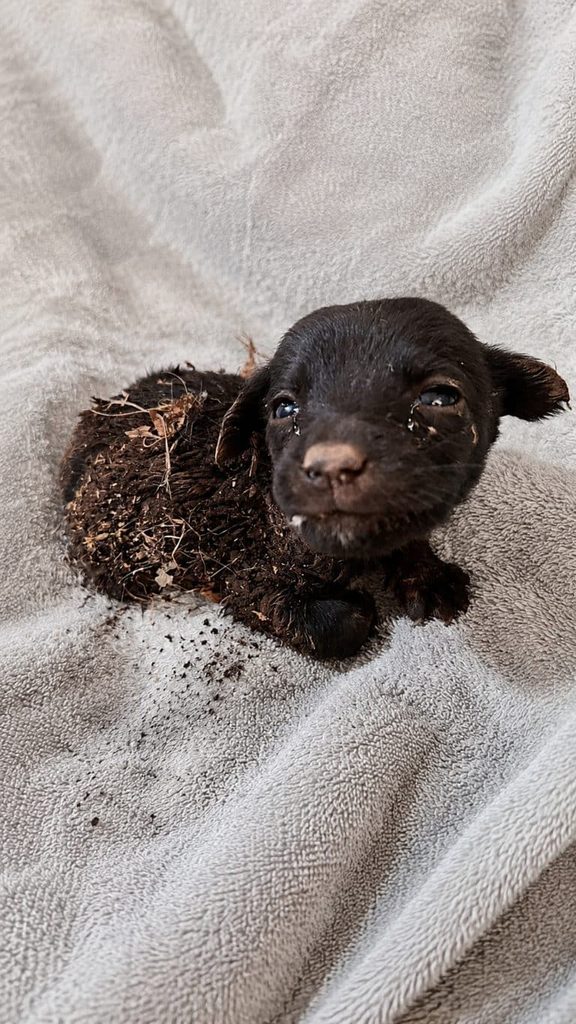
Inside were six young puppies, too small to protect themselves from the cold or search for help.
The store had already closed, and the street was nearly empty. Cars occasionally passed, but nobody realized what the box contained.
For hours, the puppies remained outside without their mother, adequate bedding, or access to food.
Video Six Puppies Spent the Night Inside a Cardboard Box By Morning, Some Could Barely Lift Their Heads
When employees arrived around 8 a.m., they discovered the animals in a worrying condition.
Several were barely moving.
What followed was an urgent animal rescue that transformed six vulnerable puppies into a playful litter with a promising future.
A Cardboard Box Goes Unnoticed Throughout the Night
The security recording established when the puppies were left near the store entrance.
At that hour, the business was closed, and the surrounding area was quiet.
The cardboard box blended into the dark storefront.
From a distance, it could easily have been mistaken for discarded packaging or unwanted merchandise.
Unfortunately, the six puppies inside had no way to attract meaningful attention.
They appeared to be only a few weeks old.
At such a young age, puppies depend heavily on warmth, frequent feeding, and supervision.
Their small bodies cannot regulate temperature as effectively as those of healthy adult dogs.
The box provided limited protection against the cold night air.
The puppies could huddle together, but that offered only a small amount of comfort.
As the hours passed, their situation became increasingly concerning.
They remained confined while the world continued moving around them.
Nobody opened the box until morning.
Store Employees Make a Disturbing Discovery
At approximately 8 a.m., employees arrived to begin their normal workday.
Instead, they encountered an unexpected emergency.
When someone opened the cardboard box, six small puppies were discovered inside.
Several appeared extremely weak.
Some struggled to lift their heads, while others barely responded to movement around them.
These were not energetic puppies eager to explore.
Their bodies showed signs of exhaustion after spending the night outdoors.
One puppy also had a visible injury on its head.
Another displayed concerning symptoms that required professional evaluation.
The exact cause of the injuries could not be established from the available security footage.
However, the puppies clearly needed immediate assistance.
The employees recognized the urgency and arranged for the animals to receive appropriate care.
An ordinary morning had suddenly become a rescue mission.
Warmth and Safety Become the First Priorities
The puppies were carefully moved away from the cold storefront.
Their small bodies required gentle handling, particularly because some were weak and others had visible injuries.
Warm blankets provided much-needed comfort during the rescue.
But bringing the puppies indoors was only the beginning.
Prolonged exposure to low temperatures can be dangerous for very young animals.
Cold stress may affect circulation, hydration, energy levels, and normal body functions.
Puppies who have gone without food may also struggle to maintain healthy blood sugar levels.
The rescue team understood that professional veterinary attention was essential.
The puppies needed examinations, controlled warming, and suitable nutrition.
Simply offering a large meal or placing them near intense heat would not necessarily have been safe.
Their recovery needed to begin carefully.

Veterinarians Begin Emergency Examinations
At the veterinary clinic, the medical team examined each puppy individually.
They assessed body temperature, hydration, breathing, responsiveness, and overall condition.
The veterinarians also checked for injuries and possible complications associated with prolonged cold exposure.
The puppies were gradually warmed while their vital signs were monitored.
This careful approach helped the team support their recovery without placing additional stress on their fragile bodies.
Appropriate fluids and nutrition were introduced according to their individual needs.
Because the puppies were so young and weak, feeding required particular attention.
The veterinary team monitored their ability to swallow, respond to handling, and maintain a stable temperature.
Every small improvement mattered.
A puppy lifting its head was encouraging.
Another beginning to eat was equally important.
These ordinary actions suggested that their bodies were responding to treatment.
An Injured Puppy Receives Encouraging Medical News
Among the six puppies, one required additional attention because of a visible head injury.
The rescue team was concerned that the damage might extend beyond what could be seen externally.
Veterinarians performed examinations to assess the puppy’s skull and neurological condition.
Fortunately, the medical evaluation reportedly found no evidence of brain damage.
It was welcome news during an otherwise uncertain situation.
The puppy still needed treatment, wound care, and continued monitoring.
However, the results gave caregivers reason to feel hopeful about recovery.
The other puppies also remained under observation.
Each animal needed to regain strength, begin feeding consistently, and maintain a healthy body temperature.
The medical team watched for signs of improvement while remaining alert to possible complications.
Recovery was underway, but it would not happen overnight.
Six Fragile Puppies Begin Their Healing Journey
Once the immediate emergency had been addressed, the puppies entered a more consistent care routine.
They received regular meals suited to their age and condition.
Their bedding was kept clean and comfortable.
Caregivers monitored their health and continued treating injuries as needed.
Special attention was given to ensuring that every puppy received enough nourishment.
In a litter, stronger puppies may sometimes reach food more easily than weaker siblings.
Careful supervision helped prevent the smallest or most vulnerable animals from being overlooked.
During the early stages, the puppies spent much of their time sleeping.
Their bodies needed rest while recovering from the difficult night.
Gradually, their energy began returning.
They lifted their heads more often and showed increasing interest in their surroundings.
What had once been a quiet group of exhausted puppies was slowly becoming a lively little family.
The First Playful Moments Bring Hope
One of the most encouraging changes appeared when the puppies began interacting with one another.
At first, their movements were small and uncertain.
One puppy might stretch a paw toward a sibling.
Another might crawl across the bedding before becoming tired.
Soon, those little movements developed into playful behavior.
The puppies began exploring their surroundings, investigating blankets, and climbing over one another.
Their steps remained clumsy, as expected for animals so young.
Sometimes a puppy would lose its balance during play and settle beside a sibling.
These moments were simple but meaningful.
They showed that the animals had regained enough strength to do more than rest and eat.
Their natural curiosity was beginning to return.
For the caregivers who had seen them barely moving on the morning of their rescue, the change was especially rewarding.

A Brighter Future Becomes Possible
By the later stages of their recovery, the puppies looked very different from the animals first discovered inside the cardboard box.
They were cleaner, stronger, and more active.
Their playful behavior showed that they were becoming increasingly comfortable in their surroundings.
However, their journey was not completely finished.
Before moving into permanent homes, young puppies need age-appropriate veterinary care, vaccinations, parasite prevention or treatment, proper nutrition, and opportunities for healthy socialization.
They also need families prepared for the responsibilities of raising a dog.
Puppy adoption involves more than providing a comfortable bed and occasional affection.
It requires training, patience, regular veterinary appointments, and a long-term commitment.
The available rescue account does not confirm that all six puppies have already been adopted.
What it does show is that they recovered enough to have a genuine opportunity for a better future.
That possibility alone represents a meaningful achievement.
A Simple Decision Makes an Extraordinary Difference
Perhaps the most memorable part of this story is how easily the puppies could have remained unnoticed.
The box looked ordinary.
The store was closed.
The street was quiet.
And the puppies were too young to seek help independently.
But when employees arrived, they opened the box and recognized that the animals inside needed assistance.
That decision connected the puppies with rescuers and veterinary professionals who could provide the care they required.
From warm blankets to medical examinations, every action contributed to their recovery.
The story also reminds us that responsible animal welfare depends on practical compassion.
Helping vulnerable animals often means arranging professional care, supporting recovery, and ensuring that their future needs are considered.
For these six puppies, that process began when someone finally noticed what had been left outside the store.
Summary
Six young puppies were left inside a cardboard box outside a closed store at approximately 10:27 p.m.
Security footage captured the moment a woman placed the box near the entrance and walked away.
The puppies remained outdoors throughout the night without adequate warmth, food, or their mother.
When employees arrived around 8 a.m., they discovered the animals in a weakened condition.
Several were barely moving, and one had a visible head injury.
The puppies were brought to safety and received emergency veterinary care, including controlled warming, examinations, appropriate nutrition, and treatment for injuries.
Fortunately, medical testing reportedly found no evidence of brain damage in the puppy with the head wound.
Over the following days, the litter gradually regained strength.
Their movements became steadier, their energy improved, and they began playing and exploring like healthy young puppies.
Although their permanent adoption outcomes have not been confirmed, their recovery has given them the opportunity for a safer and happier future.
Their story demonstrates how timely intervention, professional veterinary treatment, and consistent care can transform the lives of vulnerable animals.
Once, six tiny puppies spent a cold night hidden inside an overlooked cardboard box.
Today, their rescue stands as a reminder that compassion begins when someone notices a problem and chooses to act.