A construction site is rarely a welcoming place for an animal seeking shelter. Unfinished walls, dusty floors, scattered materials, and unfamiliar noises can make even a quiet corner feel unsafe.
Yet for one injured stray dog, a secluded spot inside a construction area had become his temporary refuge.
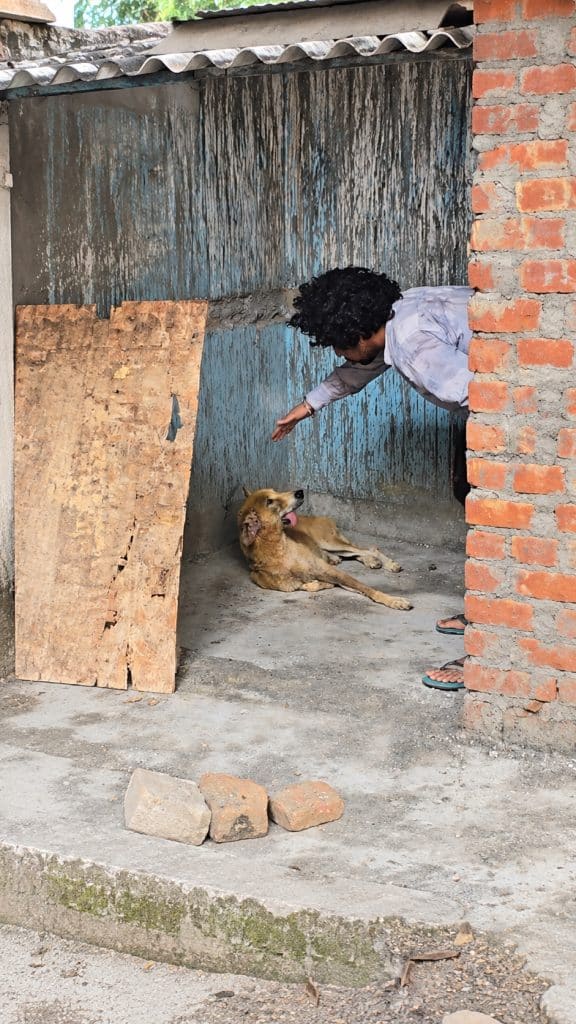
He lay curled up against a wall, exhausted and visibly uncomfortable. One of his ears was badly injured, and his weakened condition suggested that he needed help.
He did not bark to attract attention or attempt to approach anyone. He simply remained in place.
Fortunately, a group of rescuers noticed him and decided to intervene.
Video Rescuers Find An Injured Stray Dog In A Construction Site And Carefully Treat His Ear Wound
Their careful approach, coordinated handling, and immediate wound care transformed an overlooked moment into a meaningful animal rescue story. By the end of the recorded rescue, the dog could stand, walk, and drink water from a bowl.
His recovery was not complete, but he was no longer facing his difficulties alone.
A Quiet Corner Becomes a Temporary Shelter
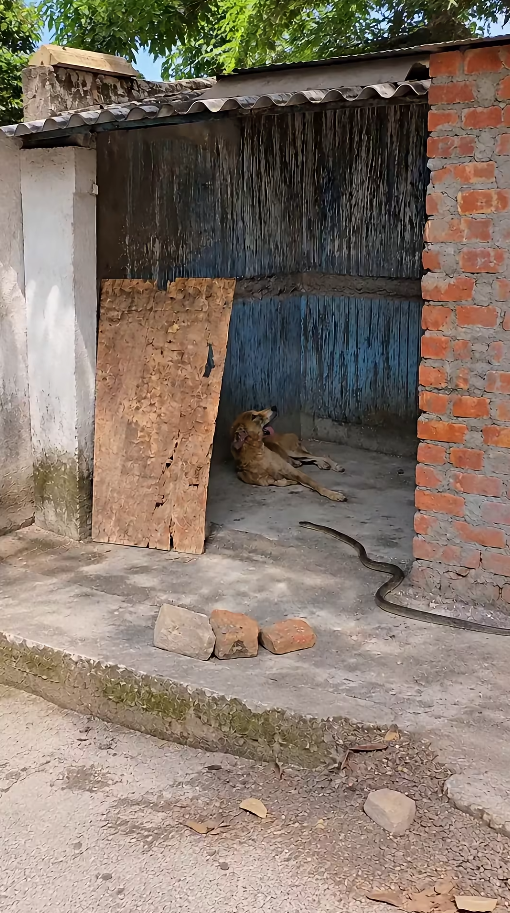
The dog was discovered resting inside an unfinished construction area, surrounded by hard surfaces and dusty surroundings.
His position suggested that he had chosen a relatively secluded place where he could remain undisturbed.
Injured animals sometimes seek quiet spaces when they feel uncomfortable or vulnerable. A hidden corner may offer temporary protection from activity, but it cannot provide the medical attention an injured dog needs.
The dog’s ear injury was particularly concerning.
Ear wounds can become more complicated when dirt, moisture, or bacteria enter the affected area. Depending on the injury, professional treatment may be necessary to manage discomfort and support healing.
The rescuers recognized that leaving him untreated could expose him to further problems.
However, helping him required a thoughtful approach.
An unfamiliar person approaching an injured animal may unintentionally cause fear, especially when the animal has limited space to move away.
The team needed to establish safety before beginning treatment.
A Patient Approach Builds the First Connection
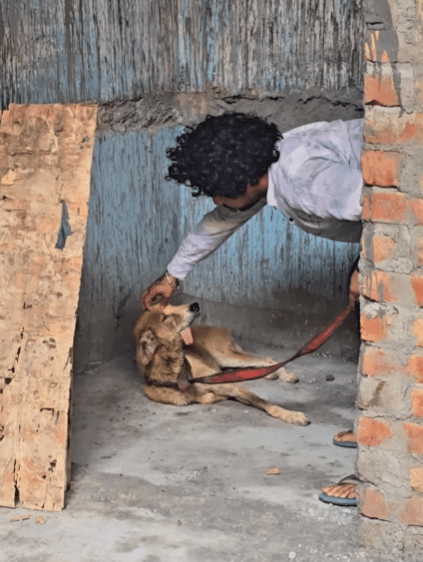
One rescuer slowly approached the dog while observing his behavior.
He avoided sudden movements and gave the animal time to become familiar with his presence.
The dog remained in place as the man moved closer.
This calm approach was important because pain and fear can influence how an animal responds to handling.
Even a normally friendly dog may react defensively when injured.
Rescuers therefore need to consider both the animal’s comfort and the safety of everyone involved.
In this case, the man gently fitted the dog with a muzzle before proceeding.
The muzzle served as a temporary safety measure during handling and treatment.
It was not a punishment. It helped reduce the risk of an accidental bite while the volunteers worked near the dog’s injured ear.
With the dog safely secured, another rescuer joined the effort.
Working Together to Move the Dog Safely
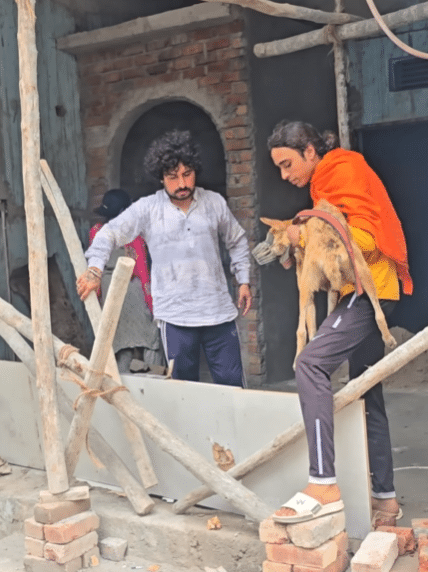
The two men carefully lifted the dog and moved him away from the corner where he had been resting.
Their coordinated movements helped them handle him more gently.
When moving an injured animal, supporting the body and avoiding unnecessary pressure are important considerations.
The appropriate method depends on the dog’s size, condition, and suspected injuries.
If an animal may have a spinal injury or another serious condition, professional guidance is especially important before attempting transportation.
The rescue account does not establish that this dog had injuries beyond his affected ear and general weakness.
Nevertheless, the volunteers handled him cautiously.
Once they reached a safer area, they could examine the ear more closely and begin providing care.
The construction site was no longer simply the place where the dog had been hiding.
It had become the starting point of his rescue.
Careful Wound Treatment Begins at the Scene
After moving the dog, the volunteers inspected his injured ear.
They worked methodically, cleaning the affected area and applying treatment.
The recorded rescue describes the use of disinfectant, injections, and a therapeutic spray.
These measures were intended to address the injury and support recovery.
The exact medications and their indications are not specified in the account, so their individual effects cannot be established from the description alone.
For ear injuries, veterinary assessment is important because the appropriate treatment depends on the location, depth, and cause of the problem.
An injury affecting the outer ear may require different care from a condition involving the ear canal.
Some cleaning products can also be unsuitable when the eardrum’s condition is unknown.
For that reason, owners and rescuers should avoid applying unfamiliar medications or household disinfectants without veterinary guidance.
The volunteers focused on treating the dog as gently as possible.
Their calm, coordinated actions demonstrated how practical skills and compassion can work together during animal rescue.
Why Injured Ears Require Proper Attention
A dog’s ears contain sensitive tissues, and untreated injuries may become increasingly uncomfortable.
Possible complications depend on the nature of the injury and whether infection develops.
Warning signs can include swelling, discharge, unusual odor, persistent scratching, or repeated head shaking.
A veterinarian may need to examine the ear to determine whether additional treatment is necessary.
In this dog’s case, the rescue account describes an externally visible injury that received cleaning and medication.
It does not provide a confirmed diagnosis or establish the original cause.
What matters is that the volunteers recognized the need for care rather than overlooking the problem.
Prompt attention can help prevent avoidable complications and give an injured animal a more comfortable recovery environment.
The dog’s treatment also illustrates why rescue work should include follow-up care whenever possible.
Initial first aid is valuable, but it does not always resolve the underlying medical concern.
The First Encouraging Signs After Treatment
After the volunteers completed the initial care, the dog began showing greater activity.
He managed to stand.
Then he started walking.
These ordinary movements carried particular meaning because he had initially been found lying quietly in a corner.
Standing and walking showed that he was capable of moving after the intervention.
However, movement alone does not confirm that an injury has healed or that discomfort has completely resolved.
The dog still needed rest, observation, and appropriate continued care.
His improvement was encouraging, but recovery would depend on how his ear responded over time.
For rescuers, these early signs can provide reassurance that an animal is becoming more comfortable.
The most responsible approach is to celebrate progress while continuing to monitor the animal’s condition.
A Bowl of Water Marks a Meaningful Moment
Near the end of the recorded rescue, the dog is seen drinking water from a bowl.
It is a simple scene, yet it represents a considerable change from his initial circumstances.
He was no longer lying alone in a dusty construction corner.
He had received attention, wound care, and an opportunity to drink.
Access to clean water is a basic requirement for every dog, particularly one living outdoors without dependable care.
Animals recovering from illness or injury may also need their hydration status assessed by a veterinarian.
Although drinking is an encouraging behavior, it does not independently establish that an animal is fully hydrated or medically stable.
For this dog, the moment showed that he could stand and engage with his surroundings after receiving assistance.
It was a small but welcome step.
The Importance of Calm Handling During Rescue
The volunteers’ approach offers a useful example of responsible animal handling.
They did not rush toward the dog or attempt to force immediate interaction.
Instead, they assessed the situation, approached gradually, used a temporary safety measure, and worked together.
These decisions helped create a more controlled environment for treatment.
Rescuing an unfamiliar dog requires awareness of canine body language.
Signs of discomfort may include a stiff posture, avoidance, growling, or attempts to retreat.
A dog that remains unusually still may also be frightened or physically unable to respond normally.
People without appropriate training should avoid placing themselves at risk when approaching an injured stray.
Contacting an experienced animal rescue organization or veterinary professional is often the safest option.
Compassion matters, but safe handling makes that compassion more effective.
The Hidden Challenges Faced by Stray Dogs
This dog’s circumstances reflect broader challenges experienced by animals living without consistent human care.
Stray dogs may seek shelter in construction sites, alleys, abandoned buildings, or other quiet locations.
These places can offer temporary protection, but they rarely provide dependable food, clean water, or medical treatment.
An injury that might receive prompt attention in a household can remain untreated for much longer when an animal lives outdoors.
That delay may make recovery more complicated.
Community animal welfare programs can help address these challenges through rescue, veterinary treatment, vaccination, sterilization, and responsible rehoming when appropriate.
Public awareness also plays an important role.
Recognizing an animal in need and contacting the right organization can create an opportunity for timely assistance.
For the dog in this story, that awareness helped bring care directly to the place where he had been resting.
A Second Chance That Still Requires Continued Care
By the end of the rescue, the dog had received treatment for his injured ear and demonstrated encouraging signs of activity.
He could stand, walk, and drink water.
These developments marked an improvement from the quiet, weakened condition in which rescuers initially discovered him.
However, the available account does not establish his long-term recovery, whether he received additional veterinary examinations, or where he eventually lived.
His immediate progress should therefore be understood as the beginning of recovery rather than a confirmed complete healing.
Continued monitoring would help identify whether the wound was improving and whether additional treatment was required.
A clean resting environment, adequate nutrition, fresh water, and appropriate veterinary follow-up could support his recovery.
For this injured stray, the most important change was that people had finally recognized his need for help.
Summary
An injured stray dog was discovered resting quietly in a corner of a construction site. He appeared weak, and one of his ears required medical attention.
A rescuer approached slowly and gently fitted him with a temporary muzzle to support safe handling.
A second volunteer then helped move the dog to a safer location.
Together, the team inspected and cleaned his injured ear before applying the treatments described in the rescue account.
Following the initial care, the dog managed to stand and walk. He was also seen drinking water from a bowl.
Although his long-term outcome remains undocumented, these early developments offered encouraging signs.
His story highlights the importance of noticing vulnerable animals, approaching them safely, providing appropriate wound care, and arranging continued veterinary attention.
Most importantly, it demonstrates that meaningful rescue work does not always involve dramatic moments.
Sometimes, it begins with two people entering a quiet construction site, treating an injured dog with patience, and giving him the care he deserves.






