At first, the sound was almost impossible to distinguish from the wind moving through the bamboo.
A rescuer stopped and listened carefully. Somewhere beyond the narrow path came a faint series of cries. Following the sound through the dense plants, the rescuer eventually discovered several newborn puppies curled together on the ground.
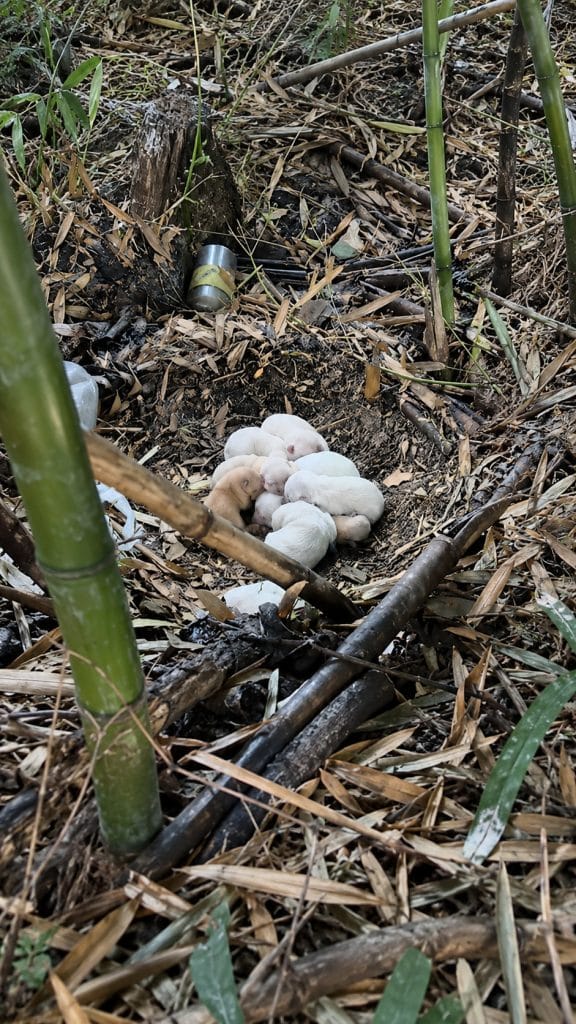
They were incredibly small.
The puppies had no proper shelter around them, only damp earth, fallen leaves, and bamboo branches. At such a young age, they depended heavily on warmth, nutrition, and attentive care.
Video Newborn Puppies Rescued From the Bamboo Forest Find Warmth, Love, and a Family Again
The rescuer initially hoped their mother was nearby and would soon return.
Then the weather changed.
Clouds gathered overhead, rain began falling, and waiting became increasingly difficult. What started as an unexpected discovery in a bamboo grove soon developed into days and nights of careful feeding, warmth, patience, and remarkable companionship.
Waiting for Their Mother
Finding young puppies alone does not always mean they have been permanently separated from their mother.
Mother dogs may leave temporarily to search for food, find water, or investigate potential danger. When conditions are safe, observing from an appropriate distance can sometimes help determine whether the mother returns.
That was initially the rescuer’s hope.
The puppies remained together while the rescuer waited nearby.
But the rain complicated everything.
Newborn puppies cannot regulate their body temperature as effectively as older dogs, making prolonged exposure to cold and wet conditions particularly concerning.
The rescuer opened an umbrella and positioned it above the little group.
Rain struck the surrounding bamboo while the puppies remained beneath this temporary shelter.
Minutes passed.
Then more time.
Still, no mother appeared.
Eventually, the combination of worsening weather and the puppies’ vulnerability made the next decision unavoidable.
They needed somewhere warmer.
Leaving the Bamboo Behind
The rescuer carefully gathered the puppies and brought them home.
Their surroundings changed immediately.
Instead of damp soil, they had clean bedding.
Instead of rain, they had a dry room.
Instead of lying exposed beneath bamboo branches, they could rest together in a protected environment.
For newborn animals, warmth is not simply about comfort. Maintaining an appropriate environment is an important part of responsible neonatal care.
The rescuer therefore focused first on the basics.
Keep them warm.
Keep them together.
Make sure they received appropriate nutrition.
Watch them carefully.
The puppies had reached safety, but caring for such young animals would require significant commitment.
Then an unexpected helper appeared.
A Small Dog Becomes Their Companion
The rescuer already had a small dog at home.
Naturally curious about the newcomers, the resident dog approached their resting area.
At first, the interaction was cautious.
The dog watched.
The puppies remained curled together.
Gradually, however, the resident dog began spending more time near them.
Soon, she was resting beside the puppies and providing companionship and warmth.
She could not replace everything the puppies needed from their biological mother, but her presence offered something meaningful.
The newborns were no longer surrounded only by unfamiliar human activity.
There was another dog nearby.
The little companion seemed comfortable staying close to them, creating a gentle scene that quickly became part of their new routine.
Bottle Feeding Became a Full-Time Responsibility
Without their mother’s milk, feeding became one of the most important tasks.
Very young puppies require appropriate nutrition on a carefully managed schedule. The rescuer prepared suitable puppy milk replacement and fed the little animals individually.
The work did not stop when evening arrived.
Young orphaned puppies may need frequent attention throughout the day and night, depending on their age and veterinary guidance.
That meant interrupted sleep and repeated checks.
Prepare the formula.
Feed one puppy.
Then the next.
Make sure everyone remained comfortable.
Clean the feeding equipment.
Rest briefly.
Then begin again when the next feeding time arrived.
It was not glamorous work.
But rescue rarely is.
Behind every photograph of growing puppies are countless ordinary tasks performed consistently when nobody else is watching.
Why Professional Guidance Matters With Newborn Puppies
Caring for orphaned newborn puppies requires more than simply offering ordinary milk.
Their nutritional and developmental needs are specific, and feeding methods that are inappropriate for their age can create problems.
Anyone who discovers newborn puppies without an adult dog should consider contacting a veterinarian or experienced animal rescue organization as soon as possible.
Professionals can provide guidance about suitable puppy milk replacement, feeding frequency, safe positioning, body temperature, hygiene, and warning signs that require veterinary attention.
Regular monitoring can also help identify changes early.
Are the puppies gaining appropriate weight?
Are they feeding normally?
Are they warm and responsive?
These simple observations can provide useful information about how they are progressing.
For the rescued litter, careful attention became part of everyday life.
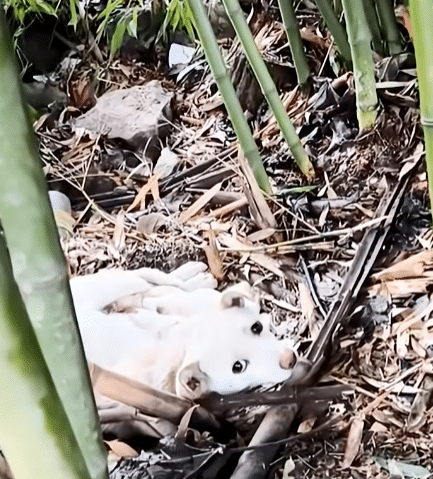
Small Changes Begin to Appear
During the earliest days, progress could be measured in tiny details.
The puppies seemed more settled after feeding.
Their movements became stronger.
Their little bodies gradually began filling out.
These changes did not happen overnight.
Recovery was more like watching a plant grow. You rarely notice a dramatic difference from one hour to the next, but after several days, the transformation becomes impossible to miss.
The puppies who had once remained curled together beneath the bamboo began showing increasing awareness of their surroundings.
Their world was expanding.
At first, that world had consisted almost entirely of warmth, feeding, and sleep.
Soon, curiosity entered the picture.
They Began Exploring the House
As the puppies developed, their movements changed.
The tiny animals who had once depended completely on being carried began wobbling around their safe area.
Their early attempts at walking were understandably unsteady.
One puppy would move forward.
Another would follow.
Sometimes they seemed to discover their own paws with surprise.
Their growing mobility brought additional responsibility for the caregiver. As puppies become more adventurous, their environment needs to remain secure and appropriate for exploration.
But it also brought joy.
Every new movement demonstrated how far they had come.
The faint cries once heard beneath rainy bamboo were being replaced by the ordinary sounds of puppies discovering life.
From Bottles to Bowls
Eventually, another important milestone arrived.
The puppies began transitioning away from bottle feeding as appropriate for their developmental stage and care plan.
Small bowls became part of their routine.
Learning to eat differently required adjustment, but the puppies gradually became more independent.
This transition also changed the rescuer’s daily schedule.
The long nights of constant bottle preparation slowly became less demanding as the puppies matured.
Their personalities became easier to distinguish as well.
One might approach food immediately.
Another might become distracted by a sibling.
A third might prefer investigating the edge of the feeding area before remembering why everyone had gathered there.
They were no longer simply a litter of vulnerable newborns.
They were becoming individuals.
Playtime Introduced a Bigger World
As they grew stronger, the puppies gained opportunities to experience safe outdoor time under supervision.
Sunny grass offered an entirely different environment from the bamboo grove where their story had begun.
There were unfamiliar scents everywhere.
Leaves moved in the breeze.
The ground felt different beneath their paws.
The puppies began playing together, tumbling across the grass and investigating anything that caught their attention.
This was perhaps the clearest sign of transformation.
The puppies were not spending their days simply trying to stay warm anymore.
They had enough energy to play.
Play is more than entertainment for young dogs. Appropriate play and exploration contribute to physical development and help puppies interact with their surroundings.
Their world was becoming larger every day.
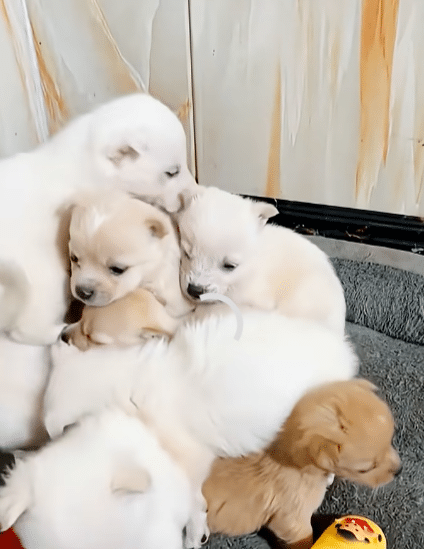
The Quiet Importance of the Resident Dog
Throughout their development, the rescuer’s dog remained part of their environment.
The relationship offered a reminder that companionship can appear in unexpected forms.
The resident dog had no obligation to spend time near the newcomers.
Yet she repeatedly chose their company.
Whether resting beside them or simply remaining nearby, she became another familiar presence in a world that had changed completely.
Of course, interactions between resident animals and vulnerable puppies should always be appropriately supervised.
Temperament, health, vaccination status, and individual circumstances matter.
But when carefully managed, positive interaction with a calm dog can become another part of a puppy’s developing social environment.
Rescue Is Built From Repetition
It is tempting to think of animal rescue as one dramatic moment.
Someone finds an animal.
They pick it up.
The rescue is complete.
Reality is usually more complicated.
For these puppies, being carried away from the rain was only the beginning.
The real work happened afterward.
It happened during late-night feedings.
It happened while bedding was cleaned.
It happened during careful observations and repeated meals.
It happened when the rescuer chose to wake up again instead of ignoring the next feeding schedule.
Rescue is often less like a single heroic leap and more like building a staircase.
Every small action becomes another step.
Eventually, those steps lead somewhere completely different.
A Future That Once Seemed Uncertain
The contrast could hardly be greater.
The puppies were discovered lying together beneath bamboo while rain approached and their mother remained absent.
Later, they were warm, well fed, increasingly active, and surrounded by care.
Their lives had changed because someone heard a faint sound and decided to investigate.
That detail matters.
Many meaningful acts of compassion begin with attention.
A sound.
A movement.
Something that seems slightly unusual.
Then comes the choice to look more closely.
For these puppies, that choice opened the door to everything that followed.
Summary
A rescuer discovered a litter of newborn puppies after hearing faint cries from inside a bamboo grove. The puppies were lying together on damp ground without adequate shelter, while their mother was nowhere in sight.
Initially, the rescuer waited in hopes that the mother would return. As rain intensified and the young puppies became increasingly vulnerable to the cold, the rescuer brought them to a warm and protected environment.
At home, the puppies received appropriate feeding, regular monitoring, clean bedding, and consistent care. The rescuer’s resident dog also began spending time beside them, providing gentle companionship as they adjusted to their new surroundings.
Over time, the puppies became stronger. Bottles eventually gave way to bowls, uncertain movements developed into confident exploration, and quiet newborns grew into playful young dogs enjoying supervised time outdoors.
Their journey demonstrates that rescue is rarely about one moment alone. It is built through patience, responsible care, professional guidance when needed, and countless small actions repeated day after day.
The puppies were once hidden beneath bamboo with only the sound of their cries revealing where they were.
Now their world is filled with warmth, companionship, play, and the possibility of a secure future.