Every shelter dog has a story, but some arrive carrying challenges that require extraordinary care. For a gentle dog named Hattie, her greatest obstacle was impossible to overlook.
A massive growth on the left side of her body made ordinary activities increasingly difficult. Walking, standing, and finding a comfortable position to rest had become daily challenges.
Yet Hattie remained remarkably patient.
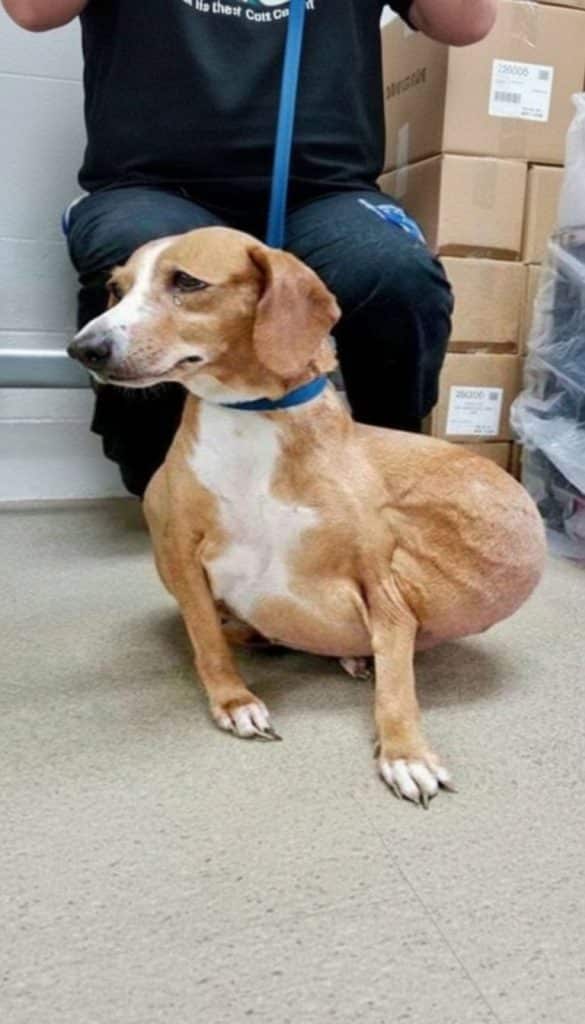
When she arrived at an animal shelter near Dallas, Texas, in 2018, her condition immediately concerned the staff. They understood that she needed more than temporary accommodation. She required specialized veterinary treatment and a rescue team willing to help her through a complicated recovery.
What followed became an inspiring dog rescue story about medical dedication, compassion, and the remarkable difference a second chance can make.
Video Hattie’s Second Chance How One Brave Dog Left the Weight of the Past Behind
A Gentle Dog Arrives at a Texas Animal Shelter
Hattie’s journey began when she entered a shelter in the Dallas area.
Like many surrendered animals, she faced an uncertain future. Families sometimes surrender pets because of financial difficulties, housing changes, or medical responsibilities they cannot manage.
The account does not specify exactly why Hattie entered the shelter, but her medical condition was immediately apparent.
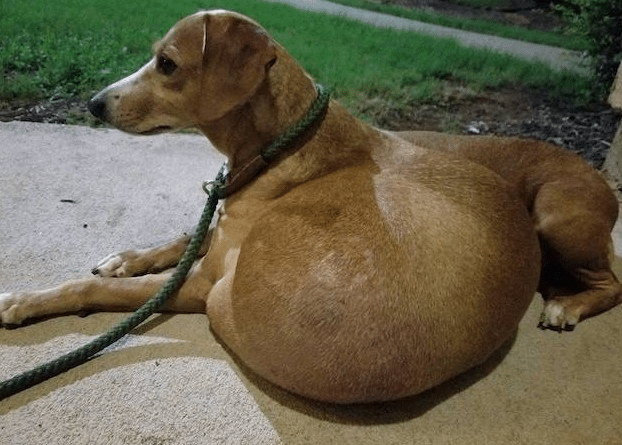
An unusually large mass extended from her left side, changing the way she carried her body.
The weight affected her balance and made movement uncomfortable.
Even lying down required adjustment.
Despite these challenges, Hattie remained calm around the people caring for her.
Her gentle personality made a lasting impression on shelter staff, who recognized that she deserved an opportunity to recover.
A Serious Medical Condition Requires Urgent Attention
The shelter team understood that Hattie’s condition could not be addressed through ordinary daily care alone.
The growth was substantial enough to interfere with her mobility and overall comfort.
Without veterinary evaluation, staff could not determine the best treatment or assess the potential risks.
Her medical needs also made finding a suitable adoptive family more complicated.
Many prospective adopters are understandably concerned about taking responsibility for an animal requiring extensive treatment.
Fortunately, a rescue organization stepped forward to help.
The team arranged for Hattie to receive specialized veterinary attention.
This decision marked the beginning of a new chapter.
Instead of facing an uncertain future at the shelter, Hattie now had access to professionals who could evaluate her condition and develop a treatment plan.
Veterinary Specialists Discover a Remarkable Challenge
At the veterinary facility, specialists carefully examined Hattie.
They assessed the size and position of the growth and considered how it affected her movement.
The results revealed an extraordinary finding.
The tumor weighed approximately fifteen pounds.
For a dog, carrying that much additional weight on one side of the body can create significant physical challenges.
The mass had altered Hattie’s posture and made ordinary movements more difficult.
Veterinarians needed to consider her overall health before proceeding with treatment.
They also had to determine whether surgery offered a reasonable opportunity to improve her quality of life.
After evaluating her condition, the medical team decided that removing the growth was the appropriate next step.
A Life-Changing Surgery Offers New Hope
Hattie’s operation required careful preparation.
Removing such a large tumor involved important surgical considerations, including her general health and the position of the affected tissue.
The veterinary team planned the procedure with the goal of improving her comfort and mobility.
When the operation was completed, the enormous mass was finally gone.
For the first time in a long while, Hattie no longer carried the additional fifteen pounds that had affected her balance.
The physical difference was immediately significant.
Her body could begin adjusting to movement without the weight pulling her to one side.
Although she still needed time to recover from surgery, the procedure offered an important opportunity for improvement.
The source account describes the growth as benign, making the outcome especially encouraging.
However, successful surgery was only the beginning of Hattie’s recovery.
The First Days After Surgery Require Patience
Following the operation, Hattie needed rest and careful monitoring.
Veterinary professionals watched her condition and provided the support necessary for healing.
Recovering from major surgery takes time, especially when an animal has spent an extended period compensating for an unusually large growth.
Hattie’s body needed to adjust to its changed balance.
Her caregivers encouraged appropriate rest while monitoring her comfort and mobility.
Soft bedding gave her a suitable place to relax.
Gentle attention helped her remain comfortable during recovery.
Instead of expecting immediate improvement, the team allowed her to progress gradually.
Every small achievement mattered.
Standing more comfortably, resting without the same physical obstruction, and moving with greater ease were meaningful steps toward a better quality of life.
Hattie Begins Discovering the Freedom to Move
As Hattie’s recovery continued, her confidence began growing.
Without the large mass affecting her balance, everyday activities gradually became easier.
She started walking with greater comfort.
Her movements became more natural as she adjusted to the changes in her body.
She also showed increasing interest in exploring her surroundings.
For a dog who had previously struggled with ordinary movement, these improvements represented a remarkable transformation.
Imagine carrying a heavy object everywhere you go, unable to set it down.
Now imagine finally being free of that burden.
Although the comparison cannot fully describe Hattie’s experience, it helps explain why the surgery made such an important difference.
Her caregivers could see that she was becoming more comfortable and engaged with daily life.
Emotional Recovery Matters Just as Much
Hattie’s progress involved more than physical healing.
She also needed a stable environment where she could feel secure.
Changes in surroundings can be stressful for shelter animals, particularly those recovering from medical treatment.
Fortunately, Hattie received consistent attention from people who cared about her well-being.
Her caregivers offered affection, reassurance, and predictable daily routines.
These experiences helped her become more comfortable in her new surroundings.
Gradually, her gentle personality became increasingly visible.
She appeared more relaxed and confident.
Rather than focusing entirely on the physical challenges that had once limited her, she could enjoy ordinary interactions.
Her emotional adjustment complemented her medical recovery.
Together, these improvements helped Hattie begin a healthier chapter of life.
Why Veterinary Care Is Essential for Dogs With Large Tumors
Hattie’s story highlights the importance of professional veterinary evaluation when a dog develops an unusual growth.
Not every lump or mass is cancerous.
Some are benign, while others require additional testing to determine their nature.
However, even a benign tumor can affect an animal’s quality of life when it becomes large or interferes with normal movement.
Veterinarians may recommend diagnostic imaging, laboratory testing, or tissue examination depending on the circumstances.
Treatment options vary according to the location, size, and characteristics of the growth.
Surgery may be appropriate in some cases, but every animal requires an individualized assessment.
For Hattie, removing the enormous mass allowed her to experience greater physical comfort.
Her journey demonstrates why timely medical attention can make such a meaningful difference.
The Importance of Rescue Organizations and Veterinary Teams
Hattie’s recovery was possible because several people worked together.
Shelter staff first recognized that her condition required specialized attention.
A rescue organization then helped arrange the medical care she needed.
Veterinary professionals evaluated the tumor and performed the operation.
Caregivers supported her throughout the recovery process.
Each contribution mattered.
Animal shelters frequently care for dogs with different medical and behavioral needs, and some cases require resources beyond those available through routine shelter services.
Rescue partnerships can help connect vulnerable animals with specialized treatment.
They can also provide recovery support and assistance with long-term care arrangements.
Hattie’s experience shows how cooperation between shelters, rescue organizations, and veterinary professionals can improve an animal’s future.
A New Life Beyond Her Medical Challenges
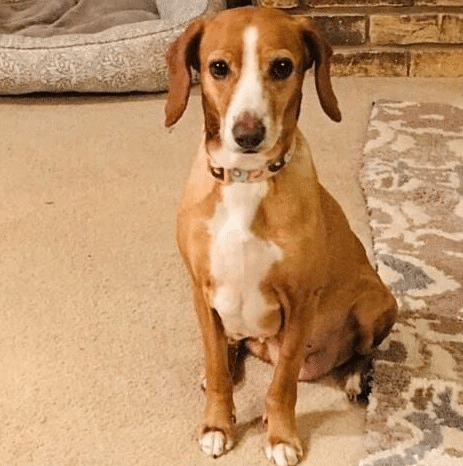
Following her surgery and recovery, Hattie’s daily life changed considerably.
She could move more freely and rest without the enormous growth affecting her position.
Her caregivers continued providing attention as she adjusted.
The gentle dog who had entered the shelter with such an unusual medical burden now had the opportunity to enjoy greater comfort.
Her transformation was not simply about appearance.
It was about restoring everyday experiences that had become difficult.
Walking without the same strain.
Finding a comfortable place to sleep.
Exploring her surroundings with renewed confidence.
These ordinary activities became meaningful signs of progress.
Hattie’s story reminds us that improving an animal’s quality of life often begins with addressing the challenges that prevent it from enjoying simple daily pleasures.
What Hattie’s Journey Teaches Us About Compassion
It would have been easy to focus only on the size of Hattie’s tumor.
After all, a fifteen-pound growth is an extraordinary medical challenge.
But her story is about much more than a successful operation.
It is about the people who recognized her needs and chose to help.
The shelter staff did not overlook her condition.
The rescue organization arranged specialized treatment.
Veterinary professionals worked to improve her health.
And caregivers supported her as she recovered.
Their combined efforts gave Hattie a future that once seemed uncertain.
Her experience also encourages compassion toward animals with visible medical differences.
A dog’s appearance does not determine its personality, worth, or ability to enjoy companionship.
Sometimes the animals facing the greatest challenges simply need someone willing to provide the right support.
Summary
Hattie arrived at an animal shelter near Dallas, Texas, in 2018 with an enormous growth on the left side of her body.
The mass affected her balance, mobility, and ability to rest comfortably.
Despite these difficulties, she remained calm and gentle around shelter staff.
Recognizing that her condition required specialized treatment, a rescue organization arranged veterinary care.
Medical examinations revealed that the tumor weighed approximately fifteen pounds.
Veterinarians carefully planned and performed surgery to remove the growth.
The procedure gave Hattie an opportunity to move without the substantial weight that had affected her body.
Following surgery, she received rest, monitoring, and supportive care while gradually regaining strength.
As her recovery progressed, she began walking more comfortably, exploring her surroundings, and displaying greater confidence.
Her journey highlights the importance of timely veterinary treatment, compassionate animal rescue, and patient rehabilitation.
Most importantly, Hattie’s story demonstrates that even animals facing extraordinary medical challenges can experience meaningful improvements in their quality of life.
What once seemed like an overwhelming burden became the beginning of a hopeful new chapter.
With dedicated care and a second chance, Hattie could finally enjoy the comfort and freedom she deserved.






