Fire can transform an ordinary day within minutes.
Smoke fills familiar streets, emergency sirens break through the noise, and families suddenly face decisions they never expected to make. During these emergencies, pets and other animals can become especially vulnerable. They may hide, become confused, or find themselves unable to escape without assistance.
Yet some of the most memorable stories to emerge from fires are not only about what was lost. They are about what people managed to save.
Firefighters, police officers, animal rescuers, and ordinary neighbors have repeatedly stepped forward to help animals reach safety. From a dog waiting at an upstairs window to animals inside a smoke-filled barn, these moments demonstrate how preparation, teamwork, and compassion can make a remarkable difference.
Video Firefighters and Strangers Risk Everything to Save Animals From the Flames
The Dog Waiting at an Upstairs Window
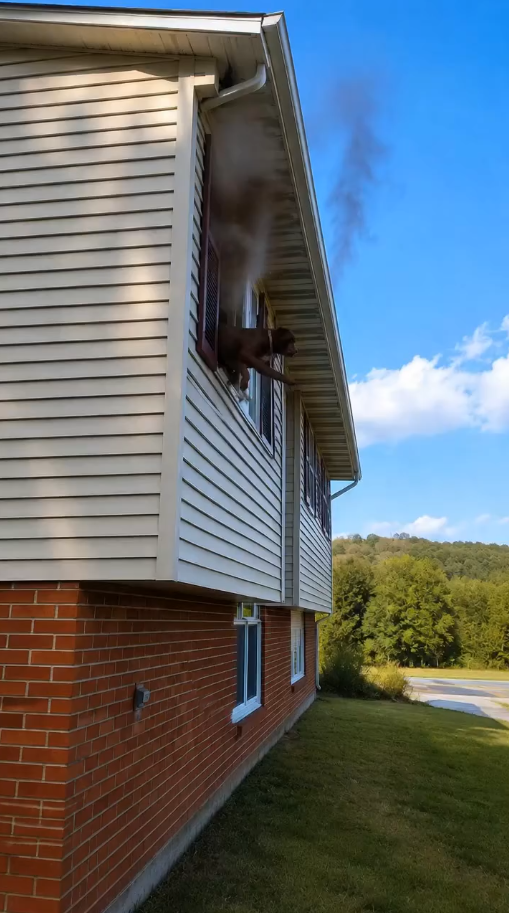
One dramatic rescue began at a house surrounded by smoke.
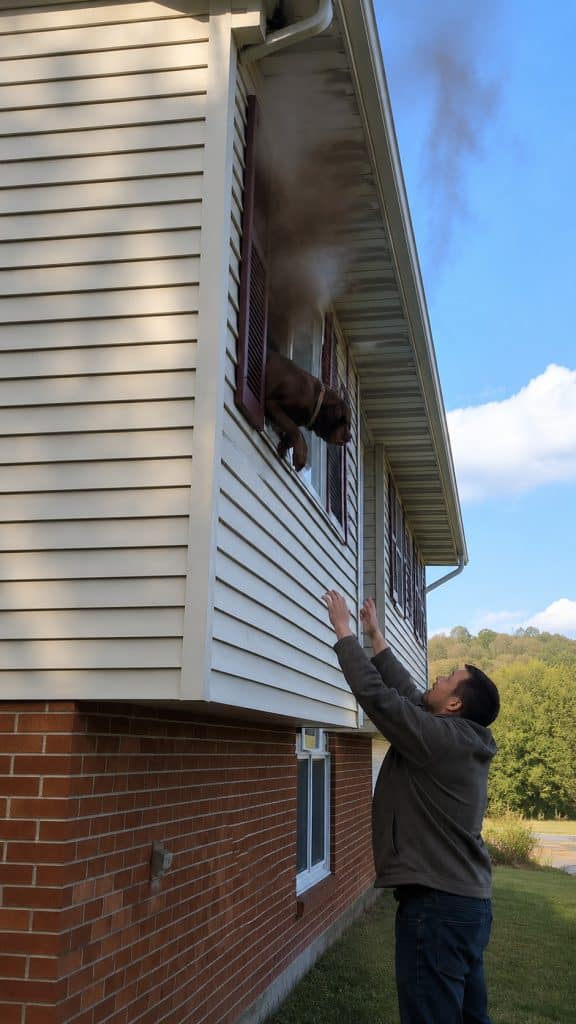
A frightened dog appeared at a second-floor window. The rooms behind him were becoming increasingly unsafe, and there was no obvious path to the ground.
People below noticed him.
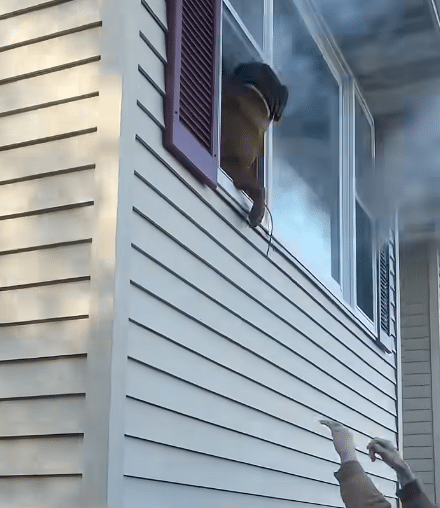
Two men positioned themselves beneath the window and prepared to help.
For several tense moments, the dog remained above them, apparently uncertain about what to do. The distance between the window and the people waiting below must have seemed enormous.
Then he made his move.
The dog jumped toward the waiting rescuers.
The men reached upward and managed to catch him, quickly moving him away from the immediate danger.
It happened in seconds.
Yet those seconds demonstrated something important about emergency response: noticing a problem early can create options that may disappear if people wait too long.
The dog could not explain what he needed.
Someone simply had to recognize it.
Animals Inside a Smoke-Filled Barn
Residential homes are not the only places where animals can face difficulties during fires.
Barns present their own challenges.
Animals housed inside may become frightened by smoke, unusual noises, and rapidly changing surroundings. Some may hesitate to move through unfamiliar openings even when an escape route becomes available.
During one emergency, heavy smoke filled a barn while people worked together to bring the animals outside.
Teamwork became essential.
Barriers needed to be opened or moved, safe exits had to remain accessible, and frightened animals required careful handling.
Rather than one dramatic action, the rescue depended on many people performing different tasks toward the same goal.
One person created access.
Another guided an animal.
Others helped maintain a clear route toward safety.
That coordination allowed the rescue effort to continue while conditions changed around them.
Why Animals May Hide During Fires
Pets do not always react to emergencies in ways their owners expect.
A frightened dog may run toward an unusual location. A cat may hide beneath furniture or enter a small space that feels protected. Livestock may resist leaving an enclosure because the outside environment seems unfamiliar and frightening.
These behaviors can complicate evacuation.
Humans understand that smoke alarms, emergency vehicles, and evacuation instructions mean it is time to leave. Animals understand only that their surroundings suddenly feel different.
Their instincts may tell them to hide.
This is one reason pet emergency planning is so valuable.
Knowing where an animal commonly hides, keeping carriers accessible, and maintaining secure leashes near an exit can save valuable time when evacuation becomes necessary.
A Vehicle Rescue Required Immediate Attention
Fire is not the only emergency involving dangerous heat.
In another incident, a dog became trapped inside a locked vehicle while environmental conditions around it grew increasingly unsafe.
A police officer recognized that waiting could make the situation worse.
The officer created access through a window and removed the dog from the vehicle.
The circumstances were different from a burning building, but the underlying principle remained the same: evaluate the situation, recognize the urgency, and use an appropriate method to reach the animal.
Vehicle interiors can become dangerously hot, particularly during warm weather. When smoke or nearby fire adds another concern, conditions may deteriorate even more rapidly.
Members of the public who discover an animal apparently experiencing an emergency inside a locked vehicle should contact local emergency services rather than improvising actions that could create additional safety or legal problems.
Professional responders can assess the circumstances and determine the appropriate intervention.
Firefighters Enter Where Others Must Leave
Firefighters regularly train to work in environments that members of the public should never enter.
That distinction is important.
During another rescue, firefighters entered a burning home after learning that a dog remained inside.
Protective equipment, training, communication, and coordinated procedures allowed them to operate in conditions where an untrained person would face significant danger.
Eventually, the dog was brought outside.
Scenes like this can make entering a burning structure look like a simple act of courage.
It is not.
Professional firefighting involves extensive training and specialized equipment. Fire behavior can change rapidly, and smoke can make navigation difficult even inside a familiar building.
The safest thing a pet owner can usually do after evacuating is tell firefighters where the animal was last seen and provide useful details rather than attempting to re-enter the property.
A Reunion After the Fire
Some rescue stories become especially memorable because of what happens after the immediate danger has passed.
In Los Angeles, a pet owner stood outside following a fire, believing his cat had not made it out.
The surrounding property had been heavily affected, and uncertainty made an already difficult situation even harder.
Then firefighters appeared.
They were carrying a cat.
The owner’s reaction changed immediately when he recognized his companion.
For a person facing the disruption caused by a major fire, recovering a beloved animal can carry enormous emotional meaning.
Homes contain possessions, photographs, furniture, and countless reminders of daily life. Pets are different. They are living members of the household, woven into routines from morning until night.
Finding a missing pet after an emergency therefore represents more than recovering something from a damaged property.
It means bringing part of the family back together.
Why Pet Fire Safety Should Start Before an Emergency
The best rescue is often the one that never becomes necessary.
Pet owners can take practical steps before an emergency occurs.
Keeping collars and identification information current can help if an animal becomes separated from the family. Microchip contact details should also remain updated.
Carriers should be stored somewhere accessible rather than buried beneath rarely used household items. Leashes can be kept near an exit, particularly in homes with dogs that may become difficult to control when frightened.
Families can also include pets in their evacuation planning.
Who will secure the dog?
Who will bring the cat carrier?
Where will the family go if an evacuation shelter does not accept animals?
Answering these questions before an emergency can reduce confusion when every minute matters.
Smoke alarms are equally important. Families should test them regularly and replace batteries or devices according to manufacturer guidance.
Preparation may not prevent every emergency, but it can make the response faster and more organized.
Helping Without Creating Another Emergency
Stories about courageous rescues naturally inspire people to help.
However, compassion should always work alongside safety.
Entering a burning building without proper training or protective equipment can put additional lives at risk. A structure may become unstable, smoke can obscure exits, and conditions can change unexpectedly.
Instead, people who have already evacuated should remain outside and provide emergency responders with useful information.
Tell firefighters that animals may still be inside.
Explain how many pets are missing.
Describe their likely hiding locations.
If possible, identify doors or other access points that responders should know about.
Those details can support professionals without adding another person to an already dangerous environment.
The People Behind Animal Rescues
Firefighters often receive much of the attention in emergency rescue stories, and understandably so. But successful animal rescues may involve many people.
Police officers can secure an area.
Animal control professionals can help handle frightened pets.
Veterinary teams can evaluate animals after smoke exposure or other emergency conditions.
Neighbors may provide important information about animals still inside a property.
Even a stranger making the right phone call can become part of the chain that leads to safety.
This is what makes emergency response so powerful when it works well.
Different people contribute different skills.
Like links in a chain, each action strengthens the next.

More Than a Dramatic Rescue
It is easy to focus on the most visually striking moments: a dog leaving an upstairs window, firefighters emerging with an animal, or a pet owner finally seeing a missing companion again.
But successful rescue extends beyond those moments.
Animals exposed to smoke, extreme heat, or stressful emergency conditions may require veterinary evaluation even when they appear normal afterward.
They may also behave differently temporarily.
A normally confident pet can become cautious. Another may remain unusually close to its owner. Some simply need a quiet environment and time to settle.
Recovery, like rescue itself, deserves patience.
What These Stories Leave Behind
Fires are remembered for the things they change.
Yet alongside stories of disruption are moments of cooperation that reveal another side of an emergency.
Two people notice a dog at a window and prepare to receive him.
A group works together to move animals from a barn.
A police officer reaches a dog inside a vehicle.
Firefighters search a home and return with someone’s beloved companion.
These actions differ in scale, location, and circumstances, but they share one idea.
Someone noticed that an animal needed assistance and responded responsibly.
Summary
Several remarkable animal rescues during fires and heat-related emergencies demonstrate how preparation, professional training, teamwork, and compassion can help pets reach safety.
In one incident, people below an upstairs window helped a frightened dog escape a smoke-filled home. Elsewhere, coordinated rescuers moved animals from a barn, a police officer assisted a dog trapped inside a vehicle, and firefighters entered hazardous conditions to locate pets that could not leave on their own. One particularly meaningful rescue ended with a pet owner being reunited with the cat he feared he had lost.
These stories also offer practical lessons. Pet owners can prepare by maintaining identification information, keeping carriers and leashes accessible, planning evacuation responsibilities, and telling emergency responders immediately when animals remain inside a property.
The most important lesson is simple: compassion becomes most effective when paired with preparation and safe action.
During an emergency, rescuers may save more than an animal. For the families waiting outside, they may also preserve a deeply meaningful part of home.






