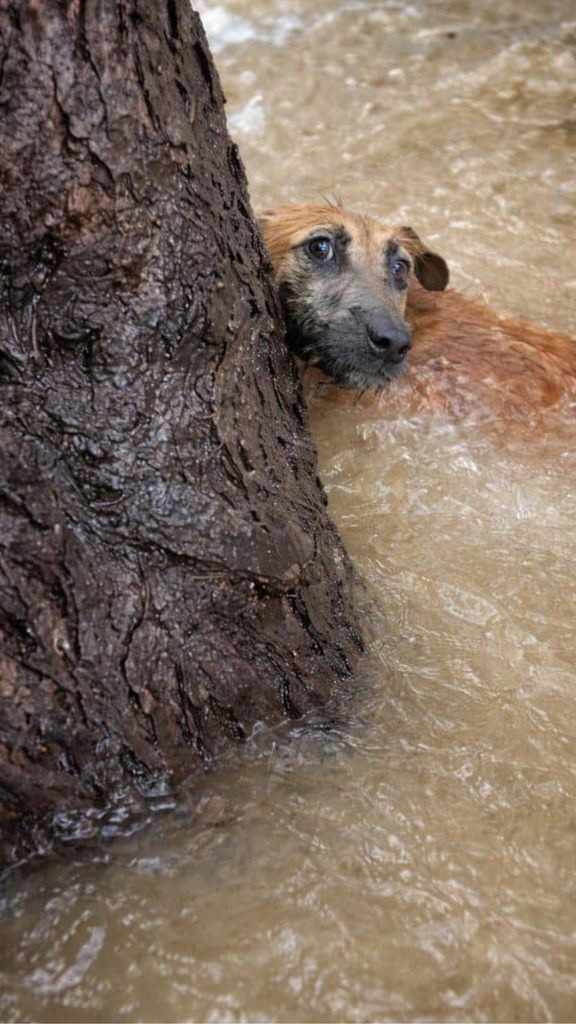
When floodwaters swept through a quiet neighborhood, a frightened dog found himself stranded beside a partially submerged tree. Water surrounded his body, leaving him with little room to move and no clear route to safety.
He pressed against the tree as the current continued flowing around him.
A local man spotted the struggling animal and entered the flooded area to help. But when he reached toward the dog, the frightened animal snapped at his hand.
The rescuer did not respond with anger. He paused, spoke gently, and gave the dog time to settle before trying again.
That patient decision changed the course of the rescue.
Video Clinging To A Submerged Tree, A Terrified Dog Bit The Hand That Came To Save Him
Soon, the man was able to lift the exhausted dog from the water and carry him toward shelter. In the weeks that followed, the animal gradually became comfortable in his new surroundings and developed a close bond with the person who had saved him.
Their story is a reminder that frightened animals sometimes need understanding just as much as they need immediate assistance.
A Dog Trapped in Rising Floodwater
The neighborhood had become difficult to recognize after floodwater covered its streets and surrounding ground.
In the middle of the flooded area, a dog had taken refuge beside a tree.
The trunk offered something solid to lean against, but it could not provide a safe escape route.
Water surrounded the animal, and the current made movement difficult.
He remained close to the bark, apparently trying to maintain his position.
Flooding can create dangerous conditions for pets and stray animals alike. Familiar routes disappear beneath the water, and animals may struggle to identify a safe direction.
Even dogs that can swim may become exhausted when currents are strong or they cannot find somewhere to rest.
This dog needed help reaching a secure location.
Fortunately, a nearby man noticed him and decided to act.
A Rescuer Approaches Through the Water
The man carefully moved through the flooded area toward the tree.
The water reached approximately his waist, making the approach physically demanding.
As he came closer, the dog appeared increasingly frightened.
The animal pressed himself against the trunk and watched the approaching stranger.
From the dog’s perspective, the situation offered little reassurance. He was surrounded by moving water, unable to leave easily, and unfamiliar with the person approaching him.
The rescuer extended a hand, hoping to make contact.
Instead, the dog snapped and caught his hand.
The sudden reaction could have ended the attempt.
An animal bite can cause injury, and a flooded environment introduces additional safety concerns.
However, the man remained focused on helping the stranded dog.
He adjusted his approach rather than forcing immediate contact.
Understanding a Frightened Dog’s Reaction
The dog’s defensive behavior was an important part of the rescue.
A frightened animal may snap when it feels cornered, threatened, or unable to escape.
That response does not necessarily reflect how the animal behaves in ordinary circumstances.
Fear can temporarily change a dog’s reactions, particularly during an unfamiliar emergency.
In this case, the dog had little control over his surroundings.
The tree offered limited protection, and the approaching person was another unfamiliar element.
The rescuer appeared to recognize that rushing could make the situation more difficult.
He stopped moving toward the animal and lowered his voice.
Instead of treating the dog’s reaction as deliberate hostility, he allowed the animal a moment to adjust.
This was a practical decision as well as a compassionate one.
Giving a frightened dog space can reduce the likelihood of further defensive behavior.
A Quiet Moment Changes the Rescue
After the initial reaction, the man remained nearby and spoke gently.
His movements became slower and more deliberate.
The dog continued watching him, but his resistance gradually decreased.
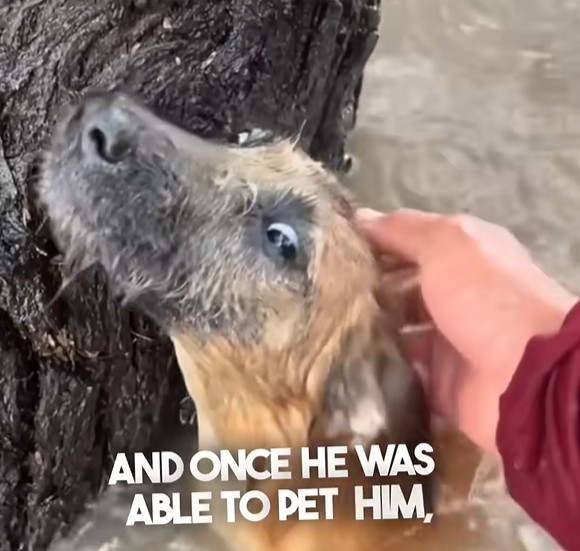
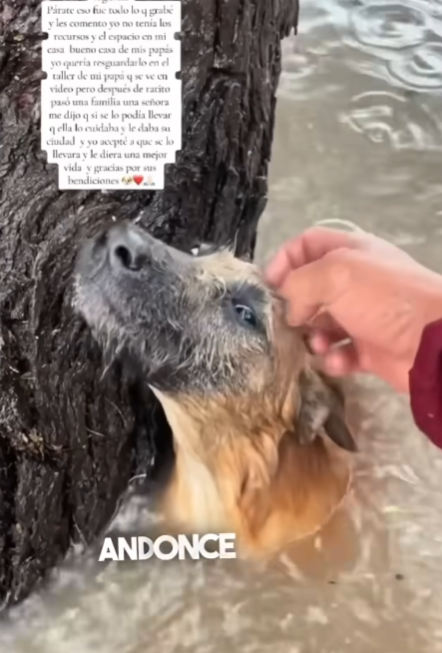
The rescuer then reached out again and carefully touched the dog’s wet head.
This time, the animal allowed contact.
It was a small but meaningful change.
The man could now move closer without provoking the same immediate reaction.
He carefully positioned his arms around the dog’s body, preparing to lift him from the water.
The account describes the dog becoming calmer as the rescuer handled him.
Although no one can know exactly what the animal understood in that moment, his behavior allowed the rescue to continue.
The man finally had an opportunity to carry him away from the tree.
Carried Away From the Flooded Tree
With the dog secured in his arms, the rescuer began moving back through the water.
The animal no longer needed to maintain his position against the trunk.
He rested against the man’s shoulder as they made their way toward safety.
The journey still required care.
Floodwater can conceal uneven ground, debris, and unexpected changes in depth.
A person carrying an animal may also have reduced balance and limited use of their hands.
The account describes the man successfully navigating the flooded area while holding the dog close.
Eventually, they reached a safer location.
The rescue had removed the immediate danger of the dog remaining stranded beside the tree.
For the animal, the change was significant.
He could finally rest without having to struggle against the surrounding water.
Warmth and Shelter After the Rescue
Once the man brought the dog into shelter, he began drying him.
The animal was still trembling after his experience in the flood.
A wet dog may lose body heat quickly, particularly after prolonged exposure to cool water.
Drying the coat and providing a sheltered resting space can help prevent further heat loss.
However, animals rescued from flooding may also require veterinary assessment.
Potential concerns include exhaustion, injuries, exposure to contaminated water, and problems associated with low body temperature.
The source account does not provide detailed veterinary findings or describe a specific medical treatment plan for this dog.
It does show that he reached shelter and received attention after the rescue.
The man gave him a protected place to recover from the immediate experience.
The difficult journey through the flooded neighborhood was over.
A New Routine Begins
The story did not end when the dog reached dry ground.
In the weeks that followed, he remained with his rescuer and gradually adjusted to life indoors.
The once-frightened animal became more comfortable around the man.
He began following him through the house and resting peacefully nearby.
These changes developed over time.
A dog recovering from a stressful event may need a predictable routine and opportunities to become familiar with new surroundings.
Regular meals, a comfortable resting area, and gentle interactions can help establish that routine.
Allowing an animal to approach voluntarily is also important.
For this dog, the transition from a flooded street to a protected home created opportunities for positive experiences.
He no longer needed to remain on alert beside a tree surrounded by water.
He could rest, explore, and become familiar with the person caring for him.
From Defensive Behavior to Companionship
One of the most memorable parts of this rescue is the contrast between the dog’s initial reaction and his later behavior.
During the flood, he snapped when the stranger reached toward him.
After spending time in a safer environment, he became a gentle companion who followed his rescuer around the house.
The change illustrates why an animal’s behavior during an emergency should not define its entire personality.
Fear, pain, exhaustion, and unfamiliar surroundings can influence how a dog responds.
A calmer environment may reveal very different behavior.
The account describes the rescued dog sleeping peacefully and showing affection toward his caregiver.
His tail wags became part of their daily routine.
These ordinary moments represented the lasting outcome of the rescue.
The man had not simply removed an animal from floodwater.
He had also given him a place where he could settle and build trust.
Why Flood Rescue Requires Careful Planning
Although this rescue ended successfully, entering floodwater can be dangerous.
Moving water may be stronger than it appears, and submerged streets can hide open drains, damaged surfaces, or sharp debris.
Floodwater may also contain contaminants.
People should avoid entering hazardous water without appropriate training and protective equipment.
When an animal is stranded, contacting local emergency services or an experienced animal rescue organization is often the safest option.
Providing an accurate location and describing the animal’s position can help responders prepare.
Rescuers must also consider the animal’s behavior.
A frightened dog may resist handling, even when a person is trying to help.
Suitable equipment and calm handling can reduce risks for both parties.
The man’s experience demonstrates why patience matters, but it should not encourage untrained people to enter dangerous flood conditions.
Protecting human safety remains essential during every animal rescue.
Preparing Pets for Flood Emergencies
The story also highlights the importance of planning for pets before severe weather arrives.
Owners living in flood-prone areas should include animals in household evacuation plans.
A secure carrier, leash, identification tag, and current microchip registration can help keep pets safe during an emergency.
Preparing food, drinking water, medication, and basic supplies in advance may also make evacuation easier.
Animals should not be left in areas where rising water could trap them.
If evacuation becomes necessary, bringing pets to a suitable safe location early can reduce the risk of separation.
These precautions cannot prevent every emergency, but they can make a meaningful difference.
For the dog in this story, help arrived when he was already stranded.
His experience shows how quickly familiar surroundings can become dangerous during flooding.
A Lasting Bond After the Flood
Weeks after the rescue, the dog’s circumstances looked very different.
He was no longer surrounded by moving water.
He had a dry place to sleep and a familiar person nearby.
The account describes him following his rescuer around the house and resting comfortably in his new environment.
His relationship with the man developed through daily care rather than a single dramatic moment.
That is an important part of animal rehabilitation.
Removing immediate danger is the first step, but a stable routine can help a rescued animal adjust afterward.
For this dog, the man who approached him beside the flooded tree became a trusted companion.
The frightened reaction that complicated their first meeting did not prevent them from building a bond.
Summary
A dog became stranded beside a partially submerged tree after floodwater covered a neighborhood.
A local man approached through waist-deep water, but the frightened animal initially snapped when he reached toward him.
Rather than forcing contact, the rescuer paused, spoke gently, and tried again.
The dog gradually allowed him closer, enabling the man to lift him from the water and carry him to safety.
After reaching shelter, the animal was dried and given a protected place to rest.
Over the following weeks, he became increasingly comfortable in his new home and developed a close relationship with his rescuer.
The story highlights the importance of patient animal handling, responsible flood safety, and continued care after an emergency.
Most importantly, it shows that a frightened dog’s first reaction does not have to determine the relationship that follows.
With time, safety, and gentle attention, the animal who once resisted help became a peaceful companion to the person who carried him out of the flood.






