A quiet open space can feel enormous when you are very small.
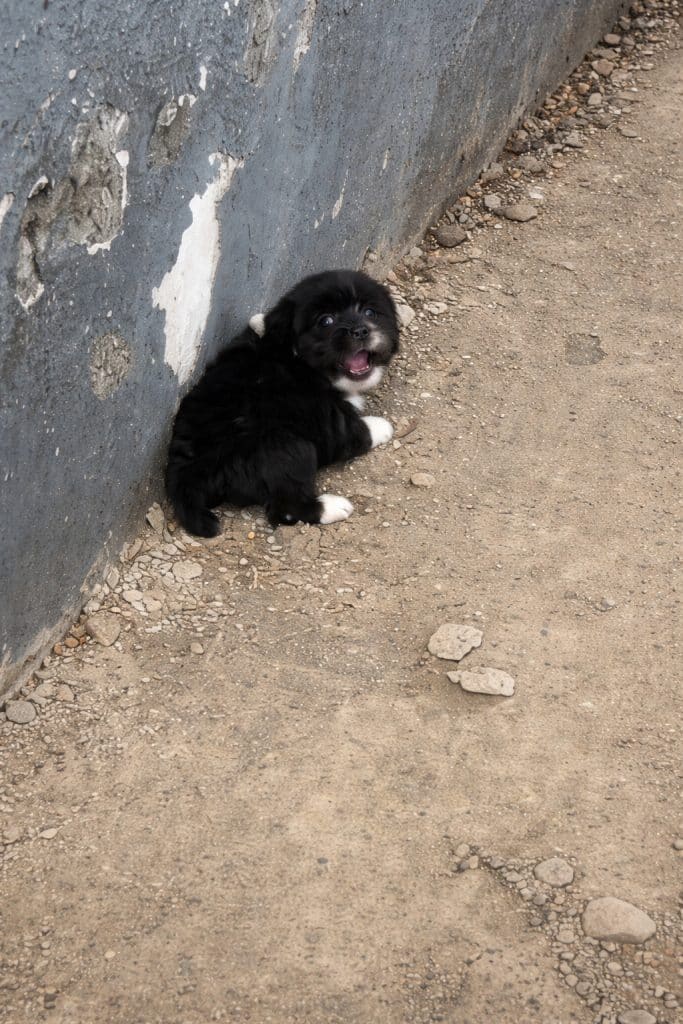
That is the first impression created by the sight of a tiny puppy curled against an aging concrete wall. Sandy ground stretches around the little animal, leaving almost nothing nearby that could offer comfort or protection. Against such a wide backdrop, the puppy appears even smaller.
There is no busy crowd and no dramatic commotion.
There is simply a young dog waiting.
Then the puppy begins to cry.
Video Alone Against the Wall A Tiny Puppy’s Silent Call for Help
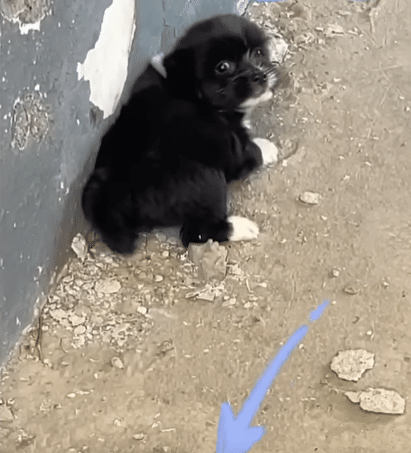
The high-pitched calls travel across the open space as the little animal looks from side to side, apparently searching for something familiar. Perhaps it is looking for its mother. Perhaps it is reacting to unfamiliar surroundings.
The video cannot answer those questions.
What it clearly shows is a vulnerable puppy alone in an environment where it needs someone to notice.
A Tiny Voice Breaks the Silence
Young puppies depend heavily on appropriate care, particularly during the earliest stages of life. They need suitable nutrition, shelter, warmth, supervision, and protection from environmental hazards.
The puppy beside the wall appears to have none of those comforts immediately available.
Its calls repeatedly break the silence.
The sound does not resemble playful barking. Instead, the puppy appears unsettled, frequently looking around while remaining close to the wall.
It would be easy to create an elaborate story about what the animal might be thinking, but we cannot know that from a short video.
What we can see matters enough.
This is a very small animal in an exposed location, and its behavior suggests that it is uncomfortable with the situation.
Sometimes that is all the information needed to recognize that an animal deserves attention.
The Wall Becomes Its Only Sense of Shelter
With nowhere obvious to hide, the puppy presses itself closer to the concrete wall.
The wall cannot provide everything a young dog needs, but in an otherwise open area, it offers at least one solid boundary.
The puppy remains tense and watchful.
Every unfamiliar sound or movement seems significant when there is no familiar companion nearby.
This image creates a powerful contrast.
The landscape is broad.
The puppy is tiny.
The surroundings are quiet.
Its calls are sharp and noticeable.
That contrast is what makes the scene memorable without requiring graphic or sensational details.
The puppy does not need dramatic storytelling to communicate vulnerability. Its size and circumstances already tell us enough.
A Story Without an Immediate Rescue
Many animal stories follow a familiar pattern.
Someone discovers an animal in need. A rescue follows. Veterinary care begins. Weeks later, photographs reveal an incredible transformation.
This particular clip is different.
There is no confirmed rescue shown in the material provided.
No veterinarian enters the frame.
No new family appears at the end.
The camera simply records the puppy as it waits.
That absence of resolution gives the scene a different kind of importance.
Viewers cannot immediately move from concern to relief. Instead, they are left with an uncomfortable question: what happens when a vulnerable animal is noticed, but help has not yet arrived?
That question extends far beyond one puppy.
Why Awareness Is Only the Beginning
Seeing an animal in possible distress can create an immediate emotional response.
But awareness becomes more meaningful when it leads to responsible action.
If someone encounters a very young puppy alone outdoors, the situation should be assessed carefully. The animal may be separated from its mother temporarily, genuinely abandoned, lost, or living near other dogs that are not immediately visible.
Rushing toward a frightened animal is not always the safest response.
Observing from an appropriate distance, checking the immediate environment, and contacting experienced animal welfare professionals or a veterinarian can help determine what should happen next.
The goal is not simply to feel sympathy.
It is to turn concern into thoughtful help.
Small Animals Depend on Human Decisions
A young puppy has limited ability to change its circumstances independently.
It cannot search online for a shelter.
It cannot call a veterinary clinic.
It cannot explain whether it has eaten recently or whether its mother is nearby.
Its options are limited to instinctive behaviors such as staying close to perceived shelter, moving around, or calling out.
That reality places responsibility on the people who encounter vulnerable animals.
Sometimes intervention means contacting a local rescue organization.
Sometimes it means seeking veterinary guidance.
Sometimes the best first action is simply remaining nearby long enough to understand the situation rather than making assumptions.
Whatever the circumstances, responsible attention can make an enormous difference.
A few minutes of someone’s time may become the first step toward food, shelter, medical evaluation, or reunion with a mother or caregiver.
The Importance of Not Assuming the Full Story
Short animal videos can be emotionally powerful, but they also provide limited context.
We see a puppy alone beside a wall.
We hear its calls.
We observe its cautious movements.
What we do not know is equally important.
The source material does not establish exactly how the puppy arrived there, how long it had been alone, whether its mother was nearby, or what happened after the recording ended.
Responsible storytelling should preserve that uncertainty.
Why?
Because compassion does not require exaggeration.
The visible reality is already meaningful. A vulnerable young animal appears alone and unsettled in an exposed area.
Adding unsupported details would not make the story more important. It would simply make it less reliable.
Sometimes the strongest story is the one that knows where the facts end.
What Responsible Help Can Look Like
Anyone who discovers a vulnerable puppy should consider both urgency and safety.
Very young animals may have needs that are difficult for an inexperienced person to assess. Their nutritional requirements can differ significantly from those of adult dogs, and weakness or unusual behavior may require professional evaluation.
That is why veterinary professionals and experienced animal rescue organizations can be valuable resources.
They can help determine whether an animal needs immediate medical attention and what kind of care is appropriate.
People should also be cautious when approaching unfamiliar dogs, even very small ones. Fear can affect behavior, and frightened animals may try to escape or protect themselves.
Calm movements, patience, and professional guidance are usually more useful than creating additional stress.
Compassion works best when it is paired with good judgment.
Sharing Can Help, but Accuracy Matters
Social media can play a useful role when animals need assistance.
A photograph or video can reach local residents, rescuers, shelters, and people who may recognize the animal.
But sharing responsibly matters.
Accurate location information provided privately to legitimate rescuers, reliable contact details, and verified updates can be far more useful than sensational captions or speculation.
Online attention should serve the animal rather than simply turning its situation into content.
The difference is intention.
Are we sharing because an animal needs practical help, or are we simply trying to generate a reaction?
For a vulnerable animal, useful information is worth far more than dramatic language.
The Puppy Beside the Wall Becomes a Reminder
The video may be short, but the image stays with you.
A tiny puppy.
A weathered wall.
An enormous stretch of empty ground.
And a voice calling into the space around it.
We do not need to know exactly what the puppy was thinking to understand the larger message.
Vulnerable animals cannot explain their circumstances in human language. They depend on people to recognize changes in behavior, notice unsafe environments, and seek appropriate help when necessary.
That begins with paying attention.
Not every person can adopt a stray animal.
Not everyone can volunteer at a shelter.
But almost anyone can choose not to look away when something clearly deserves a closer look.
Compassion often starts there.
Not with a grand rescue.
Not with applause.
Just with someone stopping.
Why Quiet Moments Still Matter
There is a temptation to believe that meaningful animal stories require extraordinary transformations.
They do not.
Sometimes the most important moment happens before the transformation begins.
It happens when an overlooked animal becomes visible to someone.
The puppy in this video has no confirmed happy ending in the information provided, and inventing one would undermine the very reason the scene matters.
Instead, its unfinished story leaves viewers with responsibility rather than resolution.
The next vulnerable animal someone notices may be frightened, lost, hungry, or simply separated from where it belongs.
The first step remains remarkably simple.
Pay attention.
Then, when help is needed, choose a responsible way to act.
Summary
A tiny puppy was filmed curled against an old concrete wall in a wide, sandy area. The young dog repeatedly cried out and looked around while remaining close to the wall, creating a striking picture of vulnerability and uncertainty.
The available material does not explain exactly how the puppy arrived there or what happened afterward, so its story should not be embellished with an invented rescue or outcome.
Instead, the scene offers a broader reminder about responsible animal welfare. Young puppies depend heavily on appropriate shelter, nutrition, supervision, and care. When someone discovers a vulnerable animal alone, calm observation and assistance from experienced rescuers or veterinary professionals can help determine the safest response.
Social media can also raise awareness, but accuracy and practical information matter more than sensational storytelling.
Ultimately, the puppy’s quiet moment beside the wall carries a simple message. Compassion begins with noticing. Sometimes changing an animal’s future starts with nothing more complicated than stopping, looking carefully, and deciding that a small life should not remain unseen.






