Some photographs tell a story without a single word. They capture a quiet moment, invite us to look more closely, and leave us thinking long after we have put down our phones.
A series of images featuring a small yellow-brown puppy did exactly that.
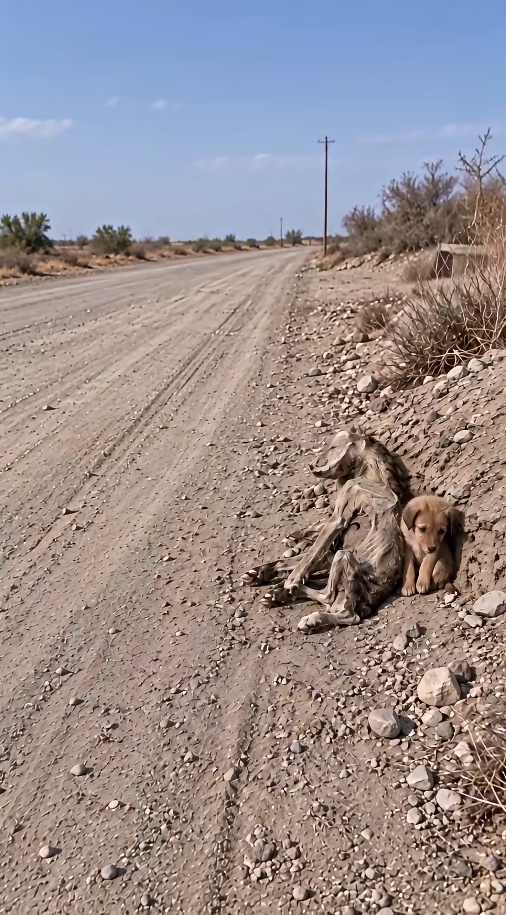
The photographs show the puppy sitting beside the remains of another dog in an outdoor setting. Rather than moving away, the little animal stays close, sometimes curling up nearby and directing its attention toward the spot.
When an overseas animal welfare page shared the images online, viewers began discussing the puppy’s circumstances. Many believed the other dog might have been its mother, although no official confirmation established their relationship.
Video A Silent Goodbye The Lonely Puppy That Touched Millions of Hearts Online
The photographs raised questions that the images alone could not answer. Was the puppy waiting for a familiar companion? Did it have anyone caring for it? What happened after the pictures were taken?
Although the puppy’s subsequent fate remains unknown, its story encouraged conversations about animal companionship, stray dog welfare, and the importance of helping vulnerable animals.
A Small Puppy in an Unforgettable Scene
At the center of the photographs is a young dog with yellow-brown fur.
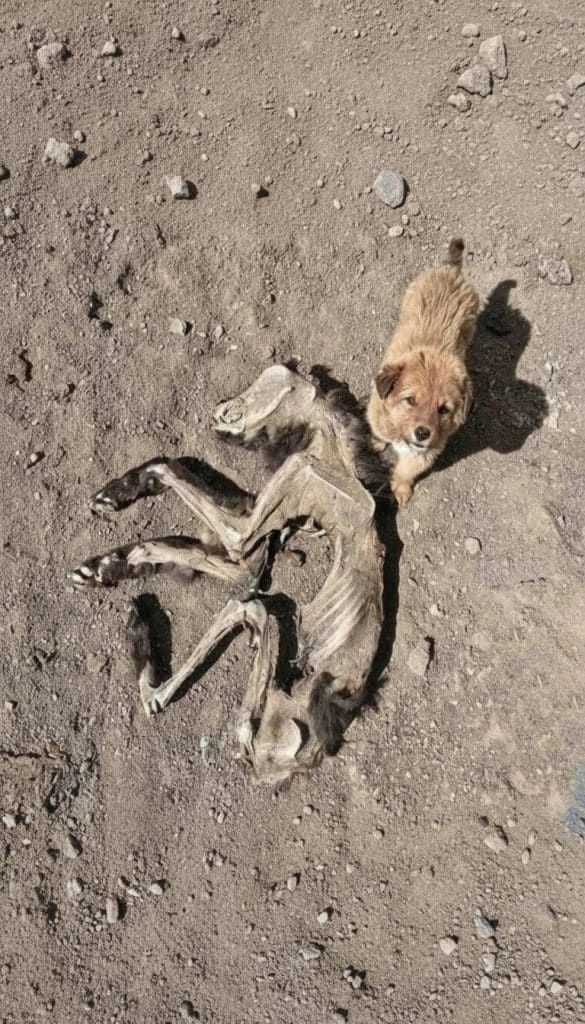
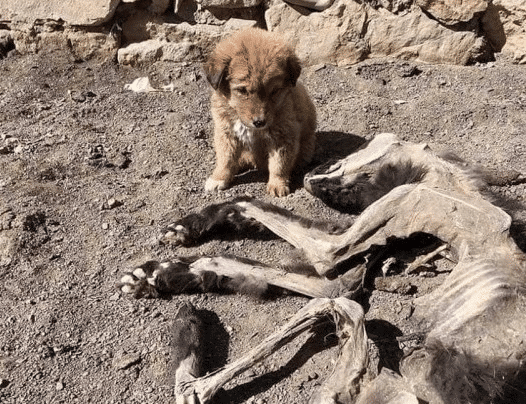
The puppy sits close to the remains of another dog, appearing calm and unusually still. In some images, it rests nearby rather than exploring its surroundings.
There is no dramatic action or elaborate setting. The emotional impact comes from the contrast between the puppy’s small size and the quiet scene around it.
For many viewers, the images suggested companionship and separation.
A young puppy normally depends on familiar animals and caregivers for food, warmth, protection, and social development. Seeing one alone in an uncertain environment naturally raises concerns about its welfare.
However, photographs cannot establish everything about an animal’s circumstances.
The images do not confirm how long the puppy remained there, whether it had access to food and water, or whether someone eventually rescued it.
Those unanswered questions became part of the public conversation.
How the Photographs Reached a Wider Audience
According to the original account, an overseas animal welfare page first shared the images before they circulated more widely online.
People responded with concern and sympathy.
Many comments focused on the possibility that the puppy had lost its mother. Others reflected on the challenges faced by young dogs living without dependable care.
The photographs also prompted viewers to share experiences involving rescued animals and the strong attachments they had observed between dogs.
What made the story memorable?
Perhaps it was the simplicity of the scene. The puppy was not performing a remarkable action. It was simply remaining close to another animal.
That quiet behavior gave viewers room to reflect on companionship, separation, and the responsibilities people have toward animals in need.
Was the Other Dog the Puppy’s Mother?
Many people interpreted the images as showing a puppy beside its deceased mother.
It is an understandable interpretation, particularly because young dogs often remain close to their mothers during their earliest stages of development.
However, the original account does not provide verified information about the relationship between the two animals.
The remains could have belonged to the puppy’s mother or another familiar dog. The photographs alone cannot establish which explanation is correct.
This distinction matters when sharing emotional animal stories.
A photograph can document what appears within the frame, but it cannot reliably reveal an animal’s history, intentions, or family relationships.
The puppy’s behavior is meaningful enough without adding details that have not been confirmed.
It was a young animal remaining beside another dog in circumstances that raised legitimate welfare concerns.
That alone deserved attention.
Understanding the Bonds Between Dogs
Dogs are social animals capable of forming strong relationships with humans and other dogs.
These connections develop through repeated interaction, familiarity, and shared experiences.
Puppies depend especially heavily on their mothers and caregivers during early development.
A mother dog provides nutrition, warmth, protection, and opportunities for social learning. Interactions with littermates also help puppies develop communication and behavioral skills.
When a young dog loses access to familiar companions, its behavior may change.
Some dogs become quieter, seek familiar scents, show reduced interest in activities, or remain close to places associated with another animal.
However, behavior varies considerably between individuals.
It would be inaccurate to conclude exactly what the puppy in these photographs was experiencing emotionally.
What we can say is that canine companionship matters, and a young dog without reliable care may face serious practical challenges.
Why Young Stray Puppies Need Special Attention
Life outdoors can be particularly difficult for puppies.
Unlike healthy adult dogs, young animals have limited physical reserves and depend on appropriate nutrition, shelter, and protection.
Their needs change rapidly as they grow.
A puppy living without dependable care may struggle to find suitable food, avoid environmental hazards, and receive necessary veterinary attention.
Exposure to extreme temperatures, parasites, infectious diseases, and traffic can also create risks.
Age is an important consideration when deciding how to help.
Very young puppies may still require maternal care or specialized feeding, while older puppies have different nutritional and developmental needs.
For this reason, anyone who discovers a vulnerable puppy should seek guidance from a veterinarian or experienced animal rescue organization.
Well-intentioned assistance is most effective when it matches the animal’s actual needs.
The Power of Quiet Animal Stories
Many online animal stories rely on dramatic moments to capture attention.
This one resonated through stillness.
The puppy’s quiet presence encouraged viewers to consider the situation rather than focus on spectacle.
For people who have cared for pets, the scene may have recalled familiar experiences: a dog waiting by a doorway, resting beside a companion, or seeking comfort in a familiar place.
These associations help explain why animal photographs can create strong emotional responses.
People recognize behaviors that resemble experiences from their own lives.
Nevertheless, empathy should not replace accuracy.
The most responsible storytelling preserves the difference between what an image shows and what viewers believe it might mean.
In this case, the photographs show a puppy staying close to another dog’s remains. The puppy’s exact relationship with that dog and its later circumstances remain unverified.
Keeping those facts clear allows the story to remain compassionate without becoming misleading.
Turning Online Concern Into Meaningful Support
The photographs prompted conversations about stray animals and the challenges they face.
Some viewers discussed dogs they had rescued, while others expressed concern about animals living without protection.
Such responses can become valuable when they encourage practical action.
Supporting a reputable local shelter, volunteering with a rescue organization, or helping community animal welfare programs can make a meaningful difference.
People considering pet adoption should also think carefully about their ability to provide long-term care.
Dogs need more than affection. They require appropriate nutrition, veterinary attention, safe housing, exercise, and consistent companionship.
Adoption is a lasting responsibility, not simply an emotional response to a photograph.
For those unable to adopt, donating supplies, supporting veterinary care, or helping share verified rescue information can provide other ways to contribute.
Small, responsible actions can strengthen the support available to vulnerable animals.
What to Do When You Find a Puppy Alone
An unattended puppy may need assistance, but the appropriate response depends on the circumstances.
First, observe the environment from a safe distance.
If the puppy appears healthy and is in a protected location, its mother may be nearby. Removing it immediately without assessing the situation could separate them unnecessarily.
If the puppy appears weak, injured, exposed to danger, or unable to care for itself, contact an experienced rescue organization or veterinarian for guidance.
Avoid offering unsuitable foods or attempting medical treatment without professional advice.
If handling becomes necessary, approach gently and use appropriate precautions.
Young animals may be frightened, and unfamiliar handling can increase their stress.
Anyone encountering a puppy near a road should also consider their own safety and avoid entering traffic.
The goal is to provide effective assistance without creating additional risks.
An Unknown Ending That Still Carries Meaning
The original account does not establish what happened to the puppy after the photographs circulated.
There is no confirmed information about a rescue, adoption, veterinary examination, or permanent home.
Although viewers naturally hope that someone reached the puppy, presenting an imagined happy ending as fact would misrepresent the story.
Its known impact lies elsewhere.
The photographs encouraged people to consider the needs of young stray animals and the importance of companionship.
They also demonstrated how a simple image can bring attention to animal welfare without relying on graphic descriptions or sensational claims.
The puppy’s story remains unfinished in the available account, but the concern it inspired can still lead to meaningful action.
A Reminder That Compassion Begins With Awareness
It is easy to overlook animals when they become part of the familiar background of a busy street.
A stray dog resting near a building or a puppy wandering beside a road may attract only a passing glance.
Yet noticing an animal’s circumstances is often the first step toward helping.
The little puppy in these photographs became a reminder of that responsibility.
Its quiet presence encouraged people to think about animals that cannot communicate their needs in human language.
Compassion does not require us to invent an animal’s thoughts or assume every detail of its history.
It asks us to recognize vulnerability, respond thoughtfully, and support appropriate care.
That message extends far beyond one widely shared photograph.
Summary
A series of photographs showing a small yellow-brown puppy beside another dog’s remains circulated online after appearing on an overseas animal welfare page.
Many viewers believed the other dog might have been the puppy’s mother, although their relationship was never officially confirmed.
The puppy’s quiet behavior prompted widespread concern and conversations about animal companionship, separation, and the difficulties faced by young stray dogs.
Its fate after the photographs remains unknown.
The story highlights the importance of distinguishing verified details from emotional interpretations while recognizing the genuine welfare needs of vulnerable animals.
It also encourages practical support through responsible adoption, veterinary care, volunteering, and assistance to reputable rescue organizations.
Ultimately, the photographs remind us that meaningful compassion begins with paying attention.
Sometimes, a quiet moment is enough to encourage people to look more closely at the animals around them and consider how they can help.






