When a severely weakened puppy named Yizu arrived at a veterinary clinic late at night, the medical team faced an urgent challenge. He was malnourished, dangerously cold, and suffering from a serious infection in one of his hind legs.
The little dog appeared frightened by his unfamiliar surroundings. His condition made even the simplest movements difficult, and he needed immediate medical attention.
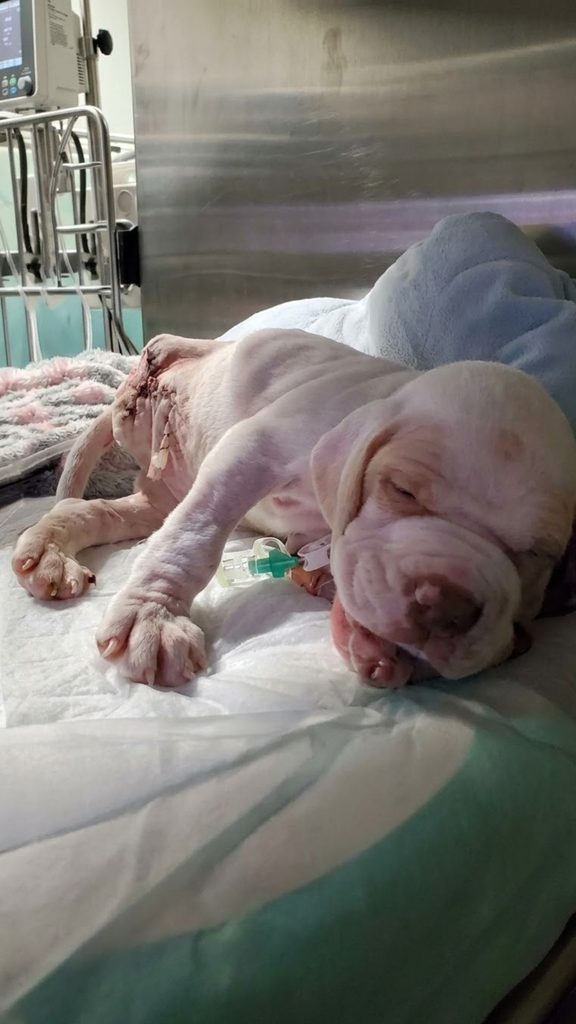
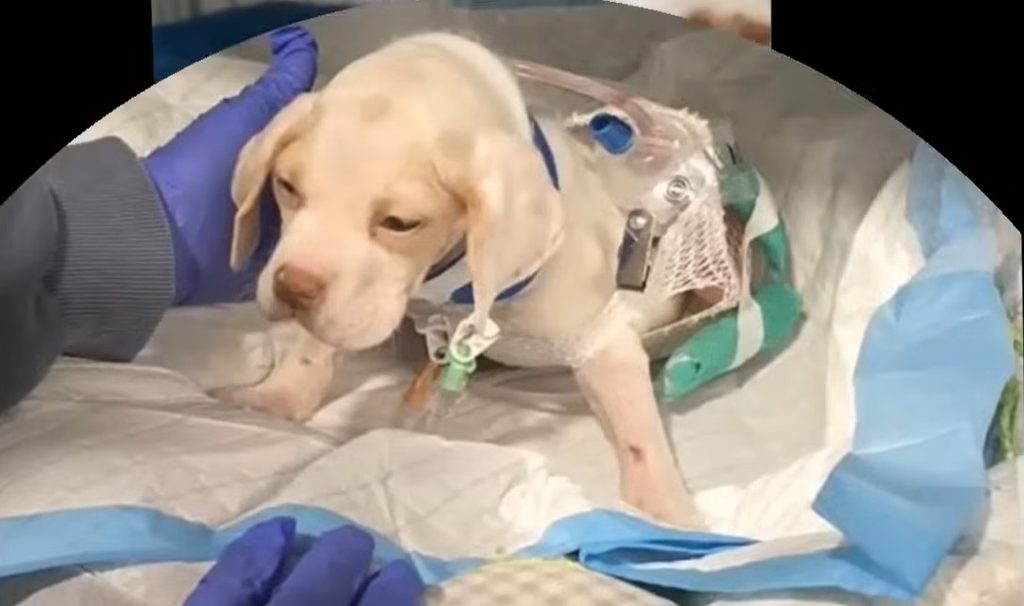
A veterinarian gently held his face during the examination. Yizu responded with a faint expression that the caregivers remembered as a small smile.
It was a touching moment before a difficult procedure.
The veterinary team determined that emergency surgery was necessary, and Yizu underwent an amputation to address his severely affected leg.
Video A Fragile Puppy Offered One Last Smile Before Slipping Into A Life Saving Coma
His recovery would require careful medical treatment, nutrition, and rehabilitation. Yet within days, the frightened puppy began eating, resting comfortably, and showing interest in toys.
Just seventeen days after his rescue, Yizu’s journey reached another important milestone: a local family welcomed him into their home.
His story shows how dedicated veterinary care and compassionate rehabilitation can help a vulnerable animal begin a new chapter.
A Fragile Puppy Arrives at the Veterinary Clinic
Yizu’s condition was serious when he reached the clinic.
He appeared extremely weak, and his body temperature had fallen to a concerning level. His hind leg also showed signs of a severe, untreated infection.
The medical team quickly recognized that he needed urgent care.
According to the rescue account, Yizu had previously been kept in a cramped cage with a large pet monitor lizard.
An incident involving the other animal left him injured, and he reportedly remained outside overnight without medical attention.
By the time he reached veterinary professionals, his condition had deteriorated considerably.
His caregivers also observed signs consistent with poor nutrition, adding another challenge to his treatment.
For a young puppy, inadequate nutrition can make recovery more difficult because the body needs sufficient energy and nutrients to maintain normal functions and support healing.
Yizu needed more than temporary comfort. He required a carefully managed medical response.
A Gentle Moment Before Emergency Surgery
Inside the examination room, Yizu appeared frightened and exhausted.
The unfamiliar lights, sounds, and handling created an overwhelming environment for an already vulnerable animal.
A veterinarian approached gently and supported his face during the assessment.
The puppy offered a faint expression that the caregivers interpreted as a smile.
Although a dog’s facial expression cannot establish exactly what he is feeling, the moment left a strong impression on the team.
They were caring for a small animal whose condition required immediate decisions.
The infection in Yizu’s hind leg was severe enough that the veterinary team determined amputation was necessary.
The procedure aimed to address the affected limb and give him a better opportunity to recover.
Surgery carried additional concerns because he was physically weak.
Nevertheless, the team proceeded with the treatment they considered necessary.
Emergency Amputation Gives Yizu a Chance to Recover
Yizu underwent surgery under anesthesia.
The veterinary team removed the severely affected hind leg and continued monitoring him during the early recovery period.
Amputation can be an appropriate veterinary treatment when a limb is extensively damaged or affected by a condition that cannot be adequately managed through other methods.
The decision depends on the animal’s overall health, the condition of the limb, and professional clinical assessment.
For Yizu, the procedure represented an important step toward addressing his immediate medical problems.
He survived the operation and woke in the recovery ward.
The clinic provided warm blankets and a quiet resting space while staff monitored his condition.
His first night after surgery marked the beginning of a demanding rehabilitation period.
He still needed nutritional support, pain management, and time to regain strength.
But he had passed through the most urgent stage of his treatment.
The First Days of Healing
During the days following surgery, Yizu received continued medical attention.
His caregivers monitored his comfort, supported his recovery, and provided medication as directed by the veterinary team.
He also needed time to adjust to moving with three legs.
For a young dog recovering from major surgery, rest is essential.
The surgical area must heal, and activity should remain appropriate for the stage of recovery.
Veterinarians may recommend controlled movement, wound monitoring, and follow-up examinations depending on the individual animal’s condition.
Yizu’s care team gradually introduced ordinary activities as he became stronger.
He began showing more interest in food, an encouraging change from his initial condition.
His appetite improved over the following days.
The puppy who had arrived at the clinic exhausted and withdrawn was beginning to participate in his daily routine.
A Small Toy Brings a New Kind of Comfort
As Yizu became more comfortable, his caregivers introduced a soft squeaky toy.
The little dog began showing interest in it.
This simple activity became another encouraging part of his recovery.
Toys can provide enrichment for dogs during rehabilitation, although play must remain appropriate for their medical condition.
For Yizu, gentle interaction offered an opportunity to engage with his surroundings without overwhelming him.
His caregivers also continued managing his comfort during the night.
Recovery after amputation is not always straightforward. Some animals require adjustments to medication, activity, or rehabilitation as healing progresses.
The rescue account describes Yizu gradually becoming more active while receiving continued attention.
His growing curiosity suggested that he was beginning to feel more comfortable in the clinic environment.
The toy was a small addition to his surroundings, but it gave him something enjoyable to focus on during recovery.
Community Support Helps the Puppy Move Forward
Yizu’s story began attracting attention from people in the local community.
As news of his rescue spread, supporters contributed toys and offered encouragement.
Their response gave the shelter and veterinary team additional resources for his continued care.
Animal rescue often depends on cooperation between veterinary professionals, volunteers, foster caregivers, and community members.
Medical treatment addresses immediate health concerns, while ongoing support helps organizations provide food, bedding, enrichment, and suitable accommodation.
For Yizu, the donated toys became part of his recovery environment.
His caregivers continued focusing on his physical progress while allowing him to explore gentle activities.
He was still a young puppy with the same basic needs as other dogs: nourishment, rest, companionship, and opportunities to play.
His missing leg changed how he moved, but it did not remove his interest in the world around him.
Ten Days After Surgery, Yizu Leaves the Clinic
By the tenth day, Yizu had made enough progress to leave the veterinary clinic for the main shelter facility.
He was eating solid food and had regained considerable strength.
The transfer represented an important milestone.
He no longer required the same level of intensive clinical care described during his first days.
At the shelter, he could continue recovering while becoming familiar with a more ordinary daily routine.
Staff provided attention and opportunities for gentle activity.
Yizu began moving around with growing confidence.
He also showed a playful side that had been difficult to imagine when he first arrived at the clinic.
The little dog enjoyed interacting with caregivers and exploring his surroundings.
His recovery was becoming visible not only in his physical condition but also in his behavior.
Learning to Enjoy Life on Three Legs
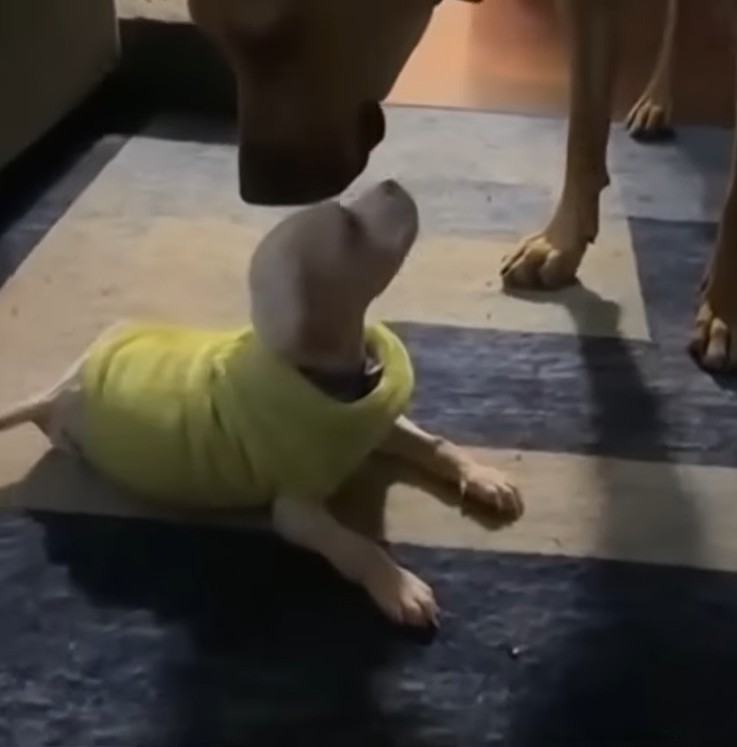
Yizu adapted to moving without one hind leg.
At first, his movements were less coordinated, but he gradually became more comfortable.
The account describes him hopping around corners and playing with shelter staff.
His tail wagged as he participated in games and sought interaction.
Many dogs can adapt well to life with three legs, although individual outcomes depend on factors such as overall health, body condition, age, and any additional orthopedic concerns.
Appropriate exercise and maintaining a healthy weight can help reduce unnecessary strain on the remaining limbs.
Yizu’s caregivers allowed him to develop confidence through everyday movement.
He did not need to perform extraordinary activities to demonstrate progress.
Walking, exploring, and playing comfortably were meaningful achievements in themselves.
The puppy who had once struggled to move was now enjoying ordinary moments with the people caring for him.
A Family Arrives on Day Seventeen
Seventeen days after Yizu’s rescue, another important change took place.
A local family visited the shelter and met the young dog.
They were drawn to his affectionate personality and playful behavior.
Despite the challenges he had experienced, Yizu had become a friendly companion who enjoyed human attention.
The family decided to adopt him.
This gave the puppy an opportunity to continue his recovery in a permanent home.
Adoption after major surgery involves responsibility.
A family caring for a three-legged dog should follow veterinary recommendations, monitor mobility, and provide suitable exercise and comfortable resting areas.
Regular veterinary care also remains important as the animal grows.
For Yizu, the adoption marked the beginning of a new chapter built around stability and companionship.
The rescue account does not provide detailed long-term medical updates, but it confirms that he left the shelter with his new family.
Why Rehabilitation Matters After Amputation
Yizu’s experience highlights the importance of continued care following major veterinary surgery.
Amputation addresses the affected limb, but rehabilitation helps an animal adjust to changes in movement and daily activity.
Caregivers may need to modify the home environment, particularly during the early recovery period.
Non-slip flooring, comfortable bedding, and controlled access to stairs can make movement easier.
Exercise should follow veterinary guidance and increase gradually as the animal becomes stronger.
Maintaining an appropriate body weight is also important for supporting mobility.
Equally valuable is allowing the dog to participate in enjoyable activities.
Play, companionship, and gentle exploration can contribute to a fulfilling life.
Yizu’s recovery demonstrates how medical treatment and everyday care work together.
His progress depended on more than the operation itself.
It also required nutrition, rest, monitoring, and people willing to support him through each stage.
A New Beginning for Yizu
Yizu’s journey began with an emergency veterinary visit.
He arrived weak, frightened, and in need of urgent treatment.
Over the following days, his circumstances changed.
He survived surgery, regained his appetite, developed confidence on three legs, and began enjoying toys and companionship.
Then a family welcomed him into their home.
His story does not suggest that every animal will recover on the same schedule. Medical outcomes and rehabilitation needs vary.
What it does show is the value of timely treatment and continued care.
For Yizu, seventeen days brought an extraordinary transition from a critical medical situation to the beginning of family life.
Summary
Yizu was a severely weakened puppy who arrived at a veterinary clinic with malnutrition, low body temperature, and a serious infection affecting one hind leg.
According to the rescue account, he had previously been kept in unsuitable conditions and had not received timely treatment after an injury.
Veterinary professionals performed an emergency amputation and provided continued medical care.
During recovery, Yizu gradually began eating, resting comfortably, and interacting with toys.
By day ten, he had become strong enough to transfer to the main shelter.
He adapted to moving on three legs and developed an affectionate, playful personality.
On day seventeen, a local family adopted him, giving him the opportunity to continue his recovery in a permanent home.
Yizu’s journey highlights the importance of responsible animal care, prompt veterinary treatment, patient rehabilitation, and compassionate adoption.
His missing leg became part of his life, but it did not prevent him from enjoying companionship, play, and a promising new beginning.






