Sometimes, the most inspiring animal stories unfold during life’s simplest moments. There are no dramatic rescues, extraordinary adventures, or grand celebrations. Instead, a quiet act of kindness reveals just how meaningful compassion can be.
In a touching video, a brown dog born or living without his two front legs stands upright while a caring man gently feeds him small pieces of food.
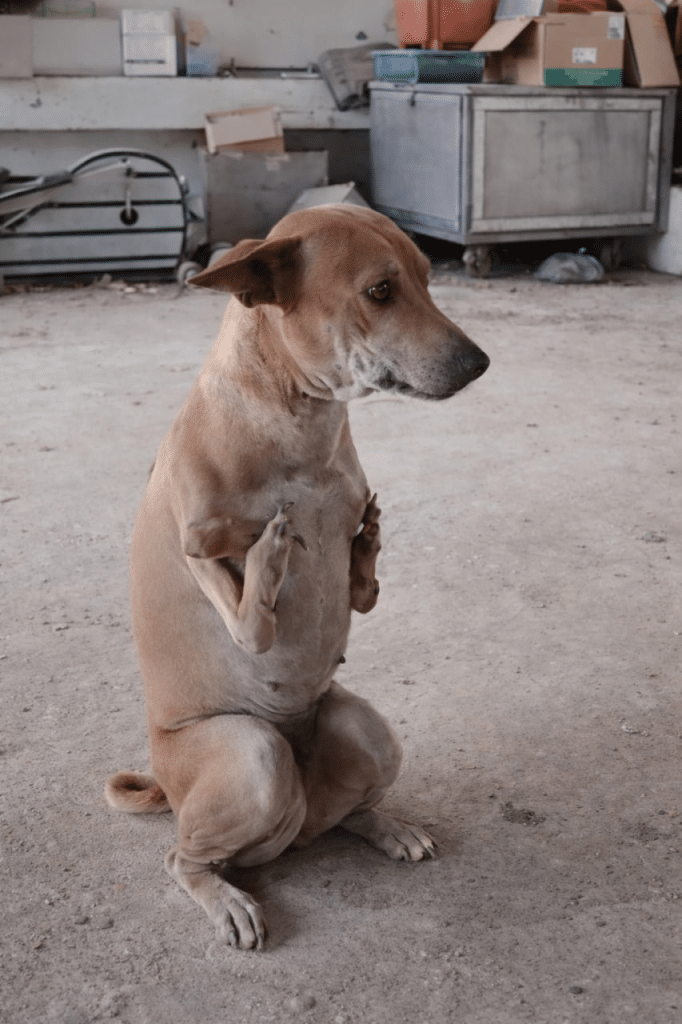
The dog balances confidently on his hind legs, patiently waiting for each bite. Beside him, the man remains calm and attentive, carefully adjusting his movements to accommodate his companion.
Their interaction offers a beautiful example of trust, patience, and responsible care for animals with disabilities.
Although the dog’s physical condition makes some everyday activities more challenging, his steady posture and relaxed behavior show how much he has adapted.
More importantly, the video reminds us that a meaningful relationship between humans and animals often develops through ordinary routines filled with understanding and affection.
Video Balanced on Two Legs, a Brown Dog Showed What Strength Can Look Like
A Remarkable Dog Who Has Learned to Adapt
The video begins with a simple but memorable scene.
A brown dog stands upright, balancing on his two hind legs without the support of front limbs.
His posture appears steady and controlled.
Rather than moving nervously, he remains calm while watching the man sitting beside him.
The dog’s ability to maintain this position suggests that he has become familiar with balancing in this way.
For most dogs, four legs provide stability during standing, walking, and eating.
Without front legs, everyday movements require different physical adjustments.
This little dog has developed a way to remain upright while interacting with his caregiver.
The video does not explain whether his condition resulted from birth differences, an injury, or another medical circumstance.
What viewers can clearly observe, however, is a dog participating comfortably in a familiar feeding routine.
A Gentle Man Offers Food With Patience
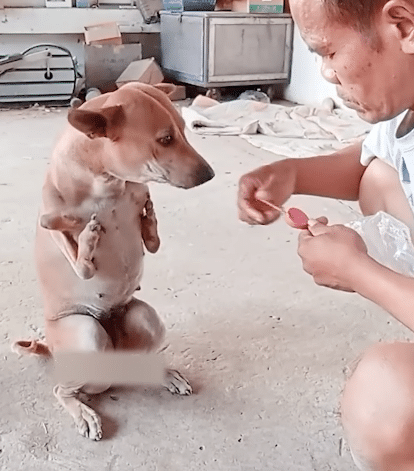
Beside the dog sits a man holding a small plastic bag containing food.
He carefully separates the food into manageable pieces before offering them individually.
His movements are slow and deliberate.
He does not rush the dog or expect him to eat quickly.
Instead, he waits for the animal to accept each portion.
The dog watches attentively, maintaining his balance as the man brings the food closer.
This peaceful interaction highlights the importance of adapting everyday care to an animal’s physical abilities.
For a dog with limited mobility, even reaching a food bowl may require additional effort.
Thoughtful assistance can make mealtimes more comfortable.
The man’s calm approach allows the dog to focus on eating without unnecessary pressure.
Their shared routine reflects a relationship built around patience and familiarity.
Trust Grows Through Small Everyday Moments
Trust between a dog and a caregiver rarely develops through a single dramatic event.
More often, it grows through repeated experiences.
Regular meals, gentle handling, familiar voices, and predictable routines help animals understand their surroundings.
In the video, the brown dog appears comfortable accepting food directly from the man’s hand.
He waits patiently rather than rushing forward.
The man responds by offering another small portion.
Their movements seem coordinated, almost like a quiet conversation.
Neither needs to communicate through words.
The dog watches.
The man responds.
Together, they complete a familiar activity.
This interaction illustrates how positive daily experiences can strengthen the relationship between people and their pets.
For animals with physical disabilities, consistent care may be especially valuable because some ordinary activities require additional assistance.
Learning to Balance With Two Hind Legs
A dog’s body normally distributes weight across four limbs.
When both front legs are absent, the animal must rely on different movement patterns.
Maintaining an upright position requires balance, muscle control, and coordination.
The brown dog in the video demonstrates an impressive ability to remain steady while receiving food.
He makes small adjustments to his posture as necessary.
His movements appear controlled rather than hurried.
However, every dog’s physical abilities are different.
Not all dogs missing their front limbs can comfortably stand upright, and this position may not be appropriate for every animal.
Veterinary professionals can assess mobility, joint health, and the potential need for supportive equipment.
Appropriate assistance helps reduce unnecessary strain while encouraging safe movement.
The dog’s ability to balance is remarkable, but his long-term comfort remains more important than any particular physical achievement.
Why Compassionate Care Makes a Difference
Caring for a dog with a disability often requires creativity and patience.
Simple tasks may need adjustments that other pet owners rarely consider.
Feeding arrangements, sleeping areas, exercise routines, and household surfaces can all influence an animal’s comfort.
For example, some dogs benefit from elevated food bowls or supportive feeding positions.
Others may need mobility equipment, non-slip flooring, or assistance navigating their surroundings.
The best approach depends on the dog’s individual condition and veterinary recommendations.
In this story, the caregiver offers food directly to the dog in small portions.
His attentive behavior suggests that he understands the importance of allowing the animal to eat at a comfortable pace.
Rather than treating the dog’s physical difference as an obstacle to companionship, he makes room for it within their daily routine.
That simple decision creates a meaningful moment of connection.
A Quiet Feeding Routine With a Powerful Message
What makes the video memorable is its peaceful atmosphere.
The man sits close to the dog.
The dog remains balanced and attentive.
Food passes gently from one hand to a waiting mouth.
Nothing about the interaction feels hurried.
There is no complicated performance or dramatic display.
Instead, viewers witness a familiar responsibility carried out with unusual care.
Feeding a pet is something millions of people do every day.
Yet for this particular dog, the routine requires thoughtful cooperation.
The man provides assistance, while the dog responds with patience.
Together, they demonstrate how ordinary activities can become opportunities to build trust.
Their interaction also encourages viewers to look beyond physical differences and recognize the personality of the animal receiving care.
Understanding the Needs of Dogs With Disabilities
Dogs with missing limbs or mobility limitations can have very different needs.
Some adapt well to alternative movement patterns.
Others benefit from wheelchairs, supportive harnesses, rehabilitation, or environmental modifications.
A veterinarian can help determine which options are appropriate.
Regular health monitoring is important because unusual movement patterns may place additional demands on certain muscles and joints.
Owners should also consider nutrition, body weight, and opportunities for comfortable rest.
Maintaining a healthy weight can be particularly helpful for dogs whose remaining limbs carry greater physical demands.
Mental enrichment matters as well.
Gentle play, companionship, and suitable activities help keep dogs engaged.
The brown dog’s feeding routine represents only one part of his daily life, but it illustrates how individualized attention can support his comfort.
Every animal deserves care that reflects its abilities and needs.
Love Is Often Expressed Through Consistency
People sometimes imagine that caring for a special-needs animal requires extraordinary gestures.
In reality, meaningful support often comes from small actions repeated every day.
Preparing meals carefully.
Offering assistance without rushing.
Providing a comfortable place to rest.
Recognizing when an animal needs a break.
These habits create a predictable environment where a pet can feel secure.
The man in the video demonstrates this principle through his patient feeding technique.
He remains attentive while the dog accepts each piece of food.
His care is practical rather than dramatic.
The result is a peaceful interaction that communicates affection through action.
For many pets, consistent routines and gentle treatment form the foundation of a trusting relationship.
A Dog Who Deserves to Be Seen Beyond His Disability
The brown dog’s missing front legs are immediately noticeable.
However, the longer viewers watch, the less important that physical difference becomes.
Attention shifts toward his calm expression, careful balance, and willingness to interact.
He is not simply a dog with a disability.
He is an individual with habits, preferences, and a relationship with someone who cares for him.
His physical condition may shape how he moves, but it does not erase his need for comfort, nourishment, and companionship.
The video offers a valuable reminder that animals should not be defined entirely by their limitations.
They deserve thoughtful care and opportunities to enjoy life in ways suited to their abilities.
Sometimes, recognizing their individuality is the first step toward understanding what they truly need.
Finding Happiness in the Simplest Moments
Not every inspiring animal story needs a dramatic ending.
Sometimes, a few quiet minutes can communicate something lasting.
A brown dog stands patiently on his hind legs.
A man breaks food into small pieces.
They share a calm moment together.
The scene feels ordinary, yet it reveals the importance of kindness and understanding.
For the dog, this routine provides nourishment and familiar attention.
For the caregiver, it offers another opportunity to support a companion who depends on him.
Their connection demonstrates that meaningful relationships are built through presence, patience, and everyday responsibility.
The dog’s physical differences remain part of his life, but they do not define the entire story.
What matters most is the thoughtful care surrounding him.
Summary
A touching video shows a brown dog without his two front legs standing upright while a caring man gently feeds him.
The dog maintains his balance on his hind legs and calmly accepts small portions of food.
Beside him, the man remains patient, offering each piece individually and allowing the dog to eat at a comfortable pace.
Their peaceful interaction highlights the importance of trust, consistent routines, and compassionate care for animals with physical disabilities.
Although the video does not reveal the cause of the dog’s condition or his complete medical history, it shows how he has adapted to a familiar daily activity.
The story also emphasizes why dogs with mobility limitations may benefit from individualized feeding arrangements, veterinary guidance, and supportive environments.
Most importantly, it reminds us that kindness does not always require extraordinary actions.
Sometimes, love appears in a quiet room, through a gentle hand and a patient companion.
For this remarkable two-legged dog, a simple meal becomes a beautiful example of comfort, trust, and the lasting value of everyday care.