For nearly five years, Shanya’s world remained painfully small.
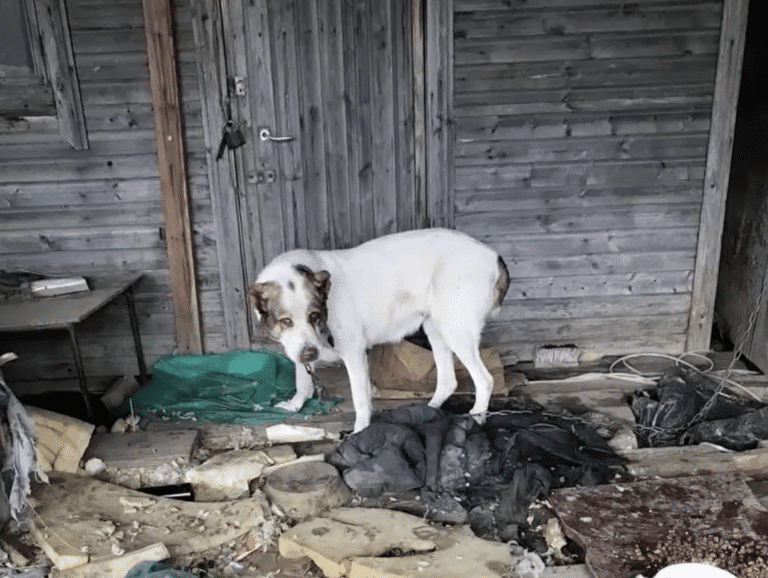
Her days passed in the same corner of a yard, surrounded by dirt and limited by a chain. While life continued beyond her reach, the little dog had few opportunities to explore, exercise, or experience the ordinary comforts that most companion animals enjoy.
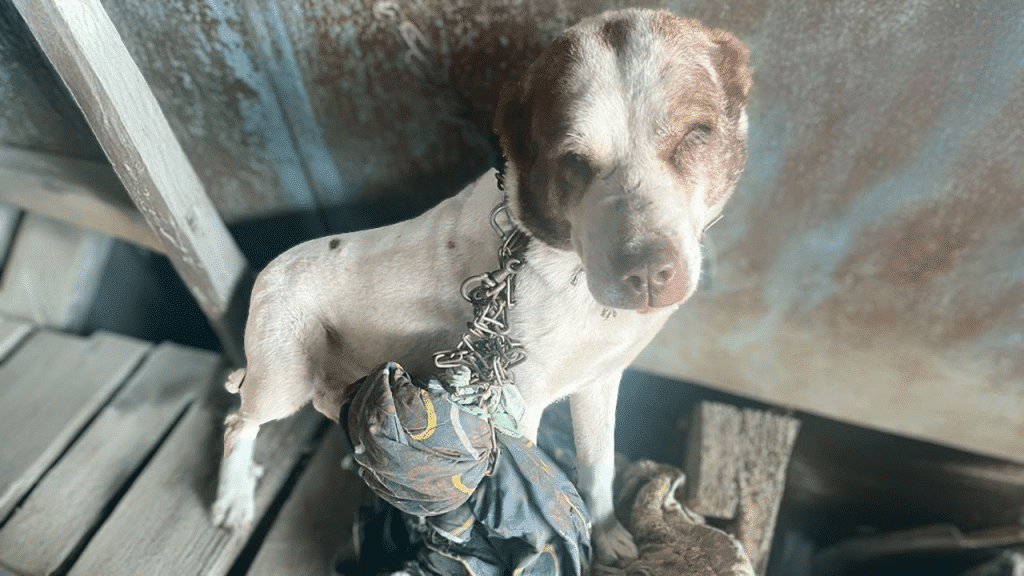
She did not know regular walks through grass.
She did not have a soft bed waiting indoors.
Most concerning of all, her cloudy eyes suggested that her vision was severely limited.
Yet Shanya’s story would eventually change because one person stopped long enough to notice her.
Video From Toxic Trauma to Triumph How Two Stray Dogs Found Second Chances Through Timely Compassion
A Quiet Dog Waiting in the Same Place
When Shanya was first noticed, her physical condition immediately raised concerns.
She appeared extremely thin. Her movements were slow and careful, and years of limited activity seemed to have affected her strength.
Her eyes were cloudy, making it difficult for her to navigate the world around her.
But her behavior was equally striking.
Shanya did not constantly pull against the chain or demand attention from people nearby. Instead, she remained remarkably still.
For an observer, that quietness could easily have made her less noticeable.
Sometimes animals in difficult circumstances do not respond in dramatic ways. They may simply become cautious and withdrawn.
That is why paying attention matters.
Shanya did not need to make a loud request for someone to recognize that she needed help.
A Nurse Notices What Others Had Overlooked
The turning point came when a nurse happened to see Shanya while passing the property.
Something about the little dog made her stop.
Rather than continuing on her way, the woman looked more carefully at the situation and decided to find out whether she could help.
According to the account, she spoke with the people responsible for the property and eventually persuaded them to allow Shanya to enter rescue care.
It was a simple decision with enormous consequences.
When the woman finally lifted Shanya into her arms, the dog reportedly did not struggle.
She rested quietly against her rescuer.
We cannot know exactly what Shanya understood at that moment, but one thing had undeniably changed.
After years in the same limited environment, she was finally leaving.
Safety Begins With Simple Comforts
At the shelter, caregivers introduced Shanya to her new surroundings gradually.
Everything was different.
There were soft blankets beneath her body, clean water nearby, regular meals, and people speaking gently around her.
For a dog accustomed to a restricted environment, even positive changes can require adjustment.
So the rescue team did not expect an instant transformation.
They gave her time.
Veterinary professionals also examined Shanya to better understand her health needs. According to the rescue story, years of limited mobility had affected her muscles and joints, with one leg requiring additional attention.
Her vision presented another important concern.
The cloudiness in her eyes had greatly limited what she could see, but the veterinary assessment reportedly brought an encouraging possibility.
Her severe visual impairment might be treatable.
Veterinary Treatment Offers New Hope
The rescue account states that veterinarians believed a procedure could potentially improve Shanya’s eyesight.
After appropriate preparation, she underwent treatment.
Then came recovery.
Her caregivers kept her in a calm environment while monitoring her progress. There was no reason to rush. After spending years in difficult circumstances, Shanya needed time for both her body and her confidence to adjust.
Eventually, something encouraging happened.
According to the story, Shanya began responding to light after the procedure.
Her treatment had improved her ability to see.
For the people caring for her, this represented much more than a medical milestone.
The dog who had spent years living within an extremely limited world could now begin experiencing her surroundings in an entirely new way.
Learning About the World at Her Own Pace
Shanya did not suddenly become a completely different dog after treatment.
Her transformation happened gradually.
At first, she moved carefully through unfamiliar spaces.
That made sense.
Seeing more clearly does not instantly teach an animal what every object, movement, or environment means. Shanya still had to learn that her new surroundings were safe.
Her caregivers allowed her to progress at her own pace.
She explored blankets beneath her paws.
She began lifting her head when familiar people entered.
She paid more attention to activity around her.
Day by day, curiosity started replacing some of her uncertainty.
This is an important part of animal recovery that dramatic rescue stories sometimes overlook.
Physical treatment can solve one problem, but emotional adjustment often follows a different timetable.
Patience gave Shanya the freedom to learn without pressure.
Trust Grows Through Predictable Care
How do you explain safety to a dog?
You cannot simply tell her that tomorrow will be better.
Instead, you demonstrate it through routine.
Meals arrive consistently.
Fresh water remains available.
A comfortable bed is still there the next morning.
Familiar caregivers return.
Gentle hands continue to be gentle.
For Shanya, these ordinary experiences became building blocks for trust.
She no longer needed to spend every day in the same neglected corner.
Her environment became predictable for a different reason.
Instead of predictable isolation, she experienced predictable care.
That distinction changed everything.
The First Experience With Snow Becomes a Milestone
One particularly memorable moment reportedly occurred during winter.
A caregiver carefully brought Shanya outside to experience snow.
Initially, she seemed uncertain.
The cold, unfamiliar texture beneath her paws was completely different from the surfaces she knew.
She paused.
Then she took another step.
And another.
Soon Shanya was carefully exploring the snowy ground.
To anyone else, walking through snow might seem completely ordinary.
For her, it represented something much larger.
She could move without a chain defining the boundary of her world.
She could choose where to step.
She could stop, explore, and continue when she felt ready.
The importance of that moment was not really the snow.
It was choice.
Freedom Can Be Found in Ordinary Things
Shanya’s new life was not built around extraordinary adventures.
Its greatest improvements were surprisingly simple.
She could sleep somewhere comfortable.
She could receive regular meals.
She could go for walks.
She could interact with familiar caregivers.
She could explore new surroundings.
These are everyday experiences, yet they represented a completely different standard of life from the one described before her rescue.
As her physical condition improved, her coat reportedly became healthier and her movement grew stronger.
Her personality also became more visible.
The quiet dog who once remained still in a forgotten corner began responding to familiar people with greater interest and trust.
Recovery was revealing the dog underneath years of isolation.
Why Long-Term Confinement Matters
Dogs need more than food and a physical place to exist.
Appropriate exercise, social interaction, veterinary care, mental stimulation, shelter, and opportunities to engage naturally with their environment all contribute to animal welfare.
Long periods of restrictive tethering can significantly limit those opportunities.
The specific effects vary between animals and circumstances, but prolonged isolation can affect physical conditioning and behavior.
Shanya’s story illustrates why responsible care involves looking at an animal’s entire quality of life.
A dog may technically occupy a yard and still lack important forms of care.
Responsible ownership means asking broader questions.
Is the animal comfortable?
Can the dog move appropriately?
Does the animal receive veterinary attention when needed?
Does it have protection from weather?
Does it receive positive social contact and opportunities for exercise?
Those questions matter because animal welfare is built through daily routines, not occasional attention.
Healing Does Not Follow a Deadline
One of the strongest lessons in Shanya’s journey is that recovery did not happen overnight.
First came removal from the restrictive environment.
Then veterinary evaluation.
Then treatment.
Then physical recovery.
Alongside all of that came the slower process of building confidence.
Progress appeared through small moments.
A comfortable rest.
A calm response to a caregiver.
A more confident step.
A curious glance toward something unfamiliar.
A walk outside.
Healing often works this way.
The changes that look small individually can become extraordinary when viewed together months later.
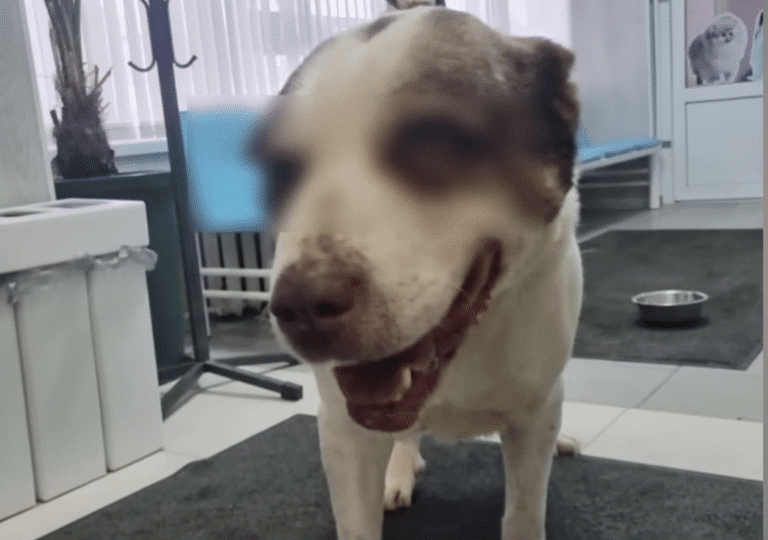
The Woman Who Chose to Stop
It is easy to focus on Shanya’s medical treatment because improving her vision represented such an important milestone.
But none of that could have happened without an earlier decision.
Someone noticed her.
The nurse could have continued walking.
Instead, she stopped and asked whether something could be done.
That decision connected Shanya with rescuers, veterinary professionals, appropriate treatment, and a safer environment.
Animal rescue often begins before anyone reaches a clinic.
It begins when someone recognizes that a situation deserves attention and chooses a responsible way to respond.
Shanya’s life did not change because she suddenly became louder.
It changed because someone finally listened to what her quiet condition was already communicating.
A Life No Longer Defined by a Chain
Today, according to the account, Shanya’s daily life looks remarkably different.
She has comfortable places to sleep, regular meals, walks, continued care, and familiar people around her.
Her world is larger now.
She can explore.
She can rest.
She can make choices about where to move.
Most importantly, she no longer spends every day confined to the same small patch of ground.
The past remains part of her story, but it does not have to define everything that follows.
Shanya’s transformation demonstrates what patient, consistent care can accomplish.
Not every improvement arrived dramatically.
Most arrived quietly, one ordinary day at a time.
Summary
Shanya reportedly spent nearly five years living in a restricted corner of a yard, with limited freedom and severely impaired vision. Her thin condition, cautious movement, and cloudy eyes raised concerns when a passing nurse finally noticed her.
The woman stopped, spoke with the people responsible for the property, and helped arrange for Shanya to enter rescue care.
At the shelter, Shanya received regular food, clean water, comfortable bedding, and veterinary attention. Professionals evaluated her physical condition and determined that treatment might improve her vision.
According to the rescue account, the procedure succeeded in improving her response to light, opening a new chapter in her recovery.
Shanya gradually became stronger and more curious. She learned to explore unfamiliar environments, recognize predictable routines, and trust the people caring for her. Even simple experiences, including walking through snow, became meaningful milestones.
Her journey offers a powerful reminder that animal rescue is rarely one dramatic event. Recovery is often built through medical care, patience, routine, responsible attention, and countless small acts of kindness.
For years, Shanya’s world barely changed.
Then one person stopped to notice her.
That single decision gave a quiet little dog something she had been missing for far too long: the opportunity to discover how much bigger her world could become.