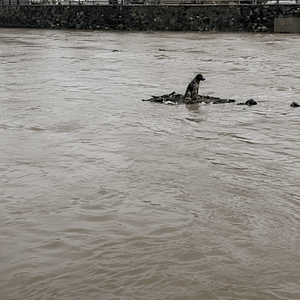
When severe flooding swept through a neighborhood, six frightened dogs found themselves trapped inside a small metal cage as muddy water rose around them.
The surrounding streets had disappeared beneath the flood. Homes were partially submerged, fences were barely visible, and debris floated through areas that had once been familiar.
But for these six dogs, the most immediate danger was inside their enclosure.
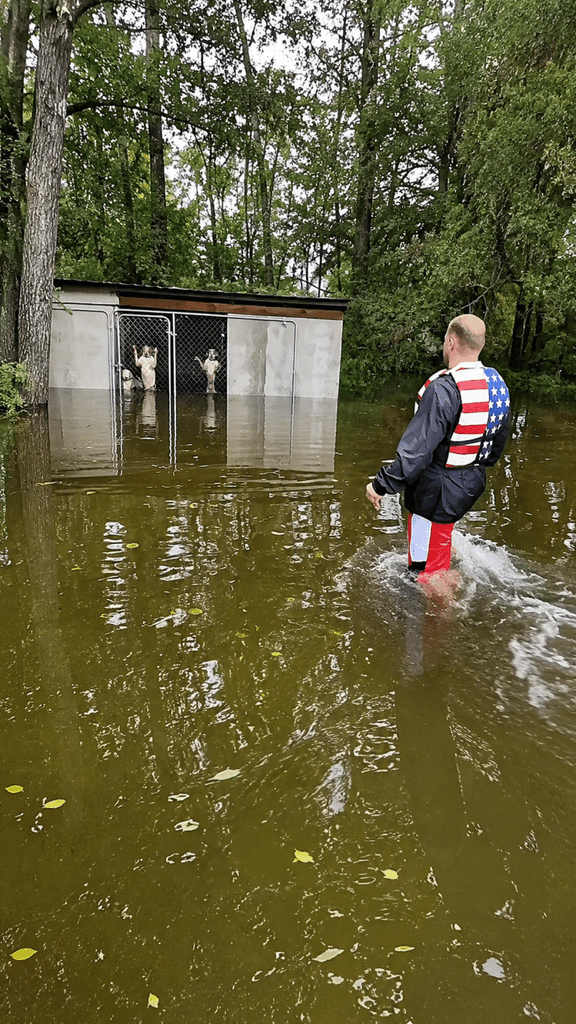
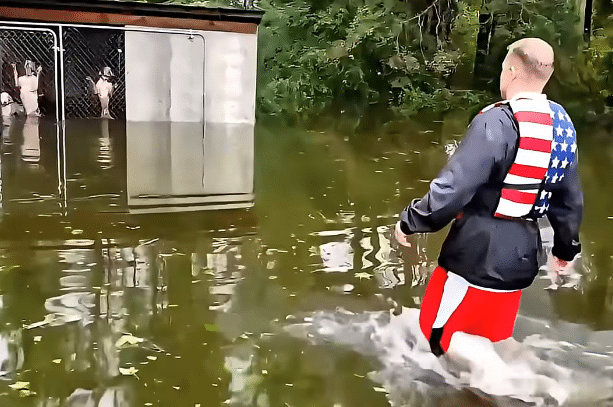
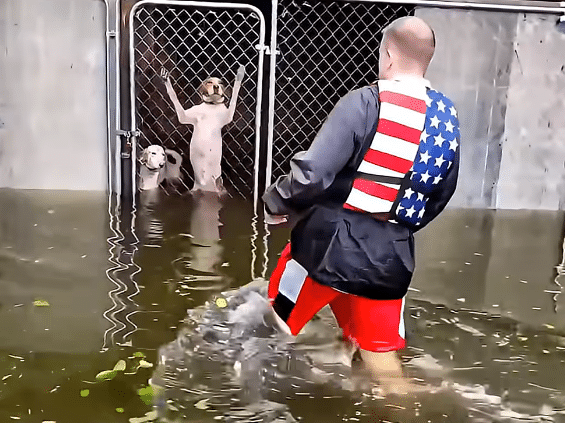
The water had risen so high that they were forced to stand on their hind legs, pressing against the metal bars to keep their heads above the surface.
They barked desperately as the flood continued surrounding them.
With no way to open the cage or reach higher ground, the animals depended entirely on someone noticing their situation.
Fortunately, a volunteer wearing a life vest spotted the trapped dogs and moved toward them through the floodwater.
What happened next became a powerful example of animal rescue, compassion, and the importance of helping vulnerable pets during natural disasters.
Video Floodwater Reached Their Necks Inside a Metal Cage And Six Dogs Had Almost Nowhere Left to Go
Six Dogs Face Rising Water Inside a Metal Cage
The storm had transformed the neighborhood into a landscape of muddy water and scattered debris.
Roads were no longer visible, and familiar paths had become difficult to navigate.
In the middle of the flooded area stood a small metal cage containing six dogs.
The enclosure offered almost no room to escape the rising water.
As the flood reached their necks, the dogs stretched upward, balancing on their hind legs to keep their faces above the surface.
Their bodies pressed together inside the confined space.
Some barked repeatedly, while others shifted position as they struggled to remain comfortable.
Unlike animals that could swim toward higher ground, these dogs had no way to leave.
The cage that should have provided shelter had become a dangerous trap.
Every additional rise in the water level increased the urgency of their situation.
They needed help, and they needed it quickly.
A Volunteer Notices the Dogs and Moves Toward Them
Amid the widespread flooding, a volunteer noticed the animals struggling inside their enclosure.
He was wearing a life vest, an important piece of safety equipment when working near dangerous water.
Without losing sight of the cage, he began carefully moving through the flooded area.
The journey was not simple.
Murky water concealed the ground beneath his feet, while debris and unstable surfaces created additional hazards.
Floodwater can make even familiar streets difficult to cross.
The volunteer continued making slow, deliberate progress.
As he approached, the dogs became increasingly vocal.
Their barking reflected the confusion and fear of being trapped in an unfamiliar situation.
Although help was arriving, the animals could not immediately understand what the stranger intended to do.
The rescuer needed to remain calm while working quickly.
A Gentle Voice Helps Calm the Frightened Animals
When the volunteer finally reached the cage, he faced another challenge.
Six frightened dogs were crowded together in a small space, and the water continued pressing around them.
Sudden movements could make the animals more anxious.
Instead of shouting or handling the cage roughly, the volunteer spoke softly.
He used a calm voice while assessing how to open the enclosure.
This gentle approach mattered.
Animals experiencing stressful situations may react unpredictably, especially when they feel trapped.
A frightened dog might attempt to escape suddenly, push against another animal, or hesitate when a rescuer reaches toward it.
By remaining composed, the volunteer helped keep the situation manageable.
His goal was not simply to open the cage.
He also needed to help the dogs move away from the flooded area safely.
That required patience, awareness, and careful timing.
Opening the Cage Door Becomes the Turning Point
Standing in the floodwater, the rescuer reached for the cage door.
The task appeared straightforward, but the conditions made it difficult.
Water pushed against his body while the dogs shifted and barked around his hands.
He needed to maintain his balance and open the enclosure without creating additional confusion.
Finally, the latch released.
The door opened.
For the first time since the flooding had surrounded them, the six dogs had a possible escape route.
But opening the cage was only the beginning.
The animals were still standing in dangerous water.
Some appeared eager to leave immediately, while others seemed uncertain about moving into the unfamiliar surroundings.
The volunteer stayed beside the opening.
Rather than leaving once the door was unlocked, he remained ready to assist each dog.
His continued presence helped turn an opening in the cage into a genuine opportunity for rescue.
One by One, the Dogs Begin Escaping
As the cage door opened, the stronger dogs started moving out.
Their movements were quick and urgent.
They splashed through the water, trying to put distance between themselves and the enclosure.
Other dogs appeared more hesitant.
After spending so much time standing upright in the rising water, some seemed exhausted.
The volunteer stayed close, helping guide them away from the cage.
He watched their movements and remained nearby when they needed additional direction.
The scene was far from orderly.
There was splashing, barking, and confusion as the dogs adjusted to their sudden freedom.
Yet the rescue continued progressing.
One dog moved farther from the enclosure.
Another followed.
Then another.
With each animal that escaped, the situation became more hopeful.
The metal cage was gradually emptying, and the dogs were moving toward safer ground.
All Six Dogs Finally Reach Safety
After leaving the cage, the dogs still needed to move beyond the deepest floodwater.
The volunteer continued guiding them toward an area where they could stand more comfortably.
Eventually, all six reached safer ground.
The difference was remarkable.
Only moments earlier, the animals had been crowded inside a partially submerged cage, struggling to keep their heads above the water.
Now, they stood outside the enclosure.
They were soaked and visibly unsettled, but they were no longer trapped.
Some remained close together.
Others appeared to wag their tails.
A few simply stood still, recovering from the frightening experience.
The volunteer remained nearby, continuing to pay attention to the animals.
His efforts had brought all six dogs out of immediate danger.
Although the account does not provide details about later veterinary examinations or permanent arrangements, the successful escape was an encouraging outcome.
Why Flooding Is Especially Dangerous for Confined Animals
Flooding presents serious risks to pets, particularly those kept in cages, kennels, or enclosed outdoor spaces.
When water rises, animals may have little opportunity to reach higher ground.
Even a sturdy enclosure can become unsafe if its location floods.
Dogs trapped inside may struggle to maintain a comfortable position as water levels increase.
Cold, exhaustion, and prolonged stress can make the situation more difficult.
The six dogs in this rescue faced an especially challenging combination of rising water and limited space.
They could not swim away because the cage prevented them from leaving.
They could not climb above the flood because the enclosure offered no elevated resting area.
Their only option was to wait for assistance.
This is why early evacuation is so important for households and facilities caring for animals.
Moving pets before floodwater arrives can prevent emergencies that become extremely difficult to manage later.
Animal Rescue During Natural Disasters Requires Careful Planning
The volunteer’s actions demonstrated compassion and determination.
However, flood rescues can be dangerous for people as well as animals.
Moving water may conceal unstable ground, sharp objects, damaged structures, and unexpected currents.
Even shallow-looking floodwater can create serious hazards.
Emergency responders often rely on protective equipment, flotation devices, ropes, and specialized training.
Whenever possible, people who discover animals trapped in dangerous floodwater should contact trained rescue professionals.
Providing the animal’s location and explaining the surrounding conditions can help responders plan an appropriate approach.
People can also assist from a safe position by keeping the animals in sight and identifying possible access routes.
The volunteer in this story wore a life vest and approached the cage carefully, but his successful rescue should not be taken as encouragement to enter dangerous water without appropriate training.
The safest animal rescue protects both the animals and the people helping them.
How Pet Owners Can Protect Animals Before a Flood
Severe storms can develop quickly, making advance preparation essential.
Pet owners should include animals in household emergency plans rather than waiting until water begins entering their property.
Dogs should be moved indoors or evacuated to safer locations when flooding is expected.
Outdoor cages and kennels should never be considered reliable protection against rising water.
Families can also prepare emergency supplies, including leashes, carriers, pet food, drinking water, medications, and identification records.
Keeping vaccination information and veterinary contact details accessible can be helpful during evacuation.
Animals should never be left chained or confined in low-lying areas when severe flooding is possible.
If evacuation becomes necessary, pets should accompany their families whenever safe and permitted.
Planning ahead reduces the chance that frightened animals will become trapped and require dangerous emergency rescues.
One Volunteer Makes a Difference During a Difficult Disaster
Natural disasters often create overwhelming challenges.
Families may lose access to their homes.
Roads become impassable.
Emergency workers face numerous calls for assistance.
In these situations, animals can sometimes be overlooked.
The six dogs in this story had no way to explain their needs beyond barking and struggling inside their enclosure.
Fortunately, someone noticed.
The volunteer did not simply observe their situation.
He approached the cage, spoke gently, opened the door, and remained nearby until the dogs escaped.
His actions demonstrate how meaningful practical compassion can be during emergencies.
Helping animals is not always about dramatic gestures.
Sometimes it involves remaining calm, recognizing an immediate need, and taking appropriate steps to connect vulnerable animals with safety.
For these six dogs, the volunteer’s intervention changed the outcome of a frightening situation.
Summary
Six dogs became trapped inside a small metal cage when severe flooding swept through their neighborhood.
As muddy water rose around the enclosure, the animals were forced to stand on their hind legs to keep their heads above the surface.
Unable to escape, they barked while the flood continued surrounding them.
A volunteer wearing a life vest noticed their situation and carefully approached through the water.
When he reached the cage, he spoke gently to the frightened dogs before opening the door.
The animals began leaving the enclosure, with some moving quickly and others requiring additional guidance.
The volunteer remained beside them and helped direct them toward safer ground.
Eventually, all six dogs escaped the flooded cage.
Their rescue highlights the importance of emergency preparedness, responsible pet care, and compassionate assistance during natural disasters.
It also reminds us that floodwater can create serious dangers for animals kept in outdoor enclosures.
Although the dogs’ later circumstances are not documented in the account, their immediate rescue gave them a chance to recover and move beyond the emergency.
Only minutes earlier, six frightened dogs had been struggling inside a cage surrounded by rising water.
Then one volunteer reached them, opened the door, and helped them find solid ground again.
In the middle of a devastating flood, that single act of compassion made an extraordinary difference.