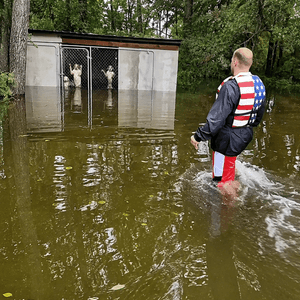
A dog was struggling to stay above the surface of a flooded river when a man nearby noticed that the animal was running out of strength.
The muddy water rushed through a concrete channel, carrying branches and debris downstream. Strong waves repeatedly pushed the dog beneath the surface before he managed to lift his head again.
Every moment brought him closer to a dam.
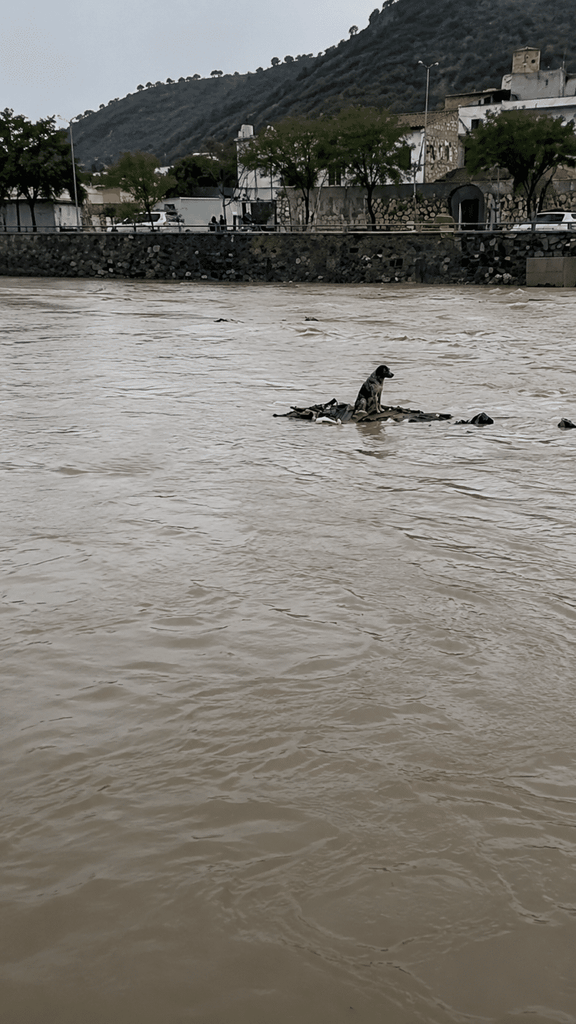
People watching from the riverbank could see the danger, but the powerful current made reaching the frightened animal extremely difficult.
Then one man made a remarkable decision.
Holding a long-handled tool to help maintain his balance, he stepped into the moving water and attempted to reach the exhausted dog.
What followed was a dramatic animal rescue that demonstrated both the power of compassion and the serious dangers of entering floodwater without specialized equipment.
Video A Dog Was Being Swept Toward the Dam Then One Man Stepped Into the Flood
A Frightened Dog Struggles Against the Flood
The river had transformed into a fast-moving channel of brown water.
Instead of flowing calmly, the current surged between concrete walls, carrying mud, branches, and scattered debris.
In the middle of the channel, a dog was desperately trying to remain afloat.
He appeared exhausted.
Rather than swimming steadily toward safety, he struggled to keep his nose and mouth above the surface.
The current repeatedly turned his body and carried him farther downstream.
Sometimes only the top of his head remained visible.
Moments later, he surfaced again several feet away.
The concrete walls offered few places where he could climb out.
Ahead, the channel narrowed near a dam, making the situation even more urgent.
The people watching from the bank understood that the dog needed help quickly.
Unfortunately, the dangerous water created a serious obstacle.
One Man Decides to Attempt a Rescue
As the dog continued drifting downstream, a man picked up a long-handled hoe or similar tool.
He appeared to intend to use it for balance and to test the ground beneath the muddy water.
Then he carefully entered the flooded channel.
The decision carried enormous risk.
Moving floodwater can be far more powerful than it looks, especially when the riverbed is hidden beneath muddy water.
Even relatively shallow currents can knock a person off balance.
The man moved cautiously, placing the tool against the ground before taking another step.
He leaned forward and tried to approach the dog.
However, the frightened animal did not understand that someone was attempting to help.
Whenever the rescuer moved closer, the dog shifted away or was pushed farther downstream by another surge.
The distance between them kept increasing.
Still, the man continued trying to reach him.
The Powerful Current Nearly Overwhelms the Rescuer
As the man moved into deeper water, the current began pushing strongly against his legs.
He struggled to remain upright.
Each step required concentration.
The long-handled tool provided an additional point of support, but it could not eliminate the danger.
Hidden debris, sudden changes in depth, and unstable footing made the situation unpredictable.
The rescuer had to focus on two difficult tasks at once.
He needed to approach the dog while protecting himself from being swept away.
Meanwhile, the exhausted animal continued moving toward the dam.
The people watching from the bank could do little but follow the rescue attempt.
For several tense moments, it seemed uncertain whether the man would be able to reach the dog at all.
Then he finally moved close enough to extend his hand.
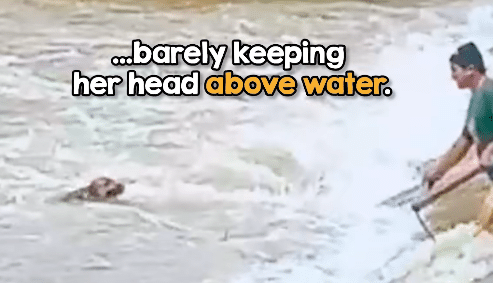
His First Attempt to Grab the Dog Fails
The rescuer stretched one arm toward the struggling animal while using the tool to maintain his balance.
His hand reached the dog’s collar.
For a brief moment, the animal stopped drifting downstream.
The man attempted to pull him closer.
It appeared that the rescue might finally succeed.
But the powerful current made holding on difficult.
The collar slipped from his hand.
Almost immediately, the water carried the dog away again.
The distance between them widened within seconds.
It was a heartbreaking setback after such a difficult effort.
The man had reached the dog, but the current had separated them before he could bring the animal toward safety.
Instead of lunging recklessly forward, he regained his footing.
Then he continued.
He repositioned the long-handled tool, steadied himself, and moved through the water once more.
The dog was still struggling ahead.
There was another chance.
A Second Attempt Changes Everything
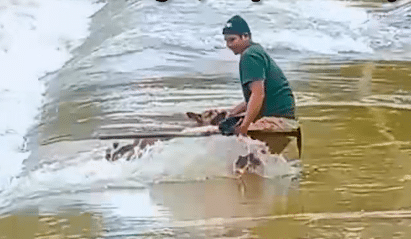
The man carefully approached the dog again.
This time, he managed to secure a firmer grip on the collar.
He held on as the water continued pushing against them.
The dog was no longer being carried farther downstream, but the rescue was far from finished.
Both were still surrounded by dangerous floodwater.
The man now faced another difficult challenge.
He had to return toward the riverbank while supporting an exhausted animal against the current.
Keeping one hand around the collar, he used the long tool for balance.
He turned slowly and began moving toward shallower water.
Every step required effort.
The dog struggled briefly as the current pressed against his body.
The rescuer kept him close while carefully working toward safety.
This time, he refused to release his grip.
The Dog Finally Reaches Solid Ground
As the pair approached the edge of the channel, the water became shallower.
The rescuer appeared to gain more stable footing.
People nearby moved closer, ready to assist once they reached the bank.
The man continued holding the dog’s collar until the animal’s paws finally touched solid ground.
Then both moved away from the strongest current.
The dog stood on his own.
Water streamed from his coat as he adjusted to being out of the river.
After a moment, he shook himself and began moving around the safer area.
It was an encouraging sight.
Only minutes earlier, he had been struggling to keep his head above the water.
Now, he was standing on dry ground.
The rescuer also appeared able to leave the channel safely.
The powerful river continued rushing downstream, but neither of them was being carried toward the dam anymore.
Why Floodwater Rescues Are So Dangerous
Although this rescue ended successfully, the man’s decision involved serious personal danger.
Floodwater is unpredictable.
Strong currents can knock down adults, conceal unstable surfaces, and carry debris capable of causing injury.
Concrete drainage channels and areas near dams are especially hazardous because water may accelerate through narrow sections.
A person entering without suitable equipment can quickly become another individual needing rescue.
That is why emergency professionals generally recommend contacting trained responders rather than entering dangerous water.
Firefighters, swift-water rescue teams, animal control officers, and specialized rescue organizations may have access to equipment designed for these situations.
Safety ropes, flotation devices, rescue poles, and other tools can help reduce risks.
The man’s determination was remarkable, but his successful outcome should not be interpreted as proof that entering floodwater is safe.
Both he and the dog were fortunate to reach shore.
Animals Face Unique Challenges During Flooding
Floods can become dangerous for pets with very little warning.
Rising water may cover familiar paths, separate animals from their families, or trap them inside areas without accessible exits.
Concrete channels create additional problems because their steep walls can prevent animals from climbing to safety.
Dogs may also become disoriented when strong currents repeatedly turn their bodies.
Even capable swimmers can become exhausted.
The dog in this rescue appeared unable to control his direction.
Each attempt to remain afloat required energy, while the current continued carrying him downstream.
The approaching dam made his situation particularly concerning.
Without intervention, he might have reached a section where rescue would have become even more difficult.
His experience highlights why early evacuation and responsible pet safety planning are essential during severe weather.
How Pet Owners Can Prepare for Flood Emergencies
Flood preparedness is an important part of responsible pet ownership.
Families living in areas vulnerable to heavy rain or rising water should include their animals in emergency plans.
Pets should be brought indoors or moved to safer locations before conditions become dangerous.
Owners should also prepare essential supplies, including carriers, leashes, identification information, medications, drinking water, and appropriate food.
Keeping veterinary records accessible can make evacuation easier.
Animals should never be left chained or confined in low-lying areas when flooding is expected.
If a pet becomes trapped in moving water, the safest response is to contact emergency professionals and provide accurate information about the animal’s location.
People can also help from a safe position by keeping the animal in sight and identifying possible access points for trained rescuers.
Preparedness cannot prevent every emergency, but it can reduce the need for dangerous last-minute rescue attempts.
A Rescue That Demonstrates the Power of Compassion
The most memorable moment in this story may be the rescuer’s second attempt to reach the dog.
He had already struggled against the current.
He had reached the animal once and lost his grip.
The water continued carrying the dog toward danger.
Yet the man remained determined.
When he reached the collar again, he maintained his hold while slowly guiding the exhausted animal toward the bank.
The rescue required patience, balance, and persistence.
It also revealed the unpredictable nature of emergencies involving frightened animals.
The dog could not understand the rescuer’s intentions.
He could only react to the water and the unfamiliar person approaching him.
Despite those challenges, the man managed to bring him safely out of the channel.
The result was a powerful reminder that compassion can inspire extraordinary actions, even in difficult circumstances.
At the same time, the story emphasizes the importance of safer rescue methods and professional emergency response.
Summary
A dog was swept into a flooded river channel where powerful currents repeatedly pushed him beneath the surface.
As he struggled to remain afloat, the water carried him closer to a dangerous dam.
A man watching from nearby decided to attempt a rescue.
Using a long-handled tool for balance, he entered the floodwater and carefully approached the exhausted animal.
His first attempt to grab the dog’s collar failed when the current separated them.
However, he regained his footing and tried again.
On his second attempt, the man secured the collar and slowly guided the dog toward the riverbank.
After several difficult steps, both reached safer ground.
The dog was conscious, able to stand, and moving around after the rescue, while the man also appeared to leave the channel safely. The account does not establish whether the dog later received veterinary care.
Their successful escape was encouraging, but the incident also demonstrated the serious dangers of moving floodwater.
The story highlights the importance of animal rescue, emergency preparedness, and professional assistance during natural disasters.
Most importantly, it reminds us that helping animals requires both compassion and careful attention to human safety.
For one exhausted dog, a stranger’s determination changed the outcome of a frightening day.
The current had carried him closer and closer to danger.
But when the rescuer reached him a second time, he held on until the dog’s paws finally touched solid ground.