Have you ever faced a situation where both sides felt right—and yet, the solution still seemed out of reach?
That’s exactly what is happening across India today.
It’s not just a policy discussion. It’s not just a legal matter. It’s a deeply human conversation—one that sits at the intersection of compassion, safety, responsibility, and trust.

On one side are those who dedicate their lives to protecting animals. On the other are families who simply want to feel safe in their own neighborhoods.
And somewhere in between lies a question that doesn’t have an easy answer.
How do we protect both?
Video When Compassion and Safety Collide India’s Struggle to Protect Both Stray Dogs and Its Children
A growing conversation that reached the highest level
In recent years, the issue of stray dog management has steadily gained attention. What was once considered a local concern has now evolved into a national conversation.
That conversation reached a turning point when the Supreme Court of India stepped in with a revised directive aimed at addressing both animal welfare and public safety.
The ruling introduced a structured approach.
Stray dogs captured by municipal authorities are to be sterilized and vaccinated before being released back into the same areas where they were found. The goal is simple: control population growth humanely while reducing the risk of disease.
There are exceptions, of course. Dogs identified with serious illness or extreme behavioral risks are handled differently to ensure community safety.
The Court also emphasized the need for designated feeding zones, discouraging unregulated feeding in public spaces. This step aims to bring order and accountability to how communities interact with stray animals.
On paper, it sounds balanced.
But as with many policies, the real challenge lies in implementation.
Why advocates support this approach
For many animal welfare supporters, the ruling represents progress.
Voices like Maneka Gandhi have long argued that humane strategies such as sterilization and vaccination are the most effective long-term solutions.
Why?
Because relocation can disrupt animal behavior.
When dogs are moved to unfamiliar areas, they may become more anxious and territorial. This can unintentionally increase conflict rather than reduce it.
Instead, stabilizing existing populations—through care and control—helps create predictable environments.
It’s a strategy rooted in science, not just sentiment.
And for advocates, it reflects a belief that compassion should guide policy.
But compassion alone doesn’t address every concern.
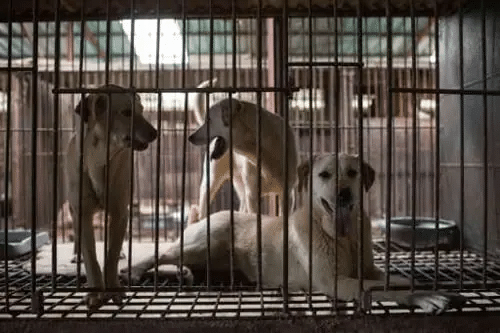
When safety becomes personal
While policies are discussed in courtrooms and offices, real-life situations continue to unfold in communities.
In Tirunelveli, a young schoolgirl named Preethika experienced something no child should have to face.
An ordinary afternoon turned into a medical emergency after an encounter with a stray dog left her injured. She was taken to a nearby hospital for urgent care, where doctors worked quickly to help her recover.
For her family, the broader debate likely felt distant.
In that moment, nothing mattered more than her safety.
And that’s the reality many families live with.
They aren’t thinking about policies.
They’re thinking about protection.
The conversation becomes even more complex when incidents involve pet dogs rather than strays.
In Ghaziabad, a resident encountered a frightening situation inside her own apartment building. A neighbor’s large dog chased her through a shared corridor, leading to a fall that resulted in injuries.
This wasn’t a stray.
This was a pet.
And it raised another important question:
Are we doing enough to ensure responsible pet ownership?
The role of accountability in shared spaces
Living in a community means sharing responsibility.
Whether it’s stray dogs in public areas or pets in residential buildings, safety depends on how well systems and individuals work together.
Pet owners play a critical role.
Training, supervision, and awareness are not optional—they are essential. A well-cared-for dog can still become a risk if boundaries are not respected.
At the same time, local authorities must ensure that public safety measures are consistent and effective.
This includes:
Regular vaccination drives
Reliable sterilization programs
Clear enforcement of feeding and management guidelines
When these systems function properly, trust grows.
When they don’t, fear takes over.
Two perspectives, one shared concern
What makes this issue so complex is that both sides are driven by genuine concern.
Animal lovers see vulnerable creatures that deserve care and dignity.
Families see potential risks that could affect their children and daily lives.
Neither perspective is wrong.
In fact, both are necessary.
Because a society that ignores animal welfare loses its compassion.
But a society that overlooks human safety risks losing its sense of security.
So the goal isn’t to choose one over the other.
It’s to find a way to support both.
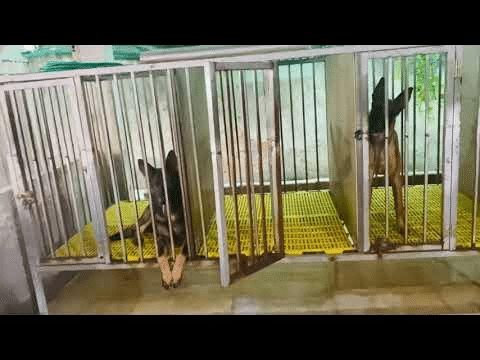
Building a path forward
So where do we go from here?
The answer doesn’t lie in extreme solutions.
It lies in balance.
Humane policies must be supported by strong implementation.
Compassion must be paired with accountability.
And most importantly, communication must remain open.
Communities need clear information.
Authorities need consistent action.
And individuals need to feel that their concerns are being heard.
Because when trust exists, cooperation follows.
And when cooperation grows, solutions become possible.
A shared responsibility
At its core, this isn’t just a story about stray dogs.
It’s a story about how we coexist.
How we care.
How we respond to challenges that don’t have simple answers.
Every community, in one way or another, faces similar questions.
How do we protect the vulnerable?
How do we ensure safety?
How do we create systems that work for everyone?
The answers may vary.
But the principle remains the same.
Progress happens when we stop seeing issues as opposing sides—and start seeing them as shared responsibilities.
Because in the end, compassion and safety are not opposites.
They are partners.
And when they work together, everyone benefits.
Summary
This article explores the ongoing debate in India over stray dog management and public safety. Following a revised ruling by the Supreme Court of India, authorities are required to sterilize and vaccinate stray dogs before releasing them back into their original areas, while also introducing structured feeding regulations. Animal welfare advocates support this humane approach, while families express concern over safety following real-life incidents involving both stray and pet dogs. The issue highlights the importance of responsible pet ownership, effective public systems, and balanced policies. Ultimately, the article emphasizes that lasting solutions require cooperation, accountability, and a shared commitment to both compassion and community safety.