In a quiet village in South Korea, something didn’t look right.
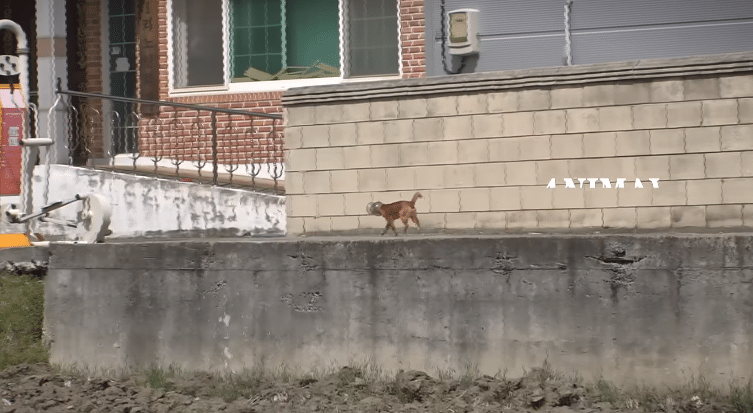
At first, it was just a glimpse—a stray dog darting between houses. But as days passed, residents began to notice something alarming. A long, rigid plastic container was tightly lodged over his head. It covered his mouth completely. He couldn’t eat. He couldn’t drink. He could barely breathe comfortably.
And according to neighbors, he had been like that for nearly three weeks.
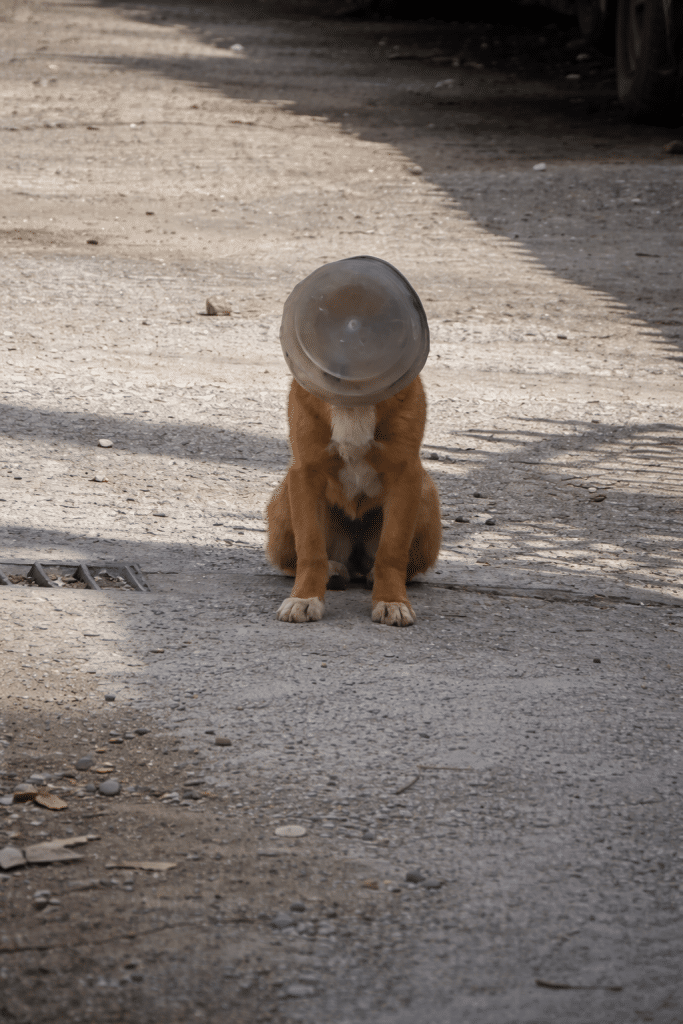
By the time word spread, his body told the story clearly.
He was dangerously thin.
His movements were frantic.
Fear had become his shadow.
Video For Weeks He Ran in Fear With a Plastic Container Trapping His Head
A Silent Crisis in Plain Sight
Stray dogs survive by instinct. They scavenge, hide, adapt. But survival becomes almost impossible when basic needs—like water—are cut off.
The plastic container wasn’t just inconvenient. It was life-threatening. Dehydration can damage organs quickly. Hunger weakens muscle. Stress elevates risk.
Yet somehow, this dog—later named Daram—kept going.
Villagers tried to help. They approached slowly. They offered food. But fear had taken control. Every time someone moved closer, Daram bolted. He couldn’t see clearly. He couldn’t smell properly. Panic drove him to run blindly.
Good intentions weren’t enough.
This required strategy.
When Professionals Stepped In
Concerned residents contacted the Korean Animal Welfare Association. Experienced rescuers arrived, understanding that frightened animals don’t respond well to urgency.
They studied his patterns. Where did he rest? When did he move? Which areas did he avoid?
They set up temporary fencing around the spaces he frequented. They narrowed his escape routes carefully. Rain fell steadily during the operation, turning the ground slick and the air cold.
Hours passed.
Rescue work is rarely dramatic. It’s patient. It’s methodical. It’s built on observation and timing.
Finally, the team gently guided Daram into a small wooden enclosure. No shouting. No chasing. Just controlled movements and steady positioning.
Once secured, he was transported immediately to a veterinary clinic.
The Moment the Plastic Came Off
At the clinic, veterinarians prepared carefully. Cutting away a rigid plastic container from a distressed animal requires precision. One wrong movement could injure the neck or cause additional panic.
They stabilized him first.
Then, with controlled tools and calm hands, they began cutting.
Piece by piece, the container loosened.
When it finally came off, the room fell quiet for a moment.
Daram blinked in confusion, as if rediscovering the world around him.
The medical assessment that followed was sobering. He was severely dehydrated. His kidney values were dangerously elevated—an indication of prolonged lack of water. Weeks without proper hydration had pushed his body to its limit.
Doctors admitted that his survival was remarkable.
The First Drink in Weeks
What happened next was simple—but powerful.
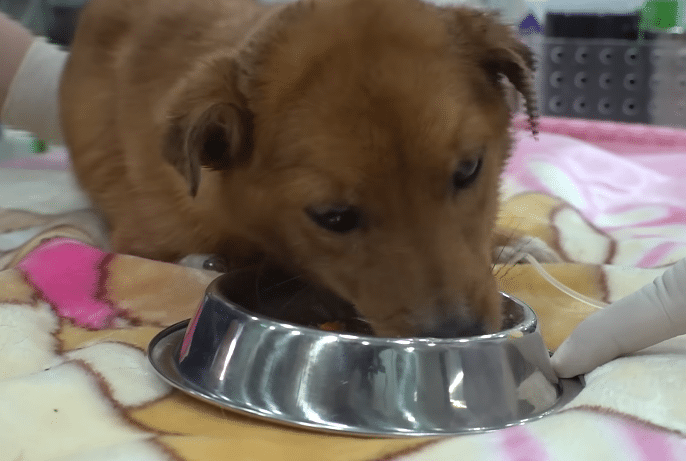
Daram drank.
Slowly at first. Carefully monitored to prevent shock to his system. Each swallow represented more than thirst—it represented relief.
Then he ate.
Not greedily. Not desperately. Just steadily. Bite by bite.
It was the turning point—from surviving to healing.
Medical stabilization required days. IV fluids restored hydration. Nutritional plans were adjusted gradually to avoid overwhelming his weakened body. Kidney levels began improving.
His eyes, once clouded with panic, softened.
But physical healing was only half the journey.
When Rescue Becomes Adoption
One man in the village had been among the first to notice Daram’s condition. He couldn’t forget the image of the container trapped around the dog’s head. When he learned that Daram needed a home, he made a decision.
He adopted him.
Bringing Daram home marked the beginning of a new chapter—but trauma doesn’t disappear overnight.
In his new house, Daram hid inside a crate. He stayed there for hours. Sometimes days. Safety felt unfamiliar. Freedom felt uncertain.
Trauma lingers quietly.
Patience became the treatment.
Rebuilding Trust Step by Step
With guidance from an animal behavior specialist, Daram’s new owner followed a structured approach.
He placed food slightly outside the crate. Not far—just enough to encourage a small stretch forward.
No force.
No pulling.
No pressure.
The next day, the bowl moved a few inches farther.
One step became two.
Two steps became a pause.
Progress in fearful dogs often looks microscopic. But consistency builds confidence.
Gradually, Daram ventured out longer. He began exploring the room cautiously. His tail lifted slightly. He responded to soft voices.
The crate stopped being a hiding place. It became just another corner of the room.
Trust, reclaimed slowly.
From Survival Mode to Belonging
Weeks later, the transformation was visible.
Daram walked freely around the house. He accepted gentle petting. He rested without constant vigilance. He began responding to his name.
Most importantly, he stayed.
Fear no longer dictated his movements.
The video of his journey ends quietly—with Daram calm and content in his adopter’s arms. There are no dramatic fireworks. No sudden leaps of joy.
Just steady peace.
And sometimes, peace is the greatest victory.
What Daram’s Story Teaches Us
This story carries lessons beyond one dog.
First, discarded plastic waste can become deadly. Containers, bottles, and rigid packaging should always be crushed or cut before disposal. What seems harmless to us can trap wildlife or stray animals searching for food.
Second, rescue often requires professional coordination. Attempting to capture a frightened animal without proper training can escalate danger. Calling experienced rescue organizations increases safety for everyone involved.
Third, trauma recovery takes time. Physical healing can happen in days or weeks. Emotional healing requires patience measured in small, consistent steps.
Daram didn’t need force.
He needed space.
He needed safety.
He needed someone willing to wait.
Summary
In a small South Korean village, a stray dog named Daram survived nearly three weeks with a rigid plastic container tightly stuck over his head, preventing him from eating or drinking. After concerned residents contacted the Korean Animal Welfare Association, rescuers carefully secured and transported him to a veterinary clinic. Veterinarians removed the container and treated severe dehydration and kidney complications. Following medical stabilization, a local man adopted Daram. With patient behavioral support and gentle encouragement, Daram gradually overcame fear and adjusted to home life. His story highlights the dangers of plastic waste, the importance of professional rescue efforts, and the transformative power of patience in helping traumatized animals learn to trust again.