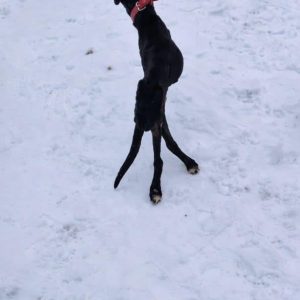
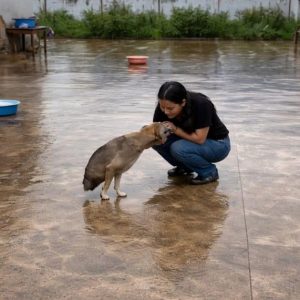
Every city has places where humanity rushes past itself. Busy stations. Crowded platforms. Endless movement with very little noticing. In one of Lima’s busiest metro stations, thousands of people passed through every single day. Shoes echoed. Trains roared. Announcements rang out. Life moved fast.
And in the middle of all that motion, a small dog lay completely still.
For two long weeks.
His name would later be known as Cabezoncito. But back then, he was just another invisible soul trapped in plain sight.
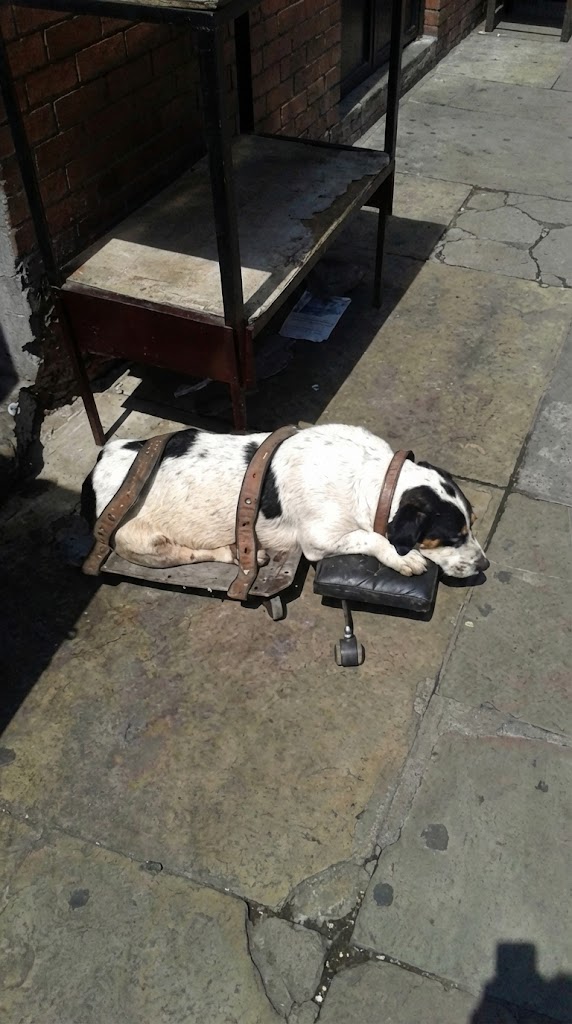
Tied to a rough wooden platform on wheels, his body was bound so tightly he could not stand. He could not turn. He could not lift his head to see who passed him by. The straps cut into his skin. The hard surface pressed against his fragile frame. His world shrank to a few inches of pain and noise.
People walked around him like he was part of the station itself. An object. A problem someone else would handle. A life quietly slipping away while the city kept moving.
How Abandonment Looks in Public
Later, people pieced together what likely happened. Cabezoncito had suffered an accident that paralyzed his back legs. Instead of seeking help, the person responsible chose something far colder. They tied him down, placed him on a wheeled table, and left him in public as if visibility could replace responsibility.
It was cruelty disguised as convenience.
At first, a few kind strangers noticed him. A group of young people loosened the straps and gave him food. They assumed that once freed, he would somehow be okay. That assumption is one many people make when discomfort fades from view.
But kindness without commitment rarely lasts.
Two weeks later, those same young people passed the station again. And there he was.
Same table. Same straps. Same position.
Only worse.
His body lay in his own waste. His skin burned with infection. His eyes had lost their shine. What strength he once had was quietly draining away. This was no longer neglect. This was a countdown.
This time, they refused to walk away.
Video Bound and Waiting How One Dog Survived Two Weeks in a Metro Station and Found Freedom
When One Choice Changes Everything
They lifted his frail body and carried him out of the station. No cameras. No speeches. Just urgency. They brought him to Sara Moran, a woman known throughout Peru for taking in dogs others consider beyond saving.
When Sara saw him, she did not look away.
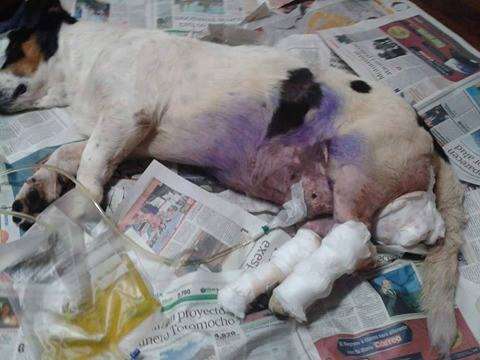
The veterinary exam revealed the full truth. His spine was permanently damaged. His kidneys were failing. His skin was raw with pressure sores. Infection had settled deep. Many professionals would have chosen euthanasia and called it mercy.
Sara chose effort.
She saw something in his eyes that charts and scans cannot measure. A quiet resistance. A refusal to disappear.
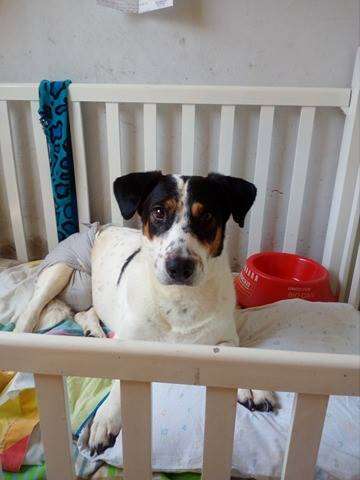
Despite limited funds, she paid for surgery. She committed to kidney treatments that required constant care. She placed him in a baby crib so his body could finally rest without pain digging into him from below.
For the first time in weeks, Cabezoncito slept without restraints.
That sleep mattered more than anyone realized.
Healing Is Not Always Loud
Recovery did not arrive with sudden miracles. It came in small signs. A calmer breath. Clearer eyes. Less pain in his movements. When his wounds began to heal, something else happened.
Hope returned.
Once stable, Cabezoncito was fitted with a custom wheelchair. The first time he used it, the change was immediate. The dog who had once been unable to lift his head was suddenly moving. Fast. Curious. Alive.
Freedom does that.
He joined a sanctuary filled with other disabled rescue dogs. More than sixty of them. Dogs with missing limbs. Dogs with wheels. Dogs with scars that told stories no one asked for but everyone respected.
Here, no one stared. No one pitied. No one rushed past.
Everyone belonged.
From Invisible to Unstoppable
Cabezoncito did not just adapt. He flourished.
His wheels carried him across open spaces. His ears lifted in the wind. His eyes sparkled with mischief and joy. The same dog once bound and left in a crowd now chased life with everything he had.
Today, he is a familiar sight on the beaches of Peru. Sand flies as he races toward the waves. People cheer as he passes. Children laugh. Strangers stop not in discomfort, but in admiration.
He has even competed in local marathons, rolling proudly beside humans who celebrate him not as a victim, but as an athlete.
Once treated like discarded baggage, he became a symbol of what commitment can do.
Why This Story Matters
Cabezoncito survived not because he was lucky, but because someone chose responsibility over indifference.
His story reminds us that suffering does not always hide in dark corners. Sometimes it lies in the middle of everything, waiting for someone to stop pretending they did not see it.
Strength does not need to shout.
Compassion only matters when it turns into action.
A broken body does not mean a broken spirit.
For two weeks, he lay unnoticed in one of the busiest places in the city.
Yet he endured.
And now, he runs.
Cabezoncito is no longer the dog tied to a table in a metro station. He is a beach runner. A marathon finisher. A living reminder that survival is only the beginning.
Becoming more than what hurt you is the real victory.