Some dogs have an extraordinary way of reminding us that happiness does not depend on having a perfect beginning. For a tiny dog named Turbo, life started with a physical difference that made ordinary activities more challenging.
Turbo was born without his two front legs. While his littermates could run, tumble, and explore freely, he had to discover his own way of moving.
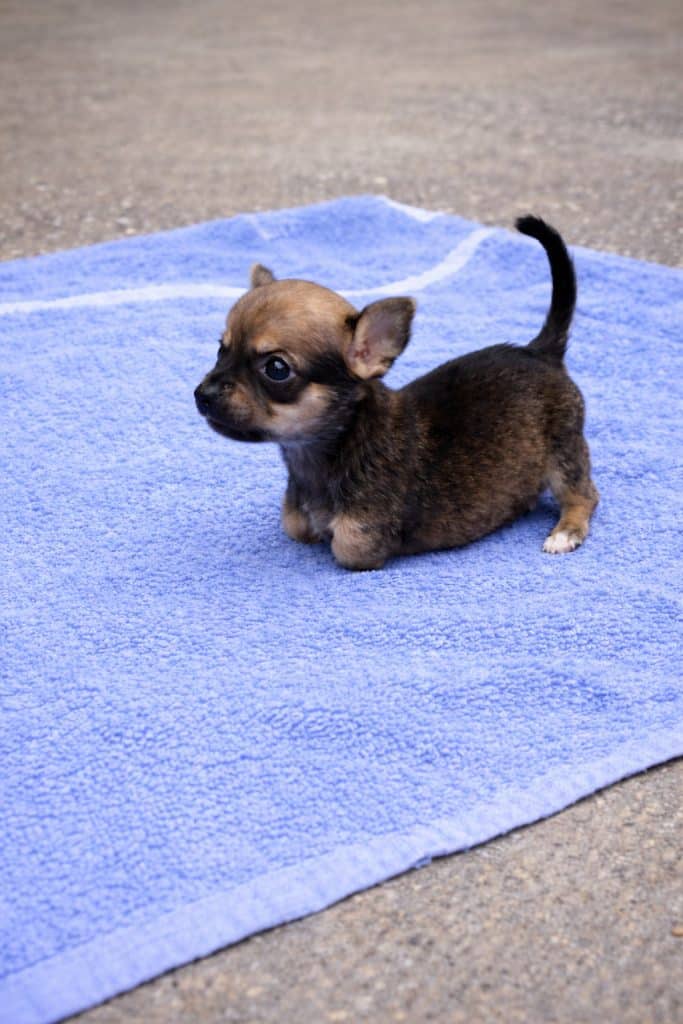
Even reaching his food bowl required extra effort.
But Turbo had something remarkable: an energetic personality and a determination to participate in everything happening around him.
Video Watch Turbo’s First Race in His Custom 3D Printed Wheels
When a compassionate veterinary clinic worker welcomed him into her home, his life began changing.
With patience, creative mobility solutions, and eventually a custom 3D-printed wheelchair, Turbo discovered the freedom to explore his surroundings.
His inspiring story celebrates the importance of adaptive pet care, innovative technology, and the special bond between animals and the people who love them.
A Tiny Puppy Born With a Unique Challenge
Turbo entered the world without his front legs, a congenital condition that affected his mobility from birth.
His littermates quickly began developing the coordination needed to walk and play.
For Turbo, those early milestones looked different.
He relied on his hind legs to balance and move, often struggling to keep up with the other puppies.
Sometimes, his siblings unintentionally pushed him aside during their playful interactions.
Despite these challenges, Turbo remained curious and eager to participate.
He watched the other puppies and attempted to follow them whenever possible.
His enthusiasm caught the attention of a woman working at a veterinary clinic.
Rather than focusing on his physical limitations, she recognized his potential.
She decided to bring Turbo home and provide the support he needed.
A Loving Home Opens New Possibilities
Once Turbo joined his new family, his playful personality quickly emerged.
He wanted to investigate every corner of the house, follow familiar sounds, and interact with the people around him.
However, ordinary household surfaces presented challenges.
Smooth floors made balancing difficult, while uneven grass required additional effort.
Even eating comfortably could be complicated.
His owner responded by adjusting his daily routine.
She gently hand-fed him when necessary and introduced simple exercises to encourage safe movement.
Treats helped motivate Turbo as he learned to balance using his hind legs.
Over time, those legs became stronger.
His growing confidence encouraged his family to explore ways of making movement easier.
They wanted him to enjoy the same opportunities for adventure as other dogs.
Creative Experiments Lead to Homemade Wheels
Turbo’s family began experimenting with homemade mobility devices.
Their first attempts used everyday materials, including PVC pipes and parts from toy helicopters.
The goal was simple: create a lightweight support system that would allow Turbo to move more freely.
However, designing a wheelchair for such a small dog proved challenging.
Some prototypes were too bulky.
Others did not fit his body comfortably.
A device that looked promising during construction did not always work well when Turbo tried using it.
Instead of giving up, his family continued testing different ideas.
Each attempt helped them better understand his needs.
Their efforts demonstrated how much thoughtful adaptation can matter when caring for a pet with a disability.
Eventually, Turbo’s story reached someone with the technical skills to develop a more suitable solution.
An Engineer Creates a Custom 3D-Printed Wheelchair
As Turbo’s journey gained attention, an engineer experienced in designing aircraft components became interested in helping him.
Using 3D-printing technology, the engineer developed a custom mobility cart suited to Turbo’s small body.
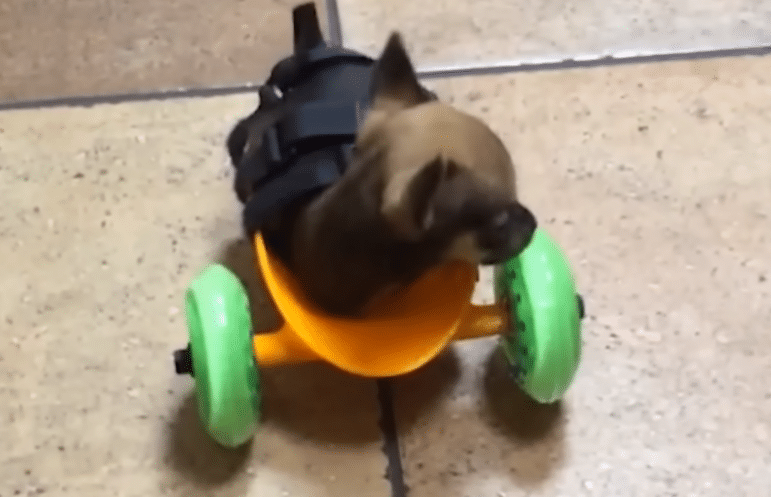
The finished design featured a bright orange frame and vivid green rollerblade wheels.
Its cheerful appearance matched Turbo’s energetic personality.
More importantly, the cart offered a new way for him to move.
Unlike the earlier homemade prototypes, the custom design was created with his proportions and mobility needs in mind.
The wheelchair supported the front portion of his body while allowing his strong hind legs to propel him forward.
For Turbo, the equipment represented an opportunity to explore his surroundings with greater independence.
But first, he had to learn how to use it.
Turbo Takes His First Steps With His New Wheels
When Turbo first tried his custom wheelchair, he appeared uncertain.
The equipment felt unfamiliar, and he needed time to understand how it moved.
He hesitated and adjusted his balance.
His family patiently encouraged him.
Then they introduced another dog, a small Pug, to join the activity.
Suddenly, Turbo had a reason to move.
His playful instincts took over.
He leaned forward and began pushing with his hind legs.
The green wheels started rolling.
Within moments, Turbo was moving across the room with increasing confidence.
His hesitation gave way to excitement as he followed his canine companion.
For everyone watching, the moment was unforgettable.
The little dog who had struggled with mobility was discovering a new kind of freedom.
A Playful Race Reveals Turbo’s Confidence
The video of Turbo’s first successful movements captures a joyful transformation.
At first, he appears cautious as he adjusts to the wheelchair.
Then he notices his canine friend.
His attention shifts immediately toward the possibility of playing.
He begins moving faster, using his hind legs to propel the cart forward.
The wheels roll smoothly as he gains momentum.
His excitement becomes increasingly obvious.
The people around him respond with laughter and encouragement.
What makes the moment special is not simply the technology.
It is Turbo’s reaction to discovering what he can do.
The wheelchair gives him an opportunity to participate in an activity he already loves.
For a playful puppy, chasing a friend is a wonderful reason to keep moving.
Growing Stronger and More Independent
As Turbo grew older, he continued adapting to his unique way of moving.
His hind legs became powerful enough to support a variety of activities.
He learned to balance upright and even hop onto the sofa.
He also developed a playful routine of standing and moving beside his canine friend Ruby, creating moments his family affectionately described as dancing.
Turbo’s personality remained energetic and curious.
He enjoyed wearing small denim jackets and spending time with his companions.
Meanwhile, his mobility equipment continued evolving.
New carts were designed to help him navigate different environments, including grass, snow, and smooth pavement.
These adaptations allowed his family to consider the challenges presented by changing surfaces.
Turbo’s progress showed how personalized equipment can support an animal’s changing needs.
How 3D Printing Can Improve Pet Mobility
Turbo’s story highlights an exciting application of modern technology.
3D printing allows designers to create customized objects based on specific measurements and requirements.
For animals with unusual body proportions or mobility challenges, this flexibility can be particularly valuable.
Traditional mobility devices may not always fit extremely small pets or animals with congenital differences.
Customized designs can offer alternative solutions.
However, a wheelchair must provide appropriate support and avoid placing unnecessary pressure on the animal’s body.
Veterinary guidance remains essential when selecting or adjusting mobility equipment.
A suitable device should complement the dog’s physical abilities rather than force uncomfortable movements.
Turbo benefited from a combination of engineering creativity, patient training, and attentive care.
His experience demonstrates how technology and compassion can work together.
The Importance of Supporting Dogs With Disabilities
Caring for a dog with a physical disability requires thoughtful planning.
Daily activities such as eating, moving, resting, and exercising may need adjustments.
Some animals benefit from mobility equipment, while others require different forms of assistance.
Every dog’s needs depend on its individual condition.
Turbo’s family recognized these challenges early and adapted their home and routines.
They encouraged his development without expecting him to move exactly like other dogs.
Their approach allowed his personality to flourish.
He could explore, play, and interact with his canine companions.
His story also challenges the assumption that animals with disabilities cannot enjoy active lives.
With appropriate support, many can participate in meaningful activities and experience a good quality of life.
A Little Dog With a Big Personality
Turbo’s life is not defined solely by his missing front legs.
He is playful, curious, affectionate, and eager to explore.
His family celebrates these qualities while providing the practical assistance he needs.
The custom wheelchair helps him participate in outdoor adventures.
His strong hind legs support his distinctive movements.
And his relationships with people and other dogs bring companionship into his daily routine.
Perhaps the most meaningful part of Turbo’s journey is how ordinary his happiness has become.
He enjoys playing with friends, exploring familiar places, and spending time with his family.
His life may look different from that of other dogs, but it is filled with opportunities for enjoyment.
Summary
Turbo was born without his two front legs, making movement difficult from the earliest days of his life.
While his littermates learned to walk and play, he had to develop his own balance and mobility.
A compassionate woman working at a veterinary clinic recognized his potential and welcomed him into her home.
She adapted his daily care, helped him strengthen his hind legs, and experimented with homemade mobility devices.
Eventually, an engineer designed a custom 3D-printed wheelchair featuring an orange frame and green wheels.
Although Turbo initially hesitated, encouragement from his family and a playful Pug helped him discover how to move confidently using the cart.
As he grew, he developed greater independence and enjoyed activities with his canine friend Ruby.
His family also introduced improved mobility devices for different surfaces and environments.
Turbo’s story highlights the importance of responsible special-needs pet care, personalized mobility equipment, and compassionate support.
Most importantly, it reminds us that physical differences do not determine an animal’s capacity for happiness.
With a loving family, creative technology, and the freedom to explore, Turbo has built a life filled with playful adventures.
He may have been born without front legs, but he has never lacked the enthusiasm to move forward.