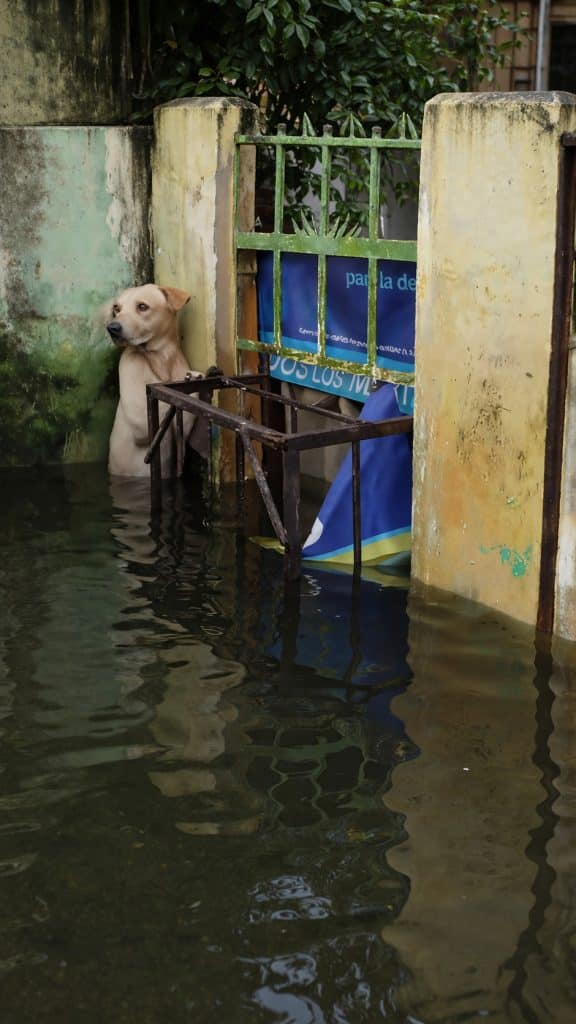
A small golden dog clung to a metal gate as floodwater surrounded an entire neighborhood. Her body was almost completely submerged, and only her head remained above the surface.
She had nowhere to stand, no visible path to safety, and no way to escape the rising water on her own.
For an unknown amount of time, the frightened dog held tightly to the gate, relying on her front paws to keep herself afloat.
Then something remarkable happened.
A rescue boat appeared among the flooded streets, carrying people searching for stranded animals.
The team spotted the little dog and immediately understood that she needed help.
What followed was a moving animal rescue story about patience, teamwork, and the extraordinary difference a few compassionate people can make.
The dog would eventually receive the name Marina, along with something far more important: a safe place to begin a new life.
Video She Clung to a Flooded Gate With Only Her Head Above Water Then a Rescue Boat Came Closer
A Neighborhood Disappears Beneath Floodwater
The flooding had transformed familiar streets into waterways.
Roads disappeared beneath murky water, debris floated between fences, and homes stood surrounded by rising currents.
For people and animals alike, the neighborhood had become difficult to navigate.
As rescuers traveled slowly through the submerged area, they searched rooftops, windows, and anything that remained above the water.
Then they noticed a small golden shape beside a metal gate.
At first, the dog appeared almost motionless.
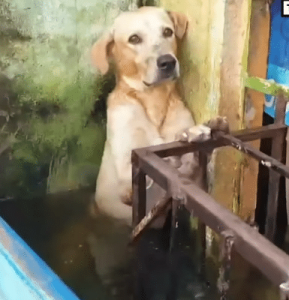
Her front paws gripped the bars while the current moved around her body.
She was not barking or attempting to swim away.
She was simply holding on.
The rescuers could not determine how long she had remained there, but her situation demanded immediate attention.
The Metal Gate Becomes Her Only Support
The gate was the only solid object the dog appeared able to reach.
Her hind legs had no visible foothold, and much of her body remained beneath the water.
Every passing moment required physical effort.
If she released the bars without support, the moving water could carry her away.
Yet continuing to hold on would become increasingly difficult as exhaustion developed.
The rescue team recognized the challenge.
They needed to approach closely enough to lift her while avoiding movements that might frighten her into releasing the gate too soon.
The boat moved forward carefully.
The rescuers reduced their speed and spoke quietly.
Instead of rushing toward the frightened animal, they approached one cautious movement at a time.
Their patience would prove essential.
A Frightened Dog Faces an Unfamiliar Rescue Boat
For Marina, the approaching boat introduced another unfamiliar element into an already confusing situation.
The water had changed everything around her.
The streets she might once have walked along were hidden.
Nearby yards and familiar landmarks had disappeared beneath the flood.
Now strangers were moving toward her in a vessel that shifted with the current.
When the boat reached the gate, one rescuer slowly extended his hand.
He gently touched the top of the dog’s head.
She remained tense but allowed the contact.
However, her paws stayed wrapped around the metal bars.
She was not ready to release the object supporting her.
The rescuers understood that they needed to earn enough cooperation to move her safely.
They continued speaking softly and prepared to support her body.
A Careful Approach Makes All the Difference
One rescuer positioned himself close enough to reach beneath the dog’s chest.
Another helped keep the boat steady.
Their goal was simple: support her weight before separating her paws from the gate.
Pulling her away suddenly could have caused her to slip between the boat and the metal structure.
Instead, they worked gradually.
The dog watched their movements while remaining pressed against the bars.
She did not attempt to escape, but she continued holding tightly.
The rescuers waited for a suitable moment.
Then they carefully placed their hands beneath her body.
This small adjustment changed everything.
For the first time since the team had found her, the dog no longer needed to rely entirely on her own strength.
Someone was ready to carry her.
The Moment Marina Finally Releases the Gate
The most important moment came when the rescuers began freeing her paws.
One front paw gradually loosened from the metal.
A rescuer immediately supported that side of her body.
Her other paw remained wrapped around the gate for another moment.
Then the team carefully guided it free.
Both paws were finally released.
The rescuers now supported her entire weight.
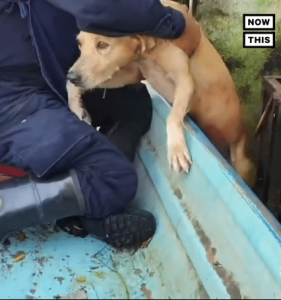
They lifted the little dog away from the gate, keeping her close to the boat to prevent her from slipping back into the water.
Her wet coat dripped as they raised her over the side.
Seconds later, her paws reached the boat’s floor.
She was safe.
The metal gate that had supported her through the flood was now behind her.
A Small Dog Finds Solid Ground Again
Once inside the rescue boat, the golden dog appeared uncertain.
The immediate danger had passed, but she was still surrounded by unfamiliar people and a moving vessel.
The rescuers gave her time to regain her balance.
They remained close without overwhelming her.
Their voices stayed calm, and they avoided unnecessary handling.
Animals rescued from frightening situations may need time to adjust even after reaching safety.
Marina had experienced prolonged physical strain, unstable surroundings, and an unfamiliar rescue process.
She needed reassurance and careful observation.
The team watched for signs of injury or breathing difficulty while continuing toward safer ground.
From what they could observe, she was conscious and responsive.
Gradually, her posture became less rigid.
Then her tail moved.
It was a small but encouraging response.
The Dog Receives a Beautiful New Name
After leaving the flooded neighborhood, the rescuers began arranging continued care for the little dog.
She needed a dry place to rest, clean drinking water, appropriate food, and attention to any health concerns caused by her time in the flood.
The team also gave her a name.
Marina.
It was a fitting choice for a dog whose rescue had unfolded in the middle of deep water.
But the name represented more than the circumstances of her discovery.
She was no longer simply an unidentified dog clinging to a gate.
She was Marina, an individual whose comfort, health, and future mattered to the people who had rescued her.
The frightened animal had become someone they knew and cared about.
Recovery Begins With Warmth and Familiar Faces
Marina’s adjustment did not happen instantly.
She needed time to become comfortable with her new surroundings.
Dry bedding replaced the cold metal gate.
Regular meals replaced uncertainty.
Familiar voices gradually replaced the unfamiliar sounds of the flooded neighborhood.
The same caregivers returned each day, allowing her to recognize their presence and routines.
These ordinary experiences helped establish a sense of stability.
For a dog who had recently struggled to keep her head above water, predictable care offered an important opportunity to recover.
There was no need for dramatic gestures.
A quiet resting place, gentle attention, and consistent care were enough to begin changing her daily life.
Marina gradually became more relaxed around the people helping her.
A New Life With the People Who Rescued Her
According to the rescue account, Marina remained with members of the group that had saved her.
Over time, she became increasingly comfortable with their routines and companionship.
The dog who had once struggled to survive in floodwater could now walk on dry ground and rest in safety.
She stayed near familiar rescuers and appeared more confident in their presence.
Some descriptions of her later life suggest that she became part of the rescue team’s everyday activities.
That does not necessarily mean Marina performed formal rescue work.
Rather, she remained close to the people who had brought her to safety while they continued helping other animals.
It was a meaningful outcome.
The little dog who had once needed rescuing was now surrounded by people dedicated to animal welfare.
Why Flooding Is Especially Dangerous for Pets
Marina’s experience highlights the challenges animals face during natural disasters.
Floodwater can rise quickly, covering familiar paths and separating pets from their usual surroundings.
Dogs may become disoriented when streets, yards, and recognizable landmarks disappear.
Moving water can also conceal hazards such as sharp debris, unstable surfaces, contaminated materials, and dangerous currents.
Even animals that can swim may struggle when conditions become unpredictable.
Some seek higher ground.
Others climb onto floating objects or hold onto structures that remain above the water.
Marina found a metal gate.
Although it offered temporary support, it could not provide lasting safety.
She needed experienced rescuers to help her reach dry ground.
The Importance of Safe Animal Rescue During Disasters
Helping animals during floods requires preparation and careful decision-making.
Rescue teams must consider water movement, unstable structures, hidden debris, and the animal’s behavior.
A frightened dog may suddenly jump, struggle, or attempt to swim away.
That is why Marina’s rescuers approached slowly and supported her body before releasing her paws from the gate.
Their actions reduced the risk of her slipping back into the floodwater.
After a flood rescue, veterinary assessment may also be important.
Animals exposed to contaminated water can develop health problems, while prolonged immersion may cause exhaustion or temperature-related complications.
Pet owners living in flood-prone areas can prepare by keeping identification records, carriers, leashes, medications, and emergency supplies accessible.
Early evacuation planning can help protect both people and animals.
Marina’s Story Shows the Power of Compassion
What makes Marina’s rescue memorable is not simply the moment she entered the boat.
It is the way the rescuers understood her situation.
They recognized that the gate was keeping her afloat.
They did not force her to release it before providing support.
They moved patiently, carefully transferring her weight from the metal bars into their hands.
That thoughtful approach allowed them to bring her aboard safely.
The rescue required no grand celebration.
Its success was visible in a small golden dog standing on the boat’s floor, no longer struggling against the water.
Later, Marina gained something even more meaningful.
She found familiar people, dependable care, and a place where she could finally rest.
Summary
Marina was a small golden dog discovered clinging to a metal gate during severe flooding that had submerged an entire neighborhood.
Her body remained mostly underwater, and she relied on her front paws to keep her head above the surface.
When a rescue team spotted her from a boat, they approached slowly to avoid frightening her.
One rescuer gently touched her head while others prepared to support her body.
Because Marina continued gripping the gate, the team carefully positioned their hands beneath her before freeing each paw.
They then lifted her into the boat and carried her toward safety.
Although she initially appeared uncertain, she gradually became more relaxed around her rescuers.
The team named her Marina and provided a safer environment, regular care, and opportunities to recover.
According to the account, she eventually remained with members of the rescue group and became comfortable with their daily routines.
Her journey demonstrates the importance of patient animal rescue, disaster preparedness, and responsible care after an emergency.
Marina’s story began with a frightened dog holding onto a gate surrounded by floodwater.
It continued with compassionate people who recognized her situation and knew how to help.
And it became a story of renewed safety when she finally reached a place where she no longer had to hold on alone.