At first glance, she looked like another small stray dog wandering alone along a quiet countryside road.
Then someone noticed the way she walked.
Every step seemed unusually careful. She moved slowly, almost as if she needed to consider each movement before taking the next one. When rescuers looked closer, the reason became clear.
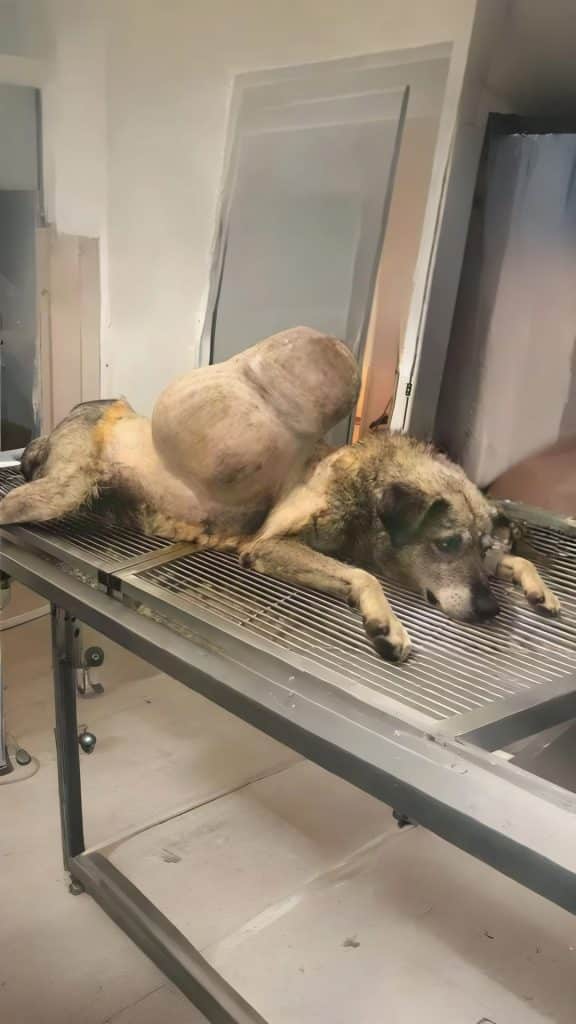
A large swelling covered part of her back, adding considerable weight to an already thin body.
Still, the little dog kept walking.
She had nowhere obvious to rest and no familiar person waiting nearby. Whatever challenges she had already faced, she continued moving forward because stopping offered no clear alternative.
Then rescuers arrived, and her journey began to change.
Video She Could Barely Walk With the Mass on Her Back Yet Bunica Kept Moving Down the Empty Road
A Small Dog Carrying an Enormous Burden
When the rescue team reached the area, the dog was still making her way slowly along the road.
She appeared underweight and tired. The large mass across her back noticeably affected the way she carried herself.
It was impossible to determine from appearance alone exactly what the growth was or how long it had been developing. That would require a professional veterinary examination.
The rescuers gave her a name: Bunica.
The name means “grandmother,” although it did not necessarily describe her actual age. Instead, it seemed to match the quiet, gentle way she observed the people who had come to help.
There was one immediate problem.
Bunica was not ready to trust them.
She did not behave aggressively. She simply moved away whenever someone came too close.
Helping her would require patience rather than pursuit.
Earning Trust One Step at a Time
The rescuers changed their approach.
Instead of repeatedly trying to close the distance, they sat nearby.
They spoke quietly.
They placed food on the ground.
Most importantly, they waited.
Whenever a rescuer moved toward Bunica, she increased the space between them. If a hand came too close, she stepped away again.
Her behavior was cautious rather than dramatic.
For a stray dog accustomed to making her own decisions about safety, that caution made sense. She had no way of knowing what these unfamiliar people wanted.
The team allowed Bunica to control the pace of the interaction.
Minutes passed.
Food encouraged her to remain nearby.
Curiosity gradually helped reduce the distance.
Eventually, she stopped retreating every time someone moved.
That small change was enough to continue the rescue.
A Careful Journey to Veterinary Help
Bunica still needed to reach a veterinary clinic, and the size of the mass meant delaying professional evaluation was undesirable.
According to the account, a mild sedative was used to make transportation safer and less stressful.
The rescuers then carefully lifted her into a carrier.
For the little dog, it marked a major transition.
Earlier that day, she had been walking alone along the countryside road, keeping her distance from anyone who approached.
Now she was traveling toward professional care.
Nobody yet knew what the veterinary examination would reveal.
But Bunica no longer had to carry the problem alone.
Veterinarians Evaluate the Large Mass
At the clinic, veterinary professionals examined the swelling on Bunica’s back.
The mass was substantial and had stretched the surrounding area, creating a significant physical burden for such a small dog.
Her low body weight created an additional concern.
Even if removing the mass surgically was considered appropriate, veterinarians first needed to determine whether Bunica was strong enough for the procedure.
That meant the team could not simply rush her into surgery.
Her basic health needed attention first.
Nutrition became a priority.
So did hydration.
She needed rest and a clean, comfortable environment where her body could begin recovering from life outdoors.
The growth remained a serious concern, but strengthening Bunica became part of preparing her for treatment.
Sometimes the safest medical plan begins by waiting until the patient is ready.
Regular Meals Become Part of Her Recovery
Bunica began receiving food on a predictable schedule.
At first, she remained cautious.
Then she started accepting meals more comfortably.
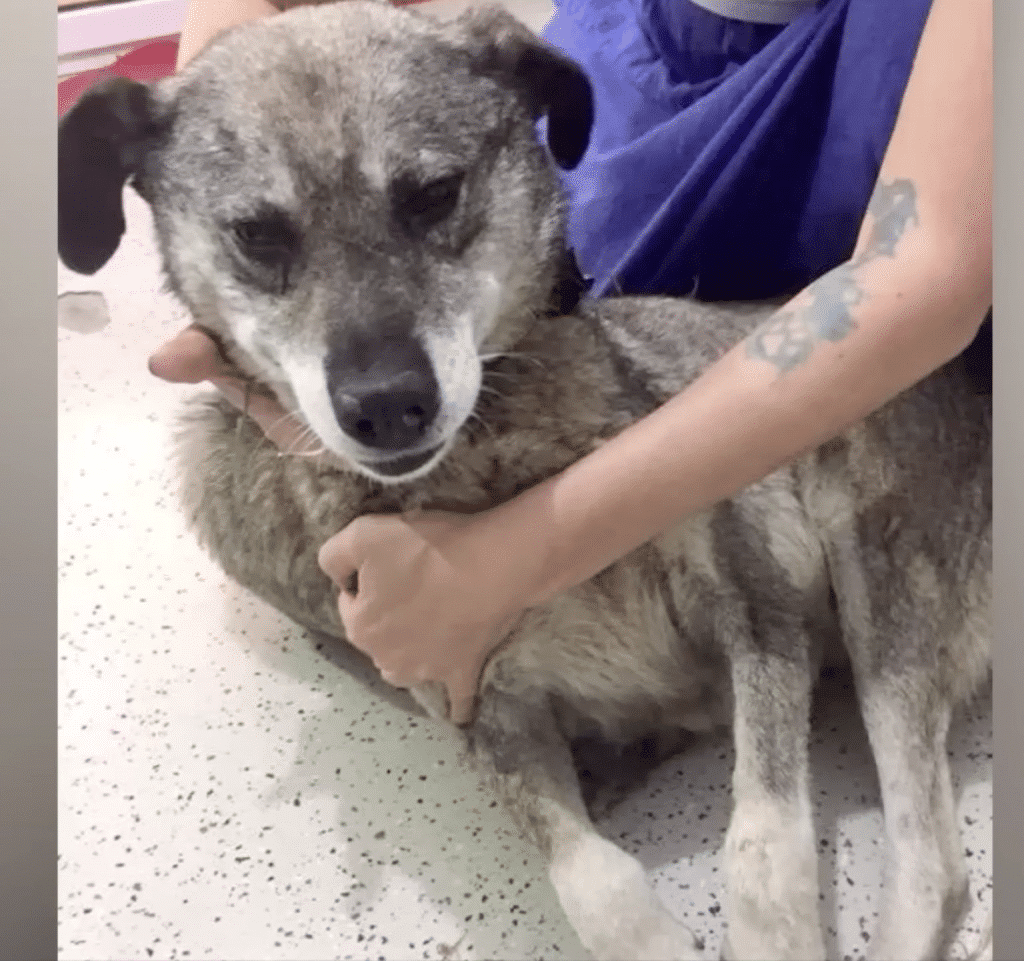
As familiar caregivers returned day after day, she gradually became more willing to take food from them.
Gentle contact became easier too.
These may sound like small achievements, but they represented meaningful changes for a dog who had previously moved away whenever a person entered her personal space.
She was learning something new.
Food would return tomorrow.
Clean water would remain available.
Her bed would still be there after she woke.
The people approaching her were not trying to chase her away.
Consistency began doing what force never could.
It gave Bunica reasons to trust.
Getting Strong Enough for the Next Step
As Bunica received regular nutrition and rest, her physical condition improved.
The goal was not simply to help her gain weight. The veterinary team needed her body to be better prepared for the medical procedure ahead.
Surgery places demands on any patient, and Bunica had arrived in a weakened condition.
So her caregivers focused on building a stronger foundation.
Every meal mattered.
Every comfortable night of sleep mattered.
Every day without the physical demands of surviving outdoors gave her body another opportunity to recover.
Eventually, veterinarians determined that she had become stable enough to proceed.
The mass was still affecting her.
But Bunica was now better prepared to face the operation.
Surgery Removes the Weight From Her Back
Once the veterinary team considered her ready, surgery was scheduled.
The goal was to remove the large mass while managing the surrounding tissue appropriately and supporting Bunica through recovery.
According to the rescue account, the procedure was completed successfully.
Then came another encouraging development.
Testing reportedly determined that the tumor was benign.
For Bunica’s caregivers, the result brought significant relief.
The growth that had altered the way she walked and placed such a noticeable burden on her small body had finally been removed.
Of course, surgery did not mean she could immediately return to normal activity.
Her body needed time to heal.
The surgical area required monitoring.
Rest remained essential.
But something fundamental had changed.
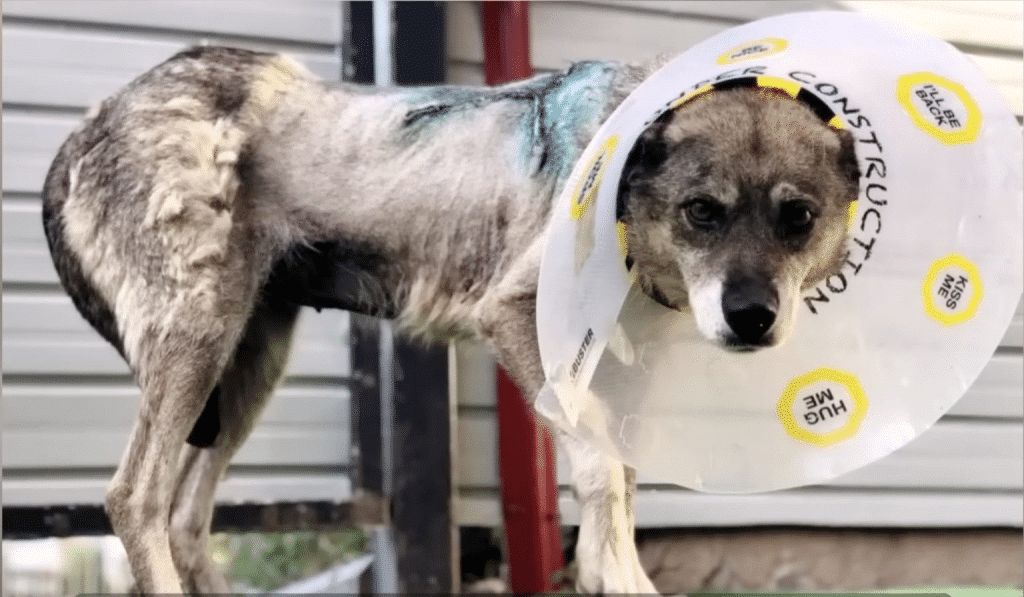
Bunica no longer carried the same physical weight across her back.
Her First Walks Reveal a Different Dog
As the days passed, Bunica gradually became more active.
Without the large mass affecting her movement, her posture began to change.
Her steps looked steadier.
She appeared more comfortable exploring her surroundings.
Eventually, caregivers began taking her on gentle walks.
These outings were very different from the lonely walk that had first brought her to rescuers’ attention.
Now she could move at her own pace without searching for somewhere safe to sleep.
She could pause in the grass.
She could lift her head and investigate new scents.
She could look around because she was curious, not simply because she needed to identify the next potential danger.
Ordinary experiences became milestones.
For a dog who had once struggled slowly down an empty road, a comfortable walk represented something worth celebrating.
The Importance of Veterinary Evaluation
Bunica’s experience also provides an important reminder about unusual lumps and swelling in animals.
A mass cannot be reliably diagnosed simply by looking at it.
Some growths may be benign, while others can require different forms of medical attention. Their size, location, development, and effect on surrounding tissue can also influence treatment decisions.
Professional veterinary evaluation is therefore essential.
Diagnostic testing can help veterinarians determine what a mass is and develop an appropriate treatment plan.
Bunica’s tumor was reportedly found to be benign after removal and testing, but that outcome could not have been safely assumed beforehand.
The same principle applies to pets at home.
If an owner discovers an unusual or changing lump on a dog, consulting a veterinarian is more responsible than trying to identify the condition through appearance alone.
Early professional attention may provide more treatment options and clearer information.
Patience Was as Important as Medical Care
Bunica’s transformation did not begin in the operating room.
It began beside the road.
Before veterinarians could help her, rescuers first had to get close enough to transport her.
And that required patience.
They did not interpret her hesitation as rejection.
They gave her space.
They offered food.
They allowed her to observe them.
That approach turned a frightened encounter into the beginning of cooperation.
This is especially important with unfamiliar stray animals. Fear can influence behavior, and even a normally gentle dog may react unpredictably when frightened or uncomfortable.
Experienced rescuers understand that slowing down can sometimes make progress faster.
Bunica did not need to be conquered.
She needed to feel safe enough to accept help.
From Surviving to Enjoying the World Again
As Bunica recovered, more of her personality became visible.
The dog who had initially focused on maintaining distance could finally spend her energy on other things.
She could enjoy food without wondering when another meal might appear.
She could sleep without constantly searching for a protected corner.
She could explore grass and unfamiliar scents during supervised walks.
Her life became less about endurance and more about ordinary experiences.
That may be the most meaningful transformation of all.
Rescue does not always need to produce a dramatic personality change.
Sometimes success is quieter.
A dog sleeps comfortably.
She approaches a familiar caregiver.
She enjoys her meal.
She walks through the grass without carrying an enormous physical burden.
Those moments can say more about recovery than any dramatic before-and-after photograph.
The Dog Who Kept Walking Finally Gets to Rest
Bunica’s story began with a simple observation.
Someone noticed that a small dog was walking differently.
Then they looked closer.
That second look revealed an animal carrying a problem she could not solve on her own.
What followed was not one dramatic rescue moment.
It was a sequence of thoughtful decisions.
Patience instead of chasing.
Food instead of pressure.
Veterinary evaluation instead of assumptions.
Nutrition and rest before surgery.
Professional treatment followed by careful recovery.
Each decision moved Bunica one step farther from the lonely road where she had been found.
She had kept walking because she had little choice.
Now she finally had somewhere safe to stop.
Summary
Bunica was discovered walking slowly through the countryside with a large mass across her back. She was thin, tired, and cautious around the rescuers who approached her.
Instead of forcing contact, the team used patience, food, and calm behavior to gradually earn enough trust to transport her for veterinary evaluation.
At the clinic, professionals determined that Bunica needed to become stronger before undergoing surgery. She received regular meals, hydration, rest, and consistent care until her condition improved enough for the procedure.
Veterinarians successfully removed the large mass, and subsequent testing reportedly showed that the tumor was benign.
During recovery, Bunica’s movement gradually improved. She began enjoying gentle walks, exploring the grass, and becoming more comfortable with the people caring for her.
Her journey demonstrates that meaningful rescue is rarely about one dramatic moment. It can begin with simply noticing that something is wrong and responding with patience.
Bunica once walked alone because she had nowhere else to go.
Now she has regular care, a comfortable place to rest, and people paying attention to her health.
Sometimes changing an animal’s life begins with nothing more complicated than looking twice and choosing not to walk away.






