For more than a month, a small, frightened dog stayed near the same house, refusing to wander far from the one place where he seemed to feel less alone.
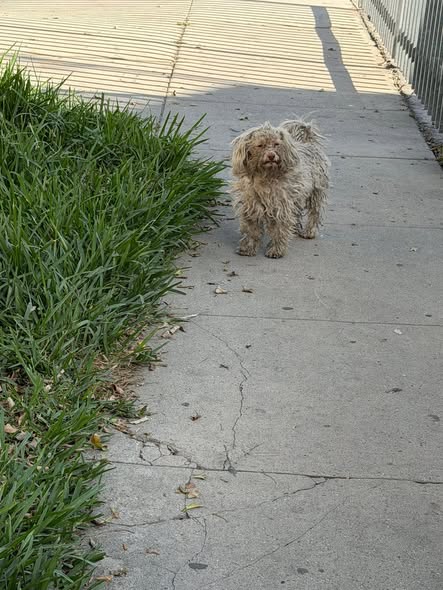
His fur had become heavily matted, dirt covered his little body, and every unfamiliar person made him nervous. Neighbors often saw him sitting quietly on the sidewalk, watching the world pass by.
But there was something unusual about his behavior.
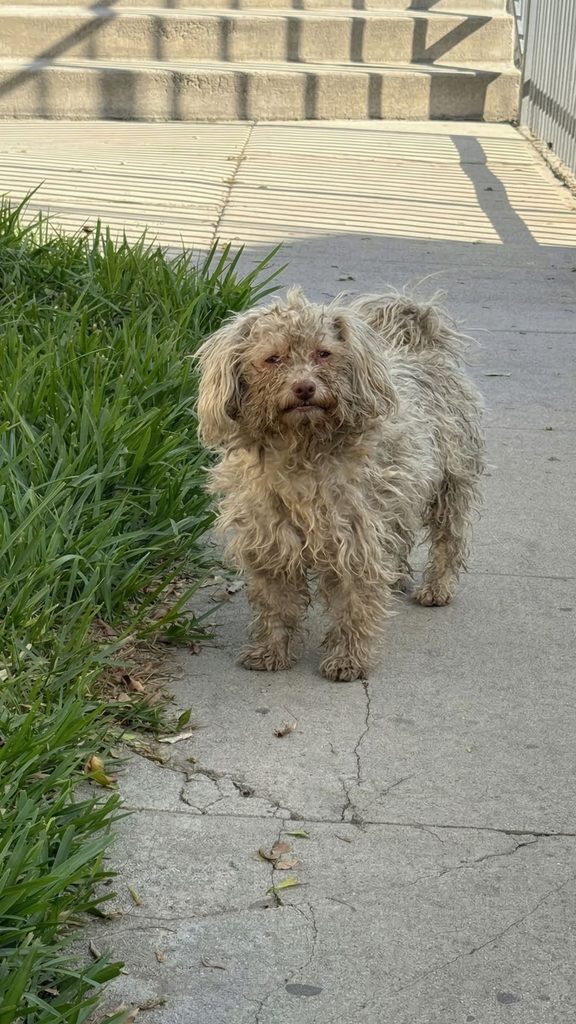
He wasn’t simply waiting for food or searching for shelter. Behind the fence of a nearby home lived another dog, and the lonely stray had developed a special attachment to him.
Day after day, he returned to that fence, apparently finding comfort in the presence of his only canine friend.
Eventually, a concerned neighbor reached out for help. What followed was an emotional animal rescue that gave the little dog, later named Tucker, a chance to leave his difficult days behind.
Video Relate Matted and Rejected, He Stayed on the Street for One Reason The Only Friend He Had Left
A Lonely Dog Finds Comfort Through a Fence
Tucker’s story began in a neighborhood where residents had noticed a small stray dog wandering alone.
His appearance suggested that he had been without proper grooming and regular care for some time.
His coat was thick with tangles, and his cautious behavior made it difficult for anyone to approach him.
Although he moved around the neighborhood, he repeatedly returned to one particular house.
Inside its fenced yard lived another dog.
The two animals had formed an unexpected connection, and Tucker seemed unwilling to leave his new friend behind.
He spent hours resting near the fence, sometimes remaining there for most of the day.
For a dog with no secure home, that familiar presence may have offered a sense of comfort.
The fence separated them physically, but it did not prevent Tucker from returning.
A Neighborhood Notices His Struggle
As the weeks passed, several neighbors became concerned about Tucker’s condition.
They could see that he needed help, but his fear of people made approaching him difficult.
Some residents began leaving food and water nearby.
They understood that forcing contact could frighten him further, so they kept their distance and allowed him to eat when he felt comfortable.
Unfortunately, Tucker’s situation remained unstable.
At times, he managed to slip through the gate into the yard where his canine companion lived.
When this happened, people sent him back outside.
Although the reasons for keeping him out were not explained, the repeated experience left Tucker returning to the sidewalk.
Still, he stayed nearby.
He seemed more interested in remaining close to his friend than finding another place to rest.
Eventually, one concerned neighbor decided that food and occasional attention were not enough.
Tucker needed a safe environment and proper care.
The First Rescue Attempt Becomes Complicated
When a rescuer arrived, she quickly realized that helping Tucker would require patience.
The little dog was extremely frightened.
Every attempt to approach him caused him to retreat, making it difficult to bring him to safety.
The rescuer tried to move carefully, but Tucker panicked and slipped through the gate into the yard.
Unfortunately, the gate was locked.
With no immediate way to reach him safely and daylight fading, the rescuer had to stop the attempt.
Leaving was disappointing, especially after seeing how much help Tucker needed.
However, continuing without a safe plan could have increased his fear or placed him at risk.
The rescuer decided to return the following morning with equipment better suited to a nervous stray.
Tucker would have to spend one more night near the familiar fence.
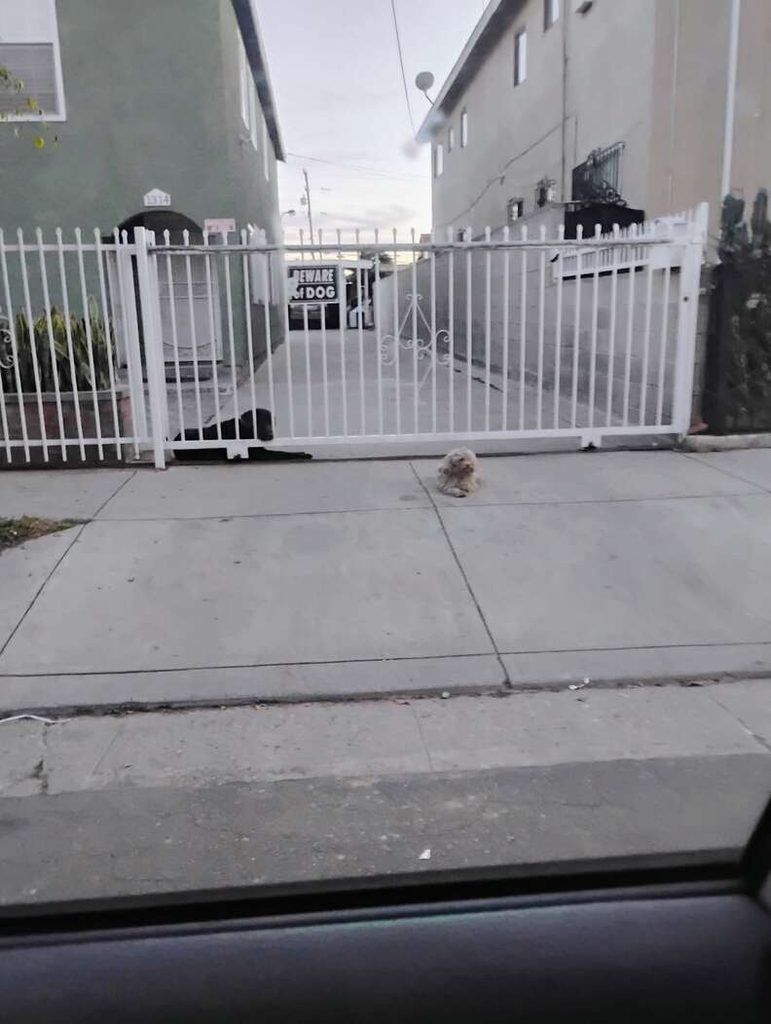
A Humane Trap Offers a Safer Solution
The next morning, the rescuer returned with a humane animal trap and food.
When she reached the house, Tucker was still there.
He was curled up outside the fence, close to the place where neighbors had seen him for weeks.
His familiar routine had not changed.
This time, however, the rescuer had a different approach.
Rather than attempting to catch him by hand, she positioned the trap and used food to encourage him to enter.
Tucker remained cautious.
He approached slowly, checking his surroundings before moving closer.
Eventually, his interest in the food overcame his hesitation.
He stepped inside.
The trap door closed, securing him without the need for a stressful chase.
After weeks of living outdoors, Tucker was finally on his way to a safer environment.
The rescue team gave him a name, marking the beginning of a new chapter.
His name was Tucker.
Veterinary Care Reveals a Dog in Need of Comfort
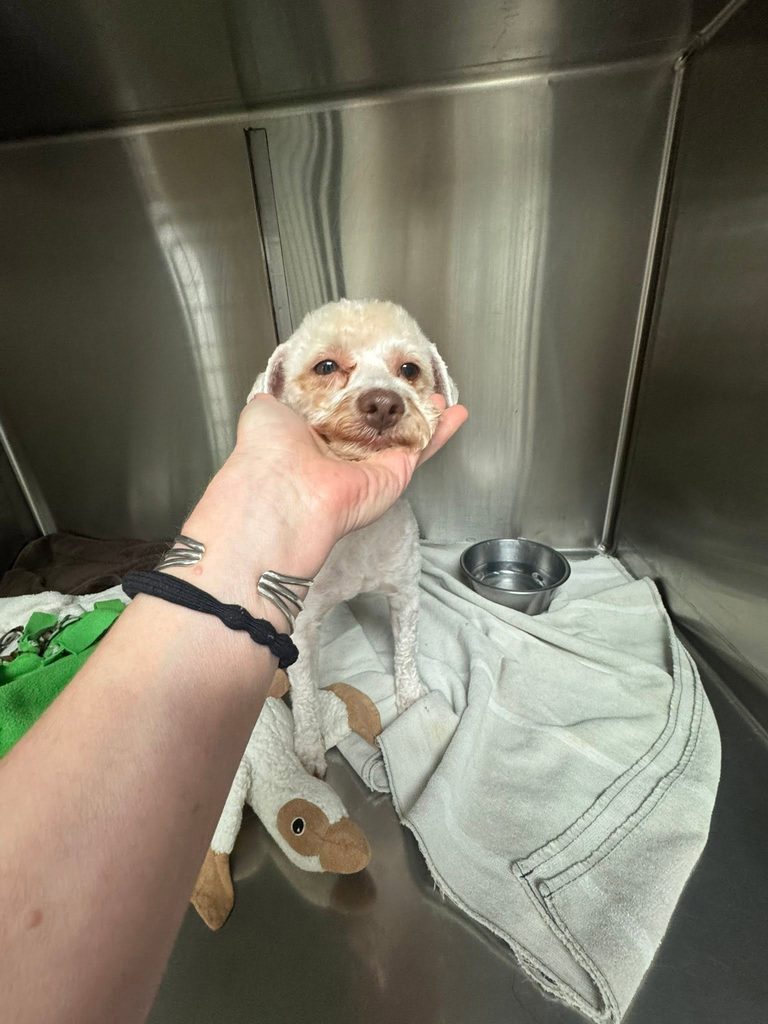
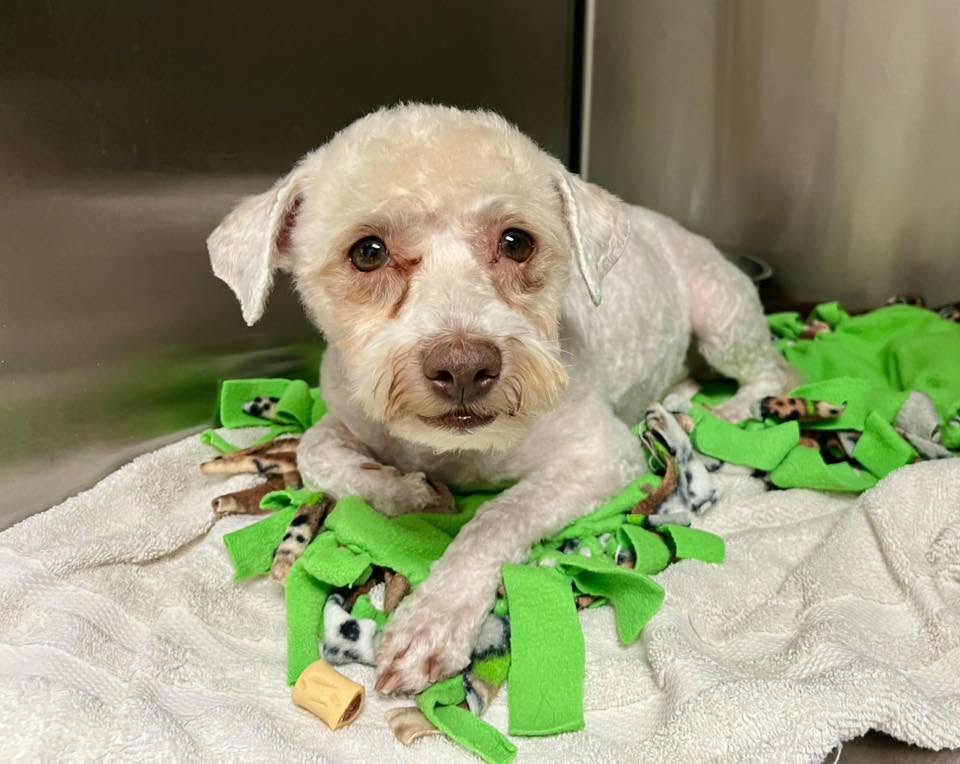
Following his rescue, Tucker was taken for veterinary attention and grooming.
His heavily matted coat was one of the most obvious concerns.
Long, tangled fur can create significant discomfort for dogs, particularly when mats become tightly packed against the skin.
These tangles may restrict movement, trap dirt, and make routine grooming increasingly difficult.
For Tucker, removing the neglected coat was an important part of restoring his comfort.
The grooming process required careful attention.
As the thick mats were removed, his small frame became more visible.
Beneath the tangled fur was a fragile-looking dog who had clearly needed assistance for some time.
The transformation was remarkable.
Without the heavy coat, Tucker could move more comfortably and begin enjoying the simple relief of being clean.
A Warm Bath Marks a Fresh Beginning
After the grooming, Tucker received a warm bath.
It was a small but meaningful part of his recovery.
The dog who had spent weeks resting on sidewalks and avoiding unfamiliar people was finally receiving personal care in a protected environment.
His fur was clean, the uncomfortable mats were gone, and he no longer needed to search the neighborhood for a place to sleep.
The change went beyond appearance.
For the first time since neighbors had begun watching him, Tucker had reliable access to food, shelter, and people responsible for his well-being.
His future was still being arranged, but his immediate circumstances had improved dramatically.
He could finally rest without worrying about being chased away from the place he considered familiar.
A Frightened Dog Begins Discovering Safety
The morning after his rescue was very different from the mornings Tucker had experienced on the street.
He no longer woke beside a fence.
He did not have to watch passing strangers from a distance or wait for someone to leave food outside.
Instead, he had a safe place to rest.
His caregivers could begin helping him become comfortable with human attention and everyday routines.
For a frightened dog, adjustment often takes time.
New surroundings, unfamiliar voices, and changes in routine can initially feel overwhelming.
Patience is especially important when an animal has spent weeks avoiding close contact with people.
Tucker’s rescue offered him the stability needed to begin that process.
Rather than forcing immediate affection, his caregivers could allow trust to develop naturally.
Every calm interaction would help him learn that people could provide more than uncertainty.
Why Humane Rescue Methods Matter
Tucker’s story demonstrates the importance of using thoughtful methods when rescuing frightened stray dogs.
His first rescue attempt was unsuccessful because fear caused him to retreat into a locked yard.
Trying to pursue him more aggressively might have made the situation harder to manage.
Instead, the rescuer returned with a humane trap.
This approach allowed Tucker to enter voluntarily while following the scent of food.
Humane traps can be useful in certain rescue situations, particularly when a frightened animal cannot be approached safely.
However, they should be used responsibly and monitored by experienced rescuers.
The goal is not simply to capture an animal.
It is to bring that animal to safety while minimizing unnecessary stress.
In Tucker’s case, patience and a carefully planned second attempt made the difference.
The Special Bond That Kept Tucker Nearby
One of the most touching details of Tucker’s journey was his attachment to the dog behind the fence.
Nobody knows exactly what Tucker felt during those weeks.
However, his repeated visits suggested that the other dog’s presence had become an important part of his daily routine.
Dogs are social animals, and familiar companions can provide comfort.
For Tucker, the fenced yard was the one location he returned to consistently.
Even when he was sent away, he came back.
His behavior reminds us that animals can form meaningful social connections under unexpected circumstances.
The friendship did not provide the shelter or veterinary care he needed, but it appeared to give him a reason to remain in a familiar place.
Fortunately, that routine also made it possible for concerned neighbors to notice him and arrange assistance.
Waiting for the Forever Home He Deserves
Tucker’s life has changed considerably since his rescue.
He is no longer the heavily matted stray resting outside a neighborhood fence.
He has received grooming, veterinary attention, and a safer place to stay.
Most importantly, he is now surrounded by people who recognize his needs and are working toward a better future for him.
According to the rescue account, Tucker has not yet found his permanent adoptive family.
He is still waiting for a forever home where he can experience stability, affection, and consistent care.
His next chapter remains unwritten.
But the most difficult part of his journey has already changed.
He no longer needs to depend on brief visits through a fence to feel connected to another living creature.
He now has an opportunity to build new relationships in a secure environment.
Summary
Tucker was a small, frightened stray dog who spent more than a month returning to the same house because of a special connection with another dog living behind its fence.
His fur was heavily matted, his body was dirty, and his fear of unfamiliar people made rescue difficult.
Concerned neighbors provided food and water, while one resident eventually contacted a rescuer for help.
The first rescue attempt failed when Tucker escaped into a locked yard. The following morning, the rescuer returned with a humane trap and successfully brought him to safety.
Tucker then received veterinary attention, careful grooming, and a warm bath that removed his uncomfortable mats and revealed the little dog underneath.
Today, he is safe and receiving the care he needs while waiting for a permanent home.
His journey is a reminder that animal rescue often requires more than a single act of kindness. It takes observation, patience, planning, and people willing to return when the first attempt does not succeed.
For Tucker, a friendship through a fence helped him endure a lonely chapter. Thanks to compassionate neighbors and a determined rescuer, he now has the chance to find a family who will welcome him on the other side of the door.






