At 9:41 p.m., a phone call interrupted a quiet evening at Li Liu’s small animal rescue camp. Dr. Song, the camp’s lead veterinarian, had just finished caring for an older dog who was finally resting comfortably.
The caller reported an injured dog on Nanjing Road in Harbin’s Hulan district. The animal had reportedly been struck by a vehicle and could not stand.
Dr. Song immediately prepared to leave.
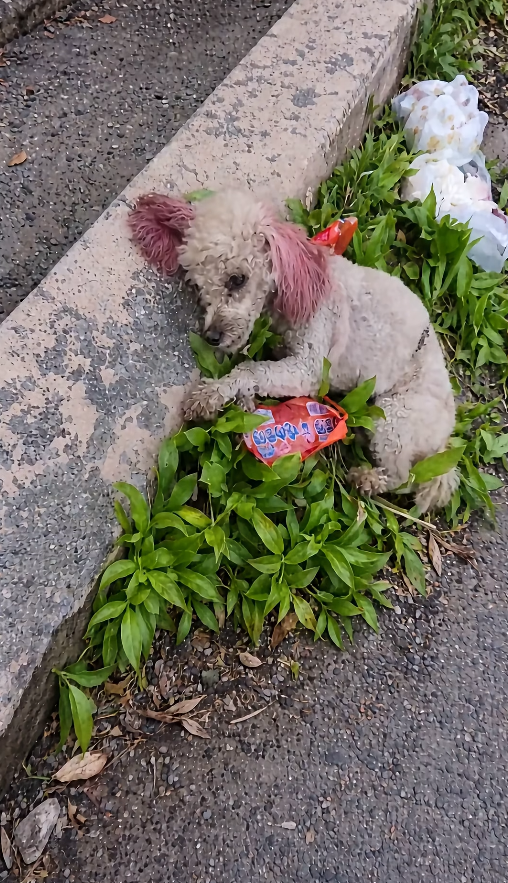
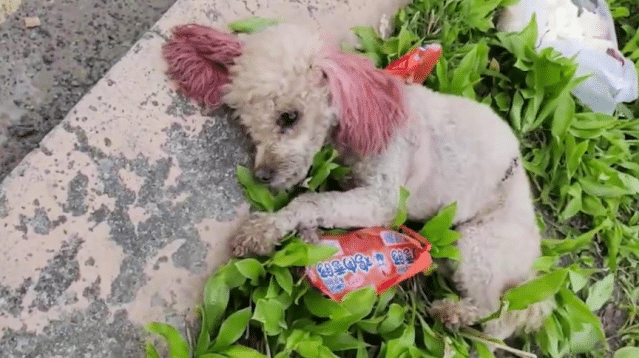
When he reached the location, he found a dog who had been lying near an entrance for hours. His legs moved weakly, and he had reportedly received neither food nor water.
Video Relate Midnight Rescue How One Veterinarian’s Quiet Resolve Gave Teddy a Second Chance
The veterinarian carefully transported him to the rescue facility, where an examination revealed injuries that would require further treatment.
The team named him Teddy.
His journey from a roadside emergency to the safety of the rescue camp would depend on professional veterinary care, careful monitoring, and the dedication of people willing to respond when he needed them most.
A Quiet Evening Interrupted by an Emergency Call
Rescue work rarely follows a predictable schedule.
At Li Liu’s animal rescue camp, Dr. Song had been attending to an older patient whose injured ear required treatment. After hours of restlessness, the dog had finally settled down.
The improvement offered a brief moment of relief.
Then the telephone rang.
At 9:41 p.m., someone reported that a dog had been injured on Nanjing Road in Harbin’s Hulan district.
The caller provided the location, allowing Dr. Song to respond without delay.
Although the full circumstances of the incident were not established, the report indicated that a vehicle had struck the animal.
Dr. Song understood that a dog unable to stand after a road accident needed prompt veterinary assessment.
He gathered what he needed and headed toward the reported location.
A Dog Unable to Stand Beside the Road
When Dr. Song arrived, a witness described what had happened earlier.
The dog had been lying near an entrance, unable to get up. His legs moved weakly, but he could not support his body.
The veterinarian asked whether anyone had provided food or water.
The witness said the dog had received neither.
That information added to the concern surrounding his condition.
An injured animal may be unable to reach basic necessities, particularly when movement causes discomfort.
Road accidents can also result in injuries that are not immediately visible.
For Teddy, remaining outside without professional attention was not a safe option.
Dr. Song approached him carefully and prepared to transport him to the rescue facility.
Despite his condition, the dog remained relatively calm during handling.
The veterinarian lifted him gently and moved him into the vehicle.
For the first time since the reported accident, Teddy was on his way to medical care.
The Journey Back to the Rescue Camp
The drive back to the facility marked the beginning of Teddy’s treatment.
Dr. Song needed to assess the dog’s injuries, manage his discomfort, and determine whether additional intervention would be necessary.
An animal injured in a vehicle collision may require careful handling because unnecessary movement can aggravate certain injuries.
Teddy’s inability to stand made professional assessment particularly important.
The rescue account describes him remaining calm during transportation.
That behavior made handling easier, although it did not establish the extent of his injuries.
Once they reached the camp, Dr. Song and the team began examining him.
The quiet evening had turned into another late-night medical emergency.
But Teddy was no longer alone beside the road.
A Careful Veterinary Examination
Back at the rescue facility, Dr. Song assessed Teddy’s condition and documented his injuries.
The team prioritized pain management and stabilization.
They also monitored his breathing and other vital signs while evaluating the effects of the accident.
The examination revealed rib injuries that would require surgery.
Such injuries can make movement and breathing uncomfortable, and treatment decisions depend on the animal’s overall condition and the nature of the damage.
The account does not provide detailed imaging results or a complete surgical report.
However, it confirms that Dr. Song identified the need for an operation and developed a treatment plan.
For Teddy, this was an important change.
He had arrived unable to stand, with no clear indication that he had received care earlier in the day.
Now, veterinary professionals were monitoring him and addressing his immediate needs.
A Name and a Path Toward Recovery
The rescue team gave the dog a name: Teddy.
It was a simple gesture, but it marked the beginning of his new relationship with the people caring for him.
Dr. Song explained that surgery would be needed to address the rib injuries.
The team also understood that Teddy would require continued observation and a gradual recovery period.
There was no guarantee that every stage would be easy.
An injured dog may need time to regain strength, tolerate normal activity, and become comfortable moving again.
Teddy’s caregivers focused on his condition rather than rushing toward a quick result.
They provided appropriate care and monitored his response.
The goal was to help him recover sufficiently to leave the hospital and continue rehabilitation in a protected environment.
Searching for Teddy’s Family
While Teddy received treatment, the rescue team shared his story publicly.
They hoped someone might recognize him.
A dog found injured on the road may be a lost companion, but his circumstances alone cannot establish whether he has an owner.
Sharing photographs and identifying details can help reunite missing pets with their families.
The team therefore made efforts to locate anyone who might know Teddy.
The supplied account does not confirm whether his previous owner was found.
His immediate medical needs remained the priority while the search continued.
Regardless of his background, Teddy needed a safe place to recover.
The rescue camp was prepared to provide that support.
The First Days of Medical Care
During the days that followed, Teddy remained under veterinary observation.
His caregivers provided treatment, suitable nutrition, and gentle handling.
They watched for changes in his condition and adjusted care according to his needs.
Progress came gradually.
His breathing became more settled, and his overall condition improved.
The team continued monitoring him while allowing his body time to recover.
For an animal injured in a road accident, rehabilitation may involve several stages.
Initial stabilization comes first, followed by treatment of identified injuries and a gradual return to ordinary activities.
The exact timeline depends on the individual dog.
Teddy’s caregivers did not expect him to recover immediately.
Instead, they focused on steady progress and continued attention.
Small Improvements Bring Encouragement
As Teddy’s condition stabilized, the team began seeing encouraging changes.
He gradually regained strength and became more comfortable.
His progress reflected the value of consistent medical care rather than a single dramatic moment.
For Dr. Song and the rescue staff, these improvements mattered.
They had first encountered Teddy when he could not stand and had been left without assistance for hours.
Now, he was receiving regular attention in a controlled environment.
His recovery also demonstrated why follow-up care matters after emergency treatment.
Removing an animal from immediate danger is only the first step.
Medical monitoring, nutrition, rest, and suitable rehabilitation help support the longer recovery process.
Teddy still needed time, but his condition was moving in a positive direction.
Ready to Leave the Animal Hospital
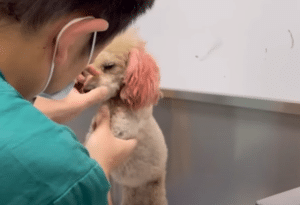
Eventually, the veterinary team determined that Teddy was ready for discharge.
This was a major milestone in his journey.
He no longer needed the same level of hospital-based care described during his initial treatment.
However, leaving the hospital did not mean returning to the street.
Teddy was discharged into the care of Li Liu’s rescue camp.
There, he could continue recovering in a protected environment with people familiar with his needs.
The transition gave him a stable routine and a comfortable place to rest.
His caregivers could continue observing his progress while providing food, water, and appropriate daily care.
The dog who had once been unable to stand beside the road now had somewhere safe to recover.
A New Routine at the Rescue Camp
Life at the camp offered Teddy something he had lacked during the emergency: stability.
He could rest without passing vehicles nearby.
His caregivers provided regular meals and monitored his condition.
He also had access to people who understood his medical history and could respond if concerns developed.
For recovering animals, a predictable routine can be valuable.
Quiet surroundings and appropriate activity allow the body time to heal.
Consistent handling can also help a dog become comfortable with unfamiliar caregivers.
Teddy’s story does not provide a confirmed adoption or reunion outcome.
What it does establish is that he left the animal hospital and entered the rescue camp’s care.
His immediate future was no longer defined by the roadside where he had been found.
Why Prompt Help Matters After Road Accidents
Teddy’s experience highlights the importance of responding appropriately when an injured animal is discovered.
A dog involved in a vehicle collision may have injuries that are difficult to assess without veterinary equipment.
Even if the animal appears calm, serious medical concerns may still be present.
Members of the public should avoid unnecessary handling and contact an experienced rescue organization or veterinary service whenever possible.
Providing an accurate location and describing the animal’s condition can help responders prepare.
If the animal is near traffic, human safety must also remain a priority.
In Teddy’s case, the emergency call provided Dr. Song with the information he needed to reach the dog.
That decision connected an injured animal with professional treatment.
It also gave the rescue team an opportunity to arrange continued care after hospitalization.
A Safer Tomorrow for Teddy
Teddy’s rescue began during a late-night emergency.
Dr. Song responded to the call, located him, transported him to the facility, and began addressing his injuries.
The veterinary team then supported him through treatment and recovery.
Eventually, Teddy became stable enough to leave the hospital.
His journey demonstrates how several connected actions can change an animal’s circumstances.
Someone noticed that he needed help.
A veterinarian responded.
The rescue camp provided treatment and ongoing support.
Each stage contributed to the outcome.
For Teddy, the result was a safer environment and an opportunity to continue healing.
Summary
Teddy was found injured on Nanjing Road in Harbin’s Hulan district after reportedly being struck by a vehicle.
At 9:41 p.m., Dr. Song received an emergency call and traveled to the location.
A witness explained that the dog had been unable to stand and had received neither food nor water.
Dr. Song carefully transported him to Li Liu’s animal rescue camp, where veterinary assessment revealed rib injuries requiring surgery.
The team provided medical treatment, pain management, nutrition, and continued monitoring.
They also shared Teddy’s story in the hope of locating anyone who recognized him.
As his condition improved, Teddy regained strength and eventually became ready for hospital discharge.
He then entered the rescue camp’s care, where he could continue recovering in safety.
His story reminds us that timely intervention, professional veterinary treatment, and patient rehabilitation can make a meaningful difference for an injured animal.
One late-night phone call gave Teddy the opportunity to leave a dangerous roadside behind and begin a safer chapter.






