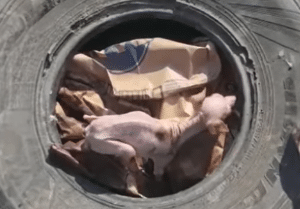
At just five months old, Julie had already experienced more hardship than any puppy should. Her fur had been dyed bright pink, and her owner reportedly used her to entertain crowds in the city. Under flashing lights, she performed while people watched, laughed, and took photographs.
But when Julie became ill and could no longer perform, her circumstances changed dramatically.
According to the rescue account, her owner placed her inside an old metal cage and abandoned her in an isolated field. For six days, the little dog remained there without food or water.
Her rescue began when a local farmer noticed an unusual patch of pink among the tall grass. Curious, he approached and discovered the weakened puppy inside the cage.
What followed was a difficult journey through emergency veterinary treatment, gradual rehabilitation, and a second chance with someone who valued her as a companion rather than entertainment.
Video Pink Fur, A Broken Past The Little Puppy Who Refused to Disappear
A Pink Puppy Left Behind in an Empty Field
Before her rescue, Julie was known for her unusual appearance. Her owner had dyed her coat pink and reportedly used her as part of an entertainment act.
At five months old, she was still a young puppy who needed appropriate nutrition, veterinary care, rest, and a safe environment.
Instead, the account describes her performing in a noisy setting where people gathered to watch.
When she became sick, her owner reportedly stopped caring for her and left her inside a rusted cage in a remote field.
The location offered little protection or access to assistance.
Six days passed before someone discovered her.
By then, Julie was severely weakened. Her condition reflected the serious consequences of prolonged deprivation and untreated illness.
A Farmer Notices Something Unusual
The farmer who found Julie was walking through the fields when a faint patch of pink caught his attention.
The color stood out against the surrounding grass.
As he approached, he discovered a small dog lying inside an old metal cage.
Julie appeared extremely thin and unresponsive.
Her body showed signs of illness, and she needed urgent veterinary attention.
The farmer recognized her as the pink puppy he had previously seen.
That familiarity helped him understand that the animal inside the cage was not simply an unfamiliar stray.
He arranged for her to receive medical care.
The discovery became the turning point in Julie’s story.
Without the farmer noticing the unusual color in the field, she might have remained hidden for much longer.
Emergency Treatment at the Veterinary Clinic
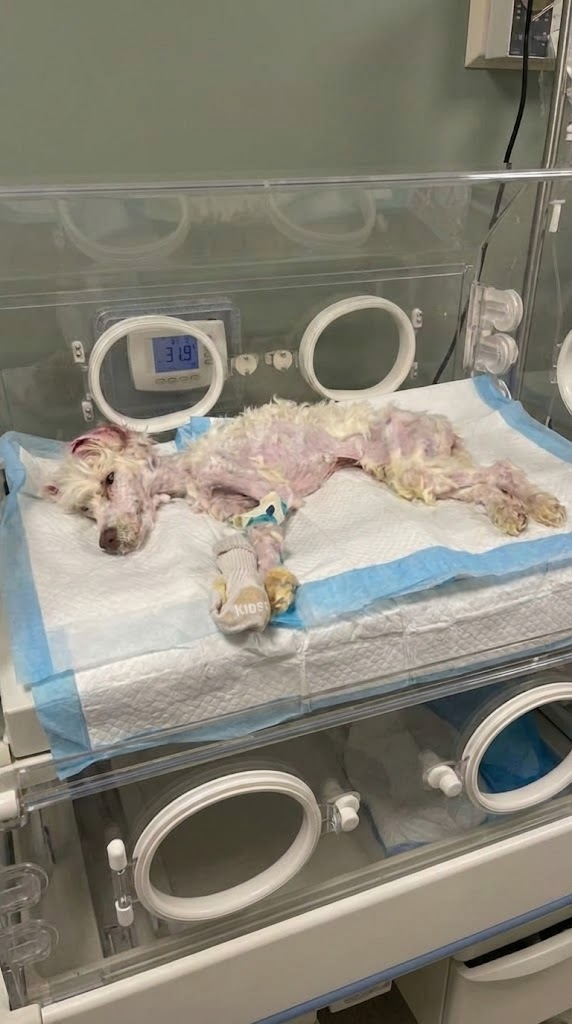
Julie arrived at the clinic in critical condition.
According to the rescue account, veterinary professionals diagnosed severe dehydration, dangerously low blood pressure, and sepsis.
She also had infected skin lesions that required treatment.
The veterinarian reportedly estimated her survival chances at approximately 50 percent. This was an assessment of Julie’s condition at that time, not a prediction that applies to other dogs experiencing similar illnesses.
Her medical team began working to stabilize her.
Severe dehydration can interfere with circulation and normal organ function, while sepsis requires prompt professional treatment.
For a young puppy who had gone without adequate food and water, the combination presented a significant challenge.
Julie needed careful monitoring and sustained medical attention.
Her recovery would not happen overnight.
The First Encouraging Signs
During the early stage of treatment, Julie remained weak.
Her caregivers watched closely for changes in her responsiveness and overall condition.
Eventually, she opened her eyes.
The account describes a small movement of her tail when she saw a gentle face nearby.
It was a quiet moment, but it gave the people caring for her encouragement.
A tail movement alone cannot establish exactly what a dog feels, yet it showed that Julie was beginning to respond to her surroundings.
Her caregivers continued treatment while allowing her body time to recover.
The immediate goal was to improve her medical condition before introducing more demanding activities.
For Julie, every small improvement mattered.
She needed to regain enough strength to sit, stand, eat, and eventually move comfortably again.
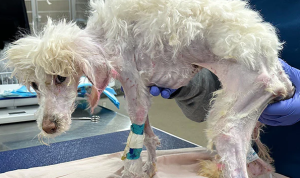
Day Eight: Julie Sits Up
By the eighth day of recovery, Julie could sit upright for approximately three minutes.
The achievement might seem ordinary for a healthy puppy, but it represented meaningful progress for an animal who had arrived at the clinic severely weakened.
Sitting required strength and coordination that she had previously lacked.
Her caregivers continued supporting her as she gradually became more active.
Recovery from a serious illness often involves periods of rest between small milestones.
Animals may improve at different rates depending on their underlying condition, treatment response, and nutritional needs.
Julie was not ready to return to ordinary puppy activities, but she was beginning to regain control of her movements.
Day Twelve: Standing on Her Own
Four days later, Julie reached another milestone.
She stood on her own legs.
Although her movements remained unsteady, the change showed that she was rebuilding strength.
The puppy who had initially been found unresponsive could now support her own weight.
Her caregivers continued monitoring her condition and allowing her activity to increase gradually.
The account does not describe a specific physical therapy program, so the precise rehabilitation methods remain unknown.
What is documented is that Julie’s mobility improved over the following days.
She was becoming more capable of interacting with the environment around her.
For a young dog, regaining movement also creates opportunities for enrichment, exploration, and social interaction when medically appropriate.
Day Eighteen: Her Appetite Returns
By day eighteen, Julie’s infection was improving, and her appetite had returned.
Eating consistently was an important part of her rehabilitation.
After severe malnutrition or prolonged food deprivation, nutritional recovery should follow veterinary guidance.
The body needs sufficient energy and nutrients to rebuild strength, but feeding must suit the animal’s medical condition.
Julie’s improved appetite offered another encouraging sign.
As her health stabilized, her caregivers also continued treating her skin and coat.
Medicated baths helped address her skin condition and gradually removed the artificial pink coloring.
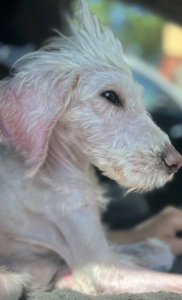
Beneath the dye, Julie’s natural white fur began to appear.
Her changing appearance became a visible reminder of how far she had come.
The puppy who had once been presented as a pink novelty was slowly returning to her natural appearance.
More Than a Change in Fur Color
Julie’s recovery was about much more than the color of her coat.
Her physical health improved through medical treatment, nutrition, and continued attention.
She also gained the opportunity to experience a safer environment.
Dogs depend on people to provide suitable living conditions, particularly when they are young or unwell.
Using an animal for entertainment does not remove the responsibility to meet its welfare needs.
Regular veterinary care, appropriate food, access to water, and safe accommodation remain essential.
Julie’s experience illustrates the consequences when those responsibilities are neglected.
It also shows how professional treatment and consistent care can create opportunities for recovery, even after a serious medical emergency.
The Account Describes an Investigation
While Julie received treatment, authorities reportedly located her former owner.
According to the account, the owner said Julie had become too weak to continue entertaining people.
The story states that consequences followed, although it does not identify the specific legal charges, penalties, or final outcome.
Those details should not be assumed.
What matters to Julie’s immediate recovery is that she was no longer in the environment where she had become ill and been abandoned.
Her caregivers could now focus on helping her regain strength.
Meanwhile, the farmer who had discovered her continued to play an important role in her future.
A Farmer Decides to Adopt Julie
The man who found Julie in the field developed a lasting attachment to her.
He had seen her at one of the most difficult moments of her life and followed her progress through treatment.
Eventually, he decided to adopt her.
After approximately six weeks of veterinary care and rehabilitation, Julie was ready to leave the clinic.
She would not return to the entertainment setting described in her past.
Instead, she would live with the person who had noticed her in the field and helped arrange her rescue.
For Julie, adoption meant a permanent home and a more predictable daily routine.
She could receive companionship and care without being expected to perform for crowds.
Her new life would center on her needs as a dog.
A White Dog Enjoying Life in the Fields
Today, the account describes Julie running freely through the fields near her new home.
Her natural white coat has replaced the bright pink appearance that once made her recognizable.
The setting is especially meaningful because it contrasts with where her rescue began.
She was discovered confined inside a cage in an isolated field.
Now, she can explore open spaces with the security of a home and a caring owner.
Her story is not simply about surviving a medical emergency.
It is also about the importance of responsible ownership and the lasting difference that one attentive person can make.
The farmer noticed something unusual, investigated, and helped a vulnerable animal receive care.
His decision to adopt Julie completed the transition from emergency rescue to long-term companionship.
Summary
Julie was a five-month-old puppy whose fur had been dyed pink for an entertainment act. After becoming ill, she was reportedly abandoned inside a rusted cage in an isolated field.
Six days later, a local farmer recognized her unusual coloring and discovered her in a severely weakened condition.
At the veterinary clinic, Julie received treatment for dehydration, low blood pressure, sepsis, and infected skin.
Her recovery progressed gradually. She sat upright on day eight, stood independently on day twelve, and showed improved appetite and infection symptoms by day eighteen.
Medicated baths also helped remove the artificial dye, revealing her natural white coat.
After approximately six weeks of treatment, Julie left the clinic and joined the farmer who had rescued her.
She now enjoys a safer life in the countryside, where she can explore, play, and receive the care she needs.
Julie’s journey highlights the importance of animal welfare, timely veterinary treatment, responsible adoption, and the compassion of people willing to help an animal in need.