When rescuers received an urgent call about a small dog discovered inside a black trash bag, they knew the situation required immediate attention.
The puppy was lying almost motionless when the team reached him. He appeared severely undernourished, dehydrated, and too weak to respond normally.
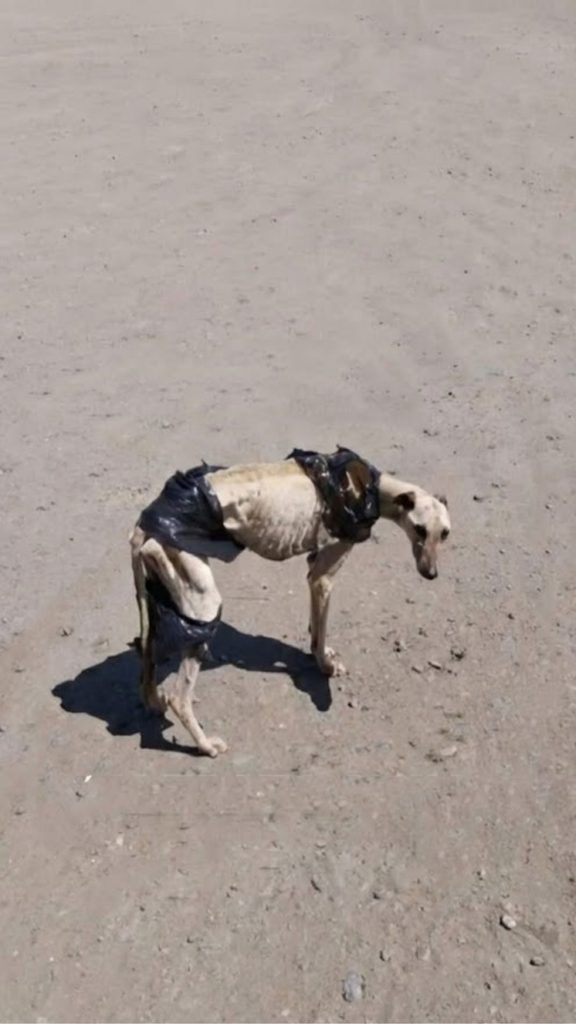
His condition raised serious concerns about whether he could survive without emergency veterinary treatment.
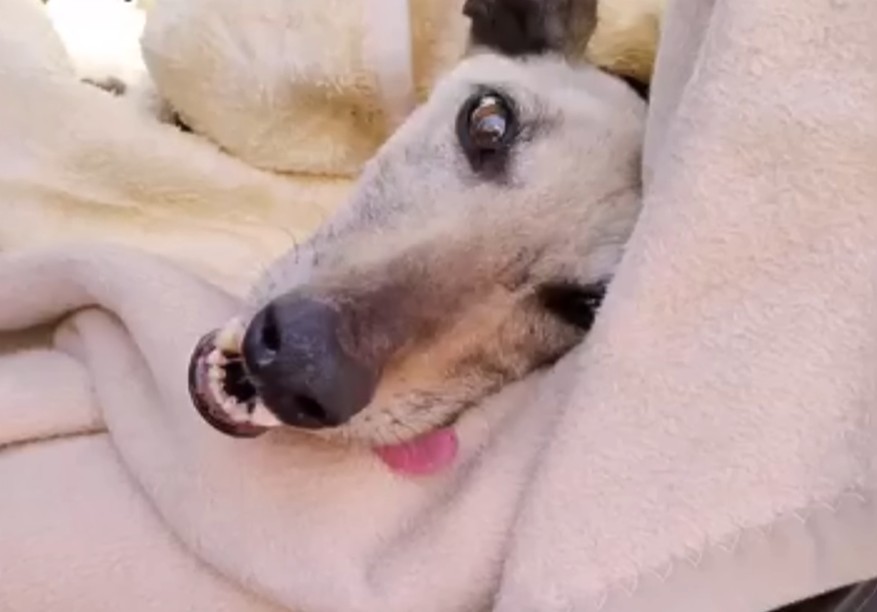
The rescuers gently wrapped him in a warm blanket and transported him to a veterinary clinic, where medical staff began working to stabilize him.
They named him Waldito.
Video A Discarded Trash Bag Hid a Fading Heartbeat That Refused to Give Up
What followed was a remarkable journey of animal rescue, medical rehabilitation, and gradual recovery. Over five months, the fragile puppy began eating, regained his strength, learned to trust familiar people, and eventually found a permanent home near the ocean.
Today, his story offers a moving example of how timely intervention and dedicated care can give a vulnerable animal another opportunity to enjoy life.
A Distressing Discovery That Required Immediate Help
The rescue began with a call reporting that a small dog had been found inside a black trash bag.
When the team arrived, they discovered Waldito lying in the dirt, barely moving.
His thin body and limited responsiveness suggested that he was in serious physical distress.
The rescuers could not determine his complete history from the circumstances alone, but his condition made one thing clear: he needed professional medical attention.
They carefully lifted him and wrapped him in a thick blanket.
The blanket provided warmth and helped protect his fragile body during transportation.
Rather than attempting to manage his condition at the discovery site, the team prioritized getting him to an emergency veterinary clinic.
For animals experiencing severe weakness or dehydration, prompt veterinary assessment can be essential.
Waldito’s journey toward recovery began with that decision.
Emergency Veterinary Care Gives Waldito a Chance
At the clinic, veterinary professionals examined the puppy and began providing supportive treatment.
The rescue account describes Waldito as severely malnourished, dehydrated, and anemic.
These conditions can place considerable strain on a young animal’s body.
A dog experiencing significant malnutrition may lack the energy and nutritional reserves needed for ordinary activity.
Dehydration can further affect circulation and normal bodily functions, while anemia may reduce the blood’s ability to transport oxygen effectively.
Waldito required close monitoring and carefully managed treatment.
The veterinary team administered fluids and medication while observing his condition.
The precise treatment protocol is not detailed in the account, but the early period involved intensive medical attention.
His caregivers understood that improvement might not happen quickly.
They focused on supporting him through each stage rather than expecting an immediate transformation.
The First Days of Recovery
During his initial days at the clinic, Waldito remained extremely weak.
He needed ongoing care while his body responded to treatment.
For a puppy in such a vulnerable condition, recovery requires careful management.
Veterinary professionals must consider hydration, nutritional support, underlying medical concerns, and the animal’s ability to tolerate treatment.
Severely undernourished animals may also require a controlled feeding plan rather than unrestricted food immediately after rescue.
The appropriate approach depends on veterinary assessment and the individual’s condition.
Waldito’s caregivers continued monitoring him closely.
Then they noticed a small but encouraging change.
His paw moved.
The movement was subtle, but it showed that he was beginning to respond.
It did not mean his recovery was complete. However, after days of profound weakness, the sign offered encouragement to the people caring for him.
A Small Movement Becomes an Important Milestone
Waldito’s early progress came in small steps.
At first, even a slight movement stood out.
As treatment continued, he gradually became more responsive.
His caregivers observed changes in his breathing, appetite, and general activity.
These developments suggested that his condition was improving under veterinary supervision.
Recovery from severe physical weakness is rarely immediate.
The body needs time to restore strength, and each stage may require adjustments to nutrition and medical care.
For Waldito, the process involved consistent attention rather than one dramatic intervention.
His veterinary team continued supporting him while he slowly regained the ability to participate in ordinary daily activities.
Eventually, he began showing interest in food.
That change marked another important step.
Learning to Eat and Regain Strength
As Waldito became more stable, his caregivers introduced small, measured portions of food.
His nutritional recovery was an essential part of his rehabilitation.
Food provides the energy and nutrients necessary to maintain bodily functions, support tissue repair, and rebuild strength.
However, animals recovering from severe malnutrition may need carefully planned feeding schedules.
Veterinary guidance helps ensure that nutritional support matches the animal’s medical condition.
Waldito gradually began eating more consistently.
His breathing also became steadier, and his overall appearance improved.
The rescue account describes a brighter expression and increasing responsiveness as his recovery progressed.
These changes were encouraging because they reflected more than temporary activity.
They showed that he was becoming better able to engage with his surroundings.
The puppy who had initially been too weak to respond was beginning to participate in everyday life.
Standing Again After Weeks of Care
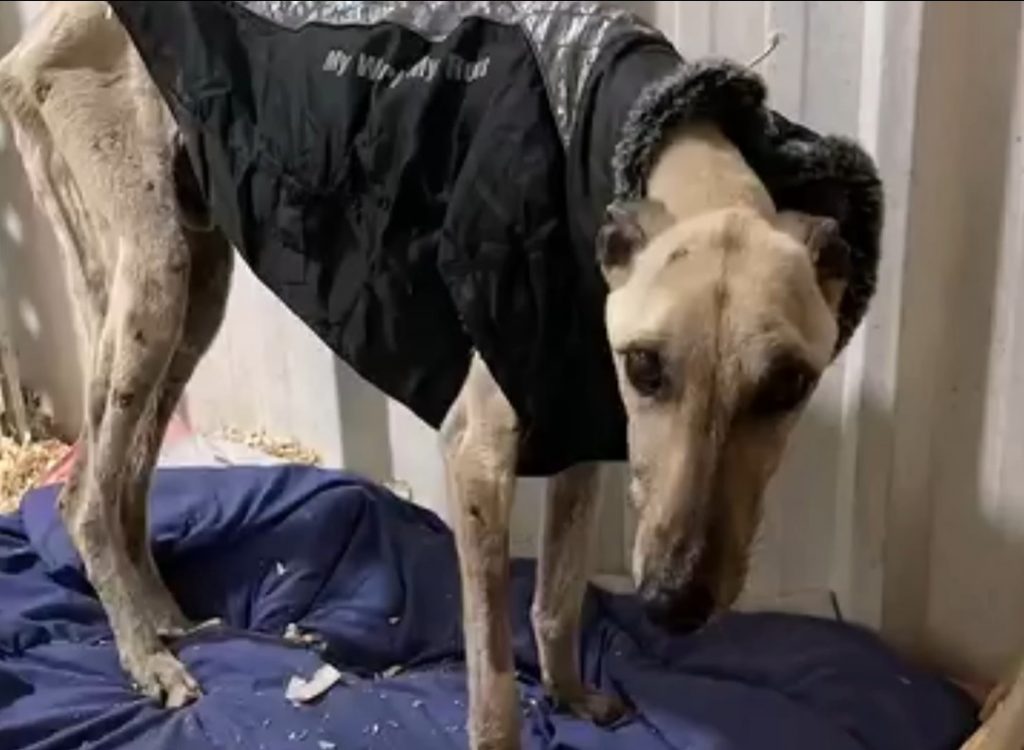
Within several weeks, Waldito had regained enough strength to begin standing.
His legs were initially unsteady, and he still required a gentle approach.
After prolonged weakness, an animal may need time to rebuild muscle strength and coordination.
Short, appropriate periods of movement can form part of rehabilitation when a veterinarian determines that the animal is ready.
Waldito’s caregivers gradually introduced new experiences as his condition improved.
They took him outdoors for gentle walks and allowed him to rest on soft grass.
The fresh air and quiet surroundings offered a welcome change from the clinical environment.
He could experience ordinary activities without being rushed.
For the rescue team, seeing him stand and explore represented a meaningful development.
The same dog who had arrived at the clinic barely moving was now discovering his surroundings with growing confidence.
Discovering the Comfort of Everyday Life
As Waldito’s physical condition improved, his behavior began changing too.
He became more comfortable around familiar caregivers.
He started wagging his tail, seeking affection, and interacting with toys.
These activities marked a new stage in his rehabilitation.
Play can provide enrichment and help dogs develop confidence, particularly when introduced at a pace suited to their physical condition.
Gentle interaction also allows caregivers to build positive associations with human contact.
Waldito’s progress did not require constant excitement or complicated activities.
Sometimes, a quiet moment on the grass was enough.
At other times, he enjoyed moving around the clinic and exploring toys.
His caregivers allowed him to experience these activities gradually.
The goal was to support his well-being while respecting the limits of his recovering body.
Why Emotional Rehabilitation Matters
Physical treatment was central to Waldito’s recovery, but his adjustment to people and unfamiliar environments also required attention.
Dogs that have experienced difficult circumstances may respond cautiously to handling, new sounds, or changes in routine.
Their reactions vary depending on individual temperament and previous experiences.
A predictable environment can help them become more comfortable.
Regular feeding times, quiet resting spaces, and gentle interactions create opportunities for positive experiences.
For Waldito, familiar caregivers became part of his daily routine.
He gradually began seeking contact rather than simply tolerating it.
His tail wags and interest in play showed that he was becoming increasingly engaged with his surroundings.
The rescue account does not establish exactly what he experienced before being found.
Nevertheless, his progress demonstrates the value of allowing a recovering animal time to adjust without pressure.
Five Months of Dedicated Rehabilitation
Waldito’s recovery continued over approximately five months.
During that period, his caregivers supported his medical needs, nutrition, physical rehabilitation, and gradual social adjustment.
His progress was the result of sustained attention.
There was no single moment that resolved every challenge.
Instead, small improvements accumulated over time.
He began eating.
He regained enough strength to stand.
He explored outdoor spaces.
He became comfortable with familiar people.
Eventually, he was ready to leave the clinic and begin life in a permanent home.
For rescue organizations, this stage represents an important transition.
An animal’s needs do not disappear when emergency treatment ends.
Finding a suitable home helps ensure that recovery continues in a stable environment where the animal can receive lifelong care.
Waldito was fortunate to find someone willing to provide that commitment.
A New Family and a Home Near the Ocean
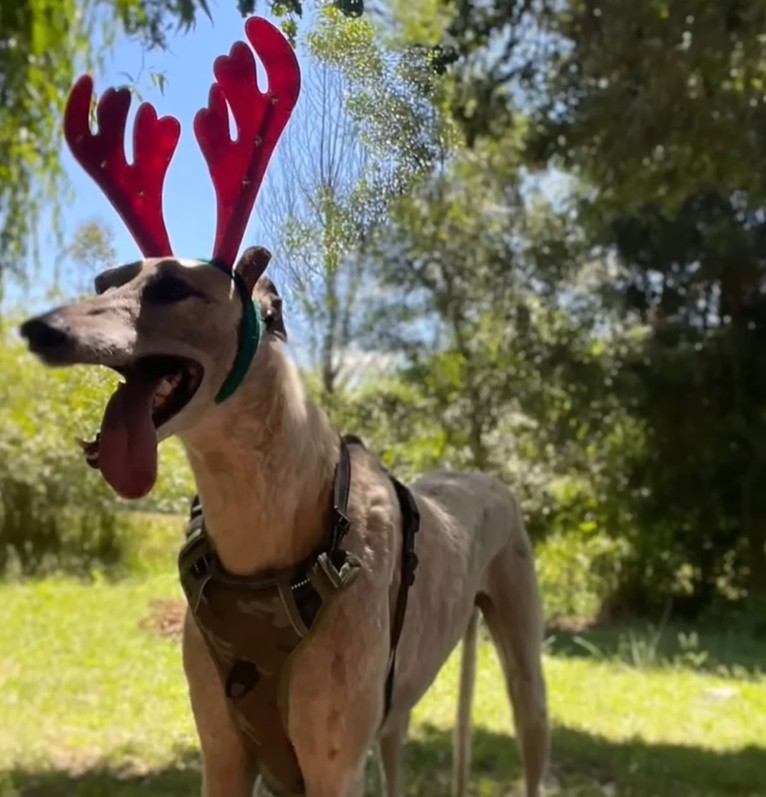
After five months of rehabilitation, Waldito was adopted by a caring new owner.
The account describes him entering the car with his new dad, ready to leave the clinic behind.
His destination was a peaceful home near the ocean.
There, he joined a family that included other dogs.
The change was extraordinary.
Instead of spending his days receiving intensive medical treatment, Waldito could enjoy ordinary experiences as a companion animal.
He had a home, familiar people, and opportunities to explore.
His new surroundings also provided space for play and exercise.
The dog who had once been discovered in a severely weakened condition now had a family committed to his well-being.
For the people involved in his rescue, this outcome represented the purpose of their months of work.
A Happy Life Along the Beach
Waldito’s new routine includes spending time near the ocean with his canine companions.
The rescue account describes him running across the sand, enjoying the sea breeze, and exploring the beach.
These simple activities reveal how much his circumstances have changed.
He can move freely, interact with other dogs, and enjoy time outdoors.
Beach outings can provide valuable enrichment for dogs when conducted safely.
Owners should supervise their pets, provide fresh drinking water, and watch for hazards such as excessive heat, sharp objects, or unsuitable water conditions.
Exercise should also match each dog’s age, health, and physical ability.
For Waldito, the beach has become part of a life built around companionship and care.
His journey from emergency treatment to outdoor adventures illustrates the possibilities that responsible rehabilitation and adoption can create.
The People Behind Waldito’s Second Chance
Waldito’s recovery depended on several important decisions.
Someone reported his situation.
Rescuers responded and transported him to a clinic.
Veterinary professionals provided intensive care.
Caregivers supported his nutrition and rehabilitation.
Finally, an adopter welcomed him into a permanent home.
Each stage contributed to the outcome.
The story also highlights the importance of supporting animal rescue organizations and responsible adoption programs.
Veterinary treatment, suitable nutrition, temporary shelter, and rehabilitation all require time and resources.
Community involvement can help organizations continue providing these services to vulnerable animals.
Waldito’s experience shows what can happen when people work together toward a common goal.
Summary
Waldito was discovered inside a black trash bag in a severely weakened condition.
Rescuers wrapped him in a warm blanket and transported him to an emergency veterinary clinic, where he received treatment for dehydration, malnutrition, anemia, and related physical weakness.
His early recovery required intensive monitoring.
Gradually, he began moving, eating, and regaining strength.
Within weeks, he could stand and enjoy gentle outdoor activities. As his condition improved, he also became more comfortable with people, sought affection, and began playing.
After approximately five months of medical rehabilitation and continued care, Waldito was adopted into a loving home near the ocean.
Today, he enjoys beach outings and companionship with his new family.
His journey demonstrates the importance of timely rescue, professional veterinary treatment, appropriate nutrition, patient rehabilitation, and responsible adoption.
Most importantly, Waldito’s story reminds us that an animal’s circumstances at the moment of rescue do not have to define the rest of its life.
With consistent care and a safe home, a vulnerable puppy can grow into a happy companion with a future filled with new experiences.






