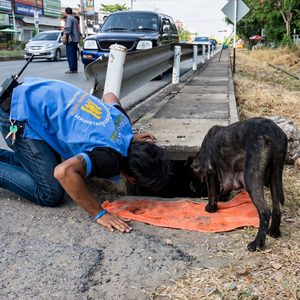
A peaceful day beside a local river took an unexpected turn when a young fisherman spotted a tiny puppy floating motionless in the water.
The little dog was soaked, cold, and unresponsive. He showed no obvious signs of being able to swim toward safety, and the current had carried him into a dangerous situation.

The fisherman immediately set aside his equipment and rushed to help.
After bringing the puppy onto the riverbank, he began emergency resuscitation efforts. For approximately eight minutes, he continued working to help the small animal breathe.
Then something changed.
Video Eight Minutes on the Riverbank A Fisherman’s Desperate Fight for a Lifeless Puppy
The puppy began responding, gasped for air, and gradually regained consciousness.
The fisherman wrapped him in his own shirt and took him to a veterinary clinic for further care.
What began as a frightening discovery eventually became a remarkable dog rescue story. The puppy recovered, and the man who saved him decided to give him a permanent home.
A Tiny Puppy Discovered in the River
The fisherman was spending time beside a local river when he noticed something unusual in the water.
A small puppy was floating without visible movement.
The animal appeared completely exhausted and unable to reach the shore.
Recognizing the danger, the young man abandoned his fishing activity and immediately focused on the puppy.
He brought the little dog out of the water and onto the riverbank.
The puppy was unresponsive, and his wet fur offered little protection from the cold.
For a young animal, prolonged exposure to cold water can become dangerous quickly.
Puppies have limited physical reserves, and their small bodies can lose heat rapidly.
The fisherman understood that the animal needed immediate attention.
He began trying to help him breathe.
Eight Minutes of Determined Rescue Efforts
On the muddy riverbank, the fisherman performed emergency resuscitation efforts.
The account describes him alternating between chest compressions and rescue breaths while attempting to restore the puppy’s breathing.
He also rubbed the dog’s wet body as he worked.
Minutes passed without an obvious response.
The situation remained uncertain, but the fisherman continued.
The reported rescue lasted approximately eight minutes before the puppy began showing signs of responsiveness.
That period was critical.
When an animal is unresponsive after submersion, emergency veterinary assistance is essential. Cardiopulmonary resuscitation may be necessary if the animal is not breathing normally and has no detectable heartbeat.
However, CPR should follow appropriate veterinary first-aid guidance.
Unnecessary compressions, incorrect positioning, or attempts to force water from the lungs can cause additional harm.
The fisherman acted in an urgent situation, using the methods described in the rescue account.
His persistence helped bring the puppy to the next stage of care.
The First Encouraging Sign
After several minutes of resuscitation, the puppy began moving.
A small shudder was followed by a gasp.
He then coughed and gradually became more responsive.
For the fisherman, the change was a moment of enormous relief.
The puppy had initially appeared motionless, but he was now showing signs of breathing independently.
His eyes began opening, and his body started trembling.
Although these developments were encouraging, they did not mean the danger had completely passed.
Dogs rescued from water may develop respiratory complications even after they appear to recover.
Water entering the airways can affect lung function, and symptoms may develop or worsen after the initial incident.
The fisherman therefore needed to get the puppy to professional care.
First, he focused on keeping the little animal warm.
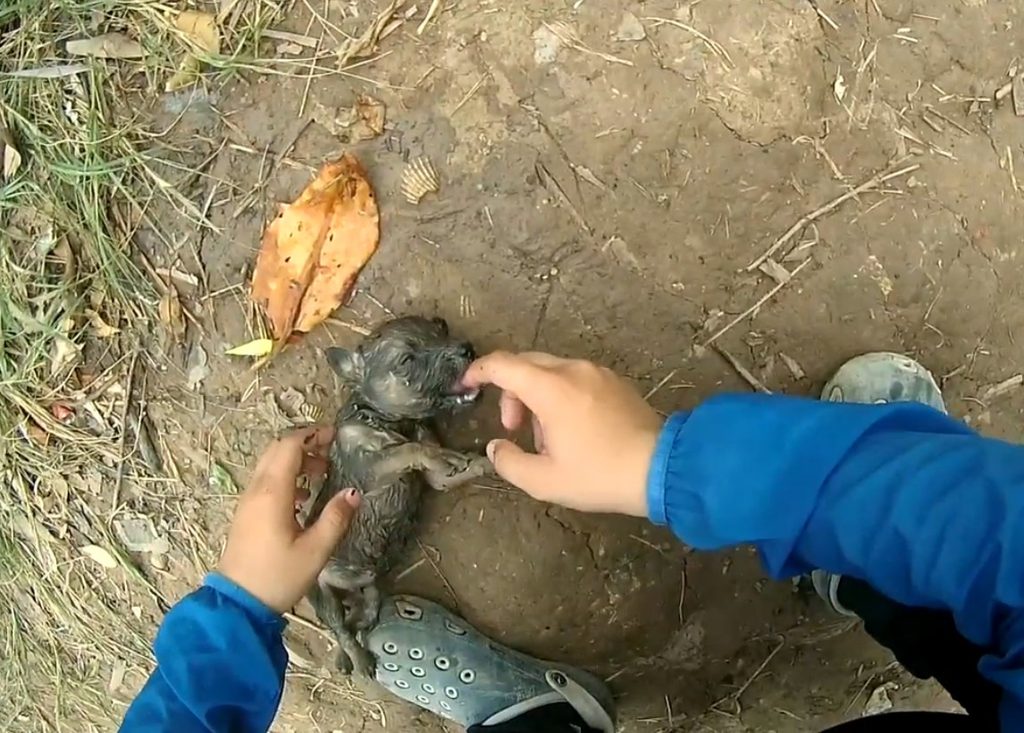
A Shirt Becomes a Temporary Blanket
The puppy remained wet and visibly cold after being brought out of the river.
The fisherman removed his striped shirt and wrapped it around the small dog.
The makeshift covering helped protect him from further exposure while the man prepared to leave the riverbank.
For an animal recovering from cold-water immersion, preventing additional heat loss is important.
Wet fur can accelerate cooling, particularly when combined with wind or low outdoor temperatures.
A dry covering and a sheltered environment may help during transportation.
However, severely chilled animals require careful warming under veterinary guidance.
Excessive or poorly controlled heat can create additional problems.
The fisherman kept the puppy close and carried him away from the river.
According to the account, the little dog also managed an unsteady step after regaining responsiveness.
It was another encouraging sign, but he still needed medical attention.
A Veterinary Visit After the Rescue
The fisherman transported the puppy to a local veterinary clinic.
There, medical professionals assessed his condition and worked to stabilize him.
The rescue account describes particular concern about his breathing and body temperature.
These are important considerations following a submersion incident.
A dog may inhale water while struggling, and the resulting respiratory problems are not always immediately apparent.
Veterinarians may evaluate breathing rate, oxygenation, temperature, and other signs to determine what treatment is required.
Depending on the animal’s condition, supportive care may include oxygen therapy, controlled warming, and continued observation.
The precise medical procedures used for this puppy are not fully documented in the supplied account.
What is clear is that he received professional attention after the fisherman brought him to safety.
That follow-up care was an important part of his recovery.
Why Veterinary Monitoring Matters After a Water Rescue
A puppy that begins breathing again after submersion may still face medical risks.
One concern is aspiration, which occurs when water or other material enters the airways.
This can interfere with normal breathing and may contribute to lung inflammation.
Signs requiring urgent veterinary attention can include coughing, unusual breathing sounds, rapid breathing, weakness, or difficulty remaining alert.
Some complications may not become obvious immediately.
For that reason, a dog that has been submerged and required resuscitation should receive veterinary evaluation even if he appears more comfortable afterward.
Cold exposure also deserves attention.
A veterinarian can assess whether the animal’s body temperature has returned to a safe range and determine whether additional monitoring is necessary.
In this puppy’s case, the clinic provided the protected environment needed for his recovery.
His condition gradually improved.
Growing Stronger With Continued Care
As the puppy recovered, he became more active.
The account describes his physical strength returning under veterinary supervision and continued attention from the fisherman.
His energy and appetite improved, allowing him to participate in ordinary daily activities.
For a young dog recovering from a serious incident, nutrition, hydration, rest, and appropriate medical follow-up are important.
Caregivers also need to monitor activity levels and avoid encouraging strenuous exercise before the animal is ready.
The puppy’s progress was a welcome change from his initial condition.
Instead of lying unresponsive beside the river, he could move around and interact with his surroundings.
His recovery also allowed the fisherman to see a different side of the little dog.
As the immediate medical concerns eased, the relationship between them began developing into something more permanent.

A Rescue Becomes a Lifelong Commitment
The fisherman had already spent considerable effort helping the puppy survive.
After seeing him recover, he decided to adopt him.
The little dog would not need to leave his rescuer behind and begin another uncertain journey.
He had found a permanent home with the person who brought him out of the river.
Adoption can provide rescued animals with the stability they need after emergency treatment.
A dependable home offers regular meals, appropriate veterinary care, companionship, and a consistent daily routine.
For young dogs, it also creates opportunities for socialization, training, and healthy development.
The fisherman’s decision transformed a temporary rescue into a lasting commitment.
The puppy was no longer simply an animal he had encountered during a day of fishing.
He had become part of his family.
A Happy Puppy With a New Routine
The account describes the puppy growing into an energetic, healthy companion.
He follows his owner closely and greets familiar people with a wagging tail.
These everyday behaviors provide a warm contrast to the moment when he was first discovered floating in the river.
He now has opportunities to play, explore, and spend time with someone who cares for him.
For a young dog, a stable environment can support both physical and behavioral development.
Regular exercise, suitable enrichment, and positive interaction help create a fulfilling routine.
His owner also has the responsibility of keeping him safe around water.
Even dogs that enjoy swimming can become exhausted or encounter unexpected currents.
Young puppies require particularly close supervision.
Appropriate precautions, including a properly fitted canine life jacket during suitable water activities, can help reduce risks.
The puppy’s experience is a reminder that water safety matters for animals as well as people.
The Importance of Acting Safely During Animal Emergencies
The fisherman’s actions highlight how quickly an ordinary outing can become an emergency.
He noticed the puppy, recognized that something was wrong, and responded.
However, rescuing an animal from water can also place a person at risk.
Strong currents, slippery banks, and deep water may create dangerous conditions.
People should avoid entering hazardous water without appropriate training and equipment.
When direct rescue is unsafe, contacting emergency services or an experienced animal rescue organization is the responsible choice.
Learning veterinary first aid can also help pet owners respond more effectively during unexpected situations.
Knowing how to assess breathing, recognize an emergency, and perform appropriate CPR may make a meaningful difference while professional assistance is arranged.
The goal is always to protect both the animal and the people attempting to help.
A Second Chance Built on Compassion
This puppy’s story began with a frightening discovery in a river.
His future changed because someone noticed him and acted.
The fisherman brought him to shore, continued emergency efforts when he remained unresponsive, provided warmth, and arranged veterinary care.
Later, he made the decision to adopt him.
Each stage contributed to the outcome.
The rescue also demonstrates that compassion extends beyond the first moment of intervention.
Emergency assistance may save an animal from immediate danger, but rehabilitation and long-term care help create a stable future.
For this puppy, the person who rescued him became the person who would continue caring for him.
Their companionship is the lasting result of that day beside the river.
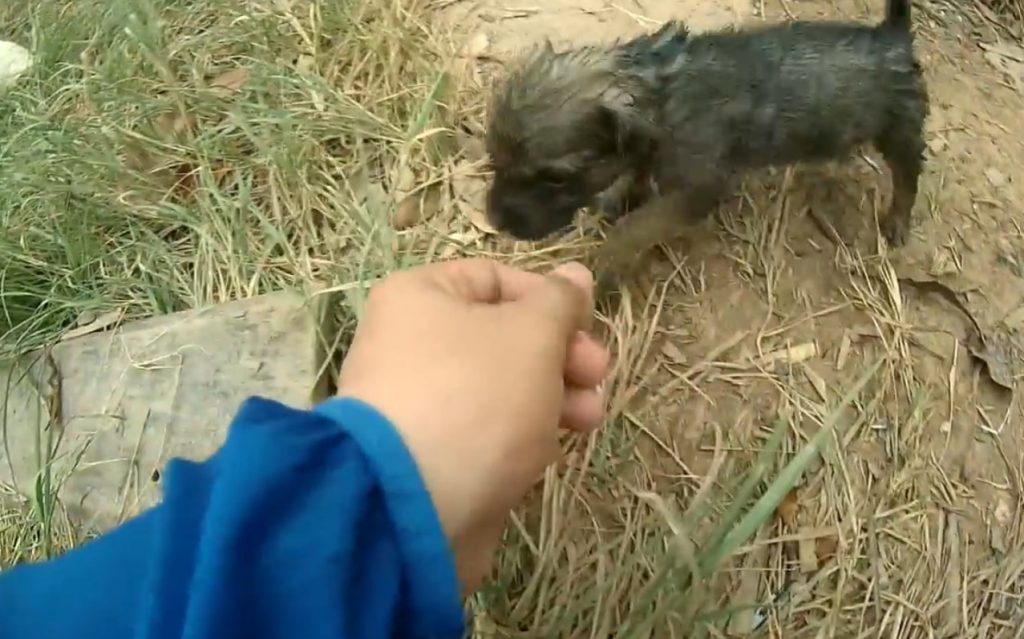
Summary
A young fisherman discovered a tiny puppy floating motionless in a local river and immediately brought him to shore.
The dog appeared unresponsive, prompting the man to begin emergency resuscitation efforts.
After approximately eight minutes, the puppy began moving, gasped for air, and gradually regained responsiveness.
The fisherman wrapped him in his own shirt to help protect him from the cold before transporting him to a veterinary clinic.
With professional attention and continued care, the puppy recovered his strength and became increasingly active.
The fisherman eventually adopted him, providing a permanent home and ongoing companionship.
Their story highlights the importance of recognizing animal emergencies, seeking prompt veterinary care after submersion, and practicing responsible water safety.
Most importantly, it shows how a single act of compassion can grow into a lifelong bond.
The puppy who was once found helpless in the river now enjoys a safer life beside the person who rescued him.