Behind the metal doors of a city stray dog holding facility, a white mother dog made a gesture that visitors would not soon forget.
She gently picked up one of her newborn puppies and carried the little one toward the narrow opening between her cage bars. Stretching forward, she held the puppy close to the people standing outside.
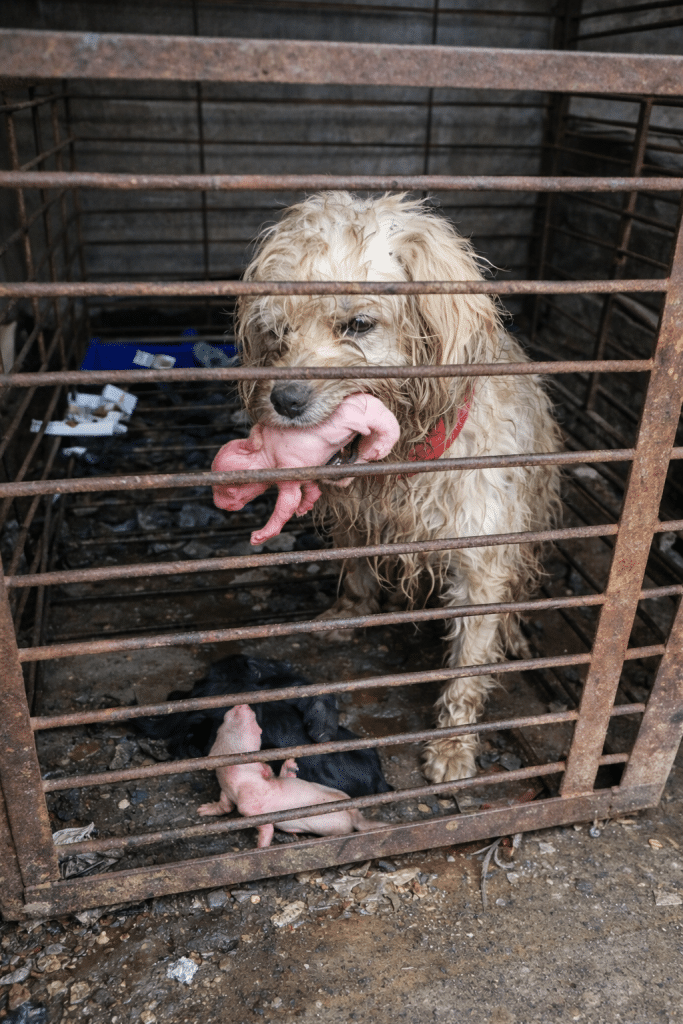
No one could know exactly what she intended. Yet the sight of a mother dog carrying her baby toward strangers raised an important question: Could someone help this vulnerable family find safety?
Among the visitors was a local woman who regularly brought food and comfort to the dogs. Moved by the encounter, she decided to take the mother and her puppies home.
Video She Lifted Her Newborn Toward the Bars A Mother’s Silent Plea for Help
What followed was a complicated journey involving rescue, adjustment, the loss of two newborns, and an unexpected discovery.
The white dog had not been abandoned. Her original family had been searching for her since she disappeared during a walk more than two weeks earlier.
Her story eventually became one of reunion, responsible pet ownership, and the difference compassionate people can make.
A Mother Dog Behind the Metal Bars
The holding facility housed numerous stray and unclaimed dogs in narrow metal cages.
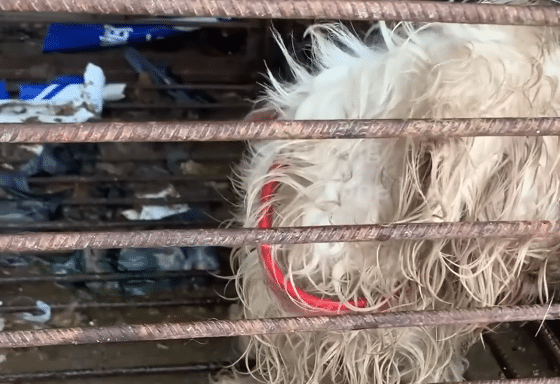
Some still wore collars. Others had small sweaters, suggesting that at least some of the animals had previously received care from people.
Their individual histories were not known.
Some may have wandered away from their homes, while others may have entered the facility under different circumstances.
Among them was a white mother dog caring for her newborn puppies.
Her situation caught visitors’ attention when she lifted one puppy and moved toward the cage bars.
The moment was unusual and deeply moving.
Mother dogs commonly carry young puppies in their mouths to reposition them or move them to another location. This behavior is part of their natural maternal care.
In this case, the gesture appeared particularly striking because she carried her puppy toward the people outside her enclosure.
Although the photographs and footage cannot establish her intentions, they captured a vulnerable family in need of a more suitable environment.
VIDEO: Mother Dog Carries Her Puppy Toward Visitors Before an Emotional Reunion With Her Family
A Woman Who Refused to Look Away
A local woman had developed a routine of visiting the facility.
She brought food and spoke gently to the animals, offering small moments of attention to dogs living behind the metal doors.
During her visits, she had observed different responses from the animals.
Some appeared distressed, while others approached the cage bars when people entered the area.
The white mother’s behavior stood out.
Seeing her carry a newborn puppy toward the visitors prompted the woman to consider how she could help.
She eventually decided to bring the mother and her puppies home.
Her goal was to provide a protected environment where the family could receive food, warmth, and consistent attention.
The decision represented an important change in their circumstances, but leaving the facility did not immediately resolve every challenge.
A New Home Brings New Challenges
Once inside the woman’s home, the mother dog remained anxious.
Despite having access to shelter and care, she appeared uncomfortable in the unfamiliar environment.
She moved her puppies into a space beneath the floorboards, apparently seeking a secluded place to keep them together.
This behavior illustrates an important aspect of caring for nursing dogs.
A mother may seek privacy when she feels uncertain about her surroundings. Even a well-intentioned change in environment can require an adjustment period.
Providing a quiet, secure nesting area can help reduce unnecessary disturbance.
The woman continued caring for the family and attempted to keep the puppies comfortable.
However, the early days brought a difficult development.
Two of the newborn puppies did not survive.
The loss was a painful part of the rescue, particularly after the effort to move the family into safety.
The mother remained close to the puppies, gently licking them.
The account does not establish the medical causes of their deaths.
What it does show is that newborn animal care can remain challenging even after a successful rescue.
The Special Needs of Newborn Puppies
Newborn puppies depend heavily on their mother and their environment.
They cannot regulate their body temperature as effectively as adult dogs, and they require frequent feeding and close monitoring.
Changes in their condition may develop quickly.
A suitable nesting area should provide appropriate warmth, clean bedding, and enough space for the mother to move comfortably.
Caregivers should also observe whether each puppy nurses regularly and gains weight.
When a newborn appears unusually weak, cold, or unable to feed, prompt veterinary attention is important.
A mother dog also needs adequate nutrition, fresh water, and opportunities to rest.
Her physical condition can influence her ability to care for the litter.
In this family’s case, the surviving puppies received continued attention while the mother gradually adjusted to the new surroundings.
The experience demonstrated that rescue involves more than transportation to a safe location.
It requires ongoing care suited to each animal’s needs.
Learning to Accept Gentle Care
As time passed, the white mother dog became more comfortable around her caregiver.
The account describes her gradually accepting food, touch, and assistance.
Her remaining puppies continued receiving warmth and close monitoring.
The change did not happen instantly.
For a dog adjusting to unfamiliar surroundings, predictable routines can make a meaningful difference.
Regular meals, a quiet resting area, and gentle interactions help create an environment where the animal can become familiar with its caregivers.
Allowing a nursing mother appropriate privacy is equally important.
She needs to feel comfortable caring for her puppies without excessive interruption.
The woman’s patient approach gave the family time to settle.
Although the early loss remained part of their story, the surviving puppies continued receiving the attention they needed.
More Dogs Begin Leaving the Facility
The rescue effort eventually extended beyond the white mother and her litter.
With assistance from rescue organizations, additional dogs from the holding facility were moved into foster care.
Their care included bathing, grooming, and treatment for minor skin conditions.
These ordinary activities can have considerable importance for animals entering a new environment.
Grooming helps caregivers assess a dog’s coat and skin, while veterinary evaluation can identify health concerns requiring treatment.
Foster homes also provide opportunities to observe behavior and establish consistent routines.
A dog that appears withdrawn inside a busy holding facility may respond differently in a quieter household.
However, adjustment varies between animals.
Some settle quickly, while others need more time and specialized support.
The account describes gradual improvements as the dogs received attention and began becoming more comfortable.
The wider rescue effort showed how collaboration between individuals and animal welfare organizations can help more animals access care.
An Unexpected Discovery Changes Everything
Then the woman received surprising news.
The white mother dog’s original owner had been located.
The dog had not been deliberately abandoned, as some observers might have assumed.
According to the account, she had disappeared more than two weeks earlier during an off-leash walk.
Her family had been searching for her.
This discovery changed the understanding of her time inside the holding facility.
What initially appeared to be the story of an unclaimed stray was also the story of a missing pet whose family wanted her home.
The circumstances highlight why identification and owner searches are important parts of responsible animal rescue.
A dog found wandering outdoors may have escaped accidentally.
Checking for a microchip, reviewing missing-pet reports, and contacting local shelters can help reunite animals with their families.
For this white mother dog, those efforts ultimately led to a long-awaited reunion.

A Joyful Reunion With Her Owner
When the dog saw her original owner again, her behavior changed immediately.
She ran toward the familiar person, wagging her tail and barking excitedly.
Her owner knelt down and embraced her.
After more than two weeks apart, the family had finally found their missing dog.
The reunion offered a powerful contrast to the earlier images of the mother standing behind metal bars.
She was no longer an unidentified animal waiting inside a holding facility.
She was a beloved pet returning to someone who had been searching for her.
The account does not provide every detail about the puppies’ later arrangements or the family’s long-term circumstances.
Nevertheless, the reunion itself was a documented turning point.
It demonstrated the value of looking beyond assumptions when encountering a stray animal.
Sometimes, a dog without an immediately visible owner is simply a lost family member waiting to be found.
Why Leashes and Pet Identification Matter
The mother’s disappearance during an off-leash walk offers an important lesson for dog owners.
Even familiar, well-trained dogs can become distracted or frightened in unexpected situations.
A sudden noise, unfamiliar animal, or interesting scent may cause a dog to move beyond its owner’s reach.
Using an appropriate leash in public areas can help reduce the risk of separation and protect dogs from traffic and other hazards.
Reliable identification provides another layer of protection.
A collar with current contact information can help someone reach an owner quickly.
Microchipping offers an additional method of identification if the collar is lost.
Owners should ensure that their microchip registration details remain accurate.
When a dog goes missing, contacting local shelters, veterinary clinics, and rescue organizations can also improve the chances of reunion.
The white mother’s story shows why these practical precautions matter.
A Community Effort With Lasting Meaning
Several people contributed to the outcome of this rescue.
The woman who visited the facility noticed the mother’s circumstances and provided temporary care.
Rescue organizations helped additional dogs leave the holding facility.
Caregivers supported the surviving puppies.
Eventually, the original owner was located, allowing the white dog to return to her family.
Each contribution addressed a different part of the situation.
The story also demonstrates why compassion and careful information gathering should work together.
An animal may need immediate assistance while its background remains unknown.
Providing care and searching for an owner are not competing responsibilities. Both can be essential to a successful rescue.
For this mother dog, the combination of temporary shelter and efforts to establish her identity created the opportunity for reunion.
Summary
A white mother dog attracted attention inside a city stray dog holding facility when she carried one of her newborn puppies toward visitors standing outside her cage.
A local woman who regularly visited the animals decided to take the mother and her litter home.
The transition proved difficult. The anxious mother hid her puppies beneath a floorboard space, and two newborns did not survive the early days.
The surviving puppies continued receiving care while their mother gradually became more comfortable.
Meanwhile, rescue organizations helped additional dogs leave the facility and enter foster care.
The story took an unexpected turn when the mother’s original owner was located. She had disappeared during an off-leash walk more than two weeks earlier, and her family had been searching for her.
Their emotional reunion brought the mother dog’s journey back to the people who loved her.
Her experience highlights the importance of compassionate rescue, appropriate newborn puppy care, responsible pet identification, and safe walking practices.
Most importantly, it reminds us that every stray animal has a history worth understanding.
For this white mother dog, the journey that began behind metal bars eventually led her back into the arms of her family.






