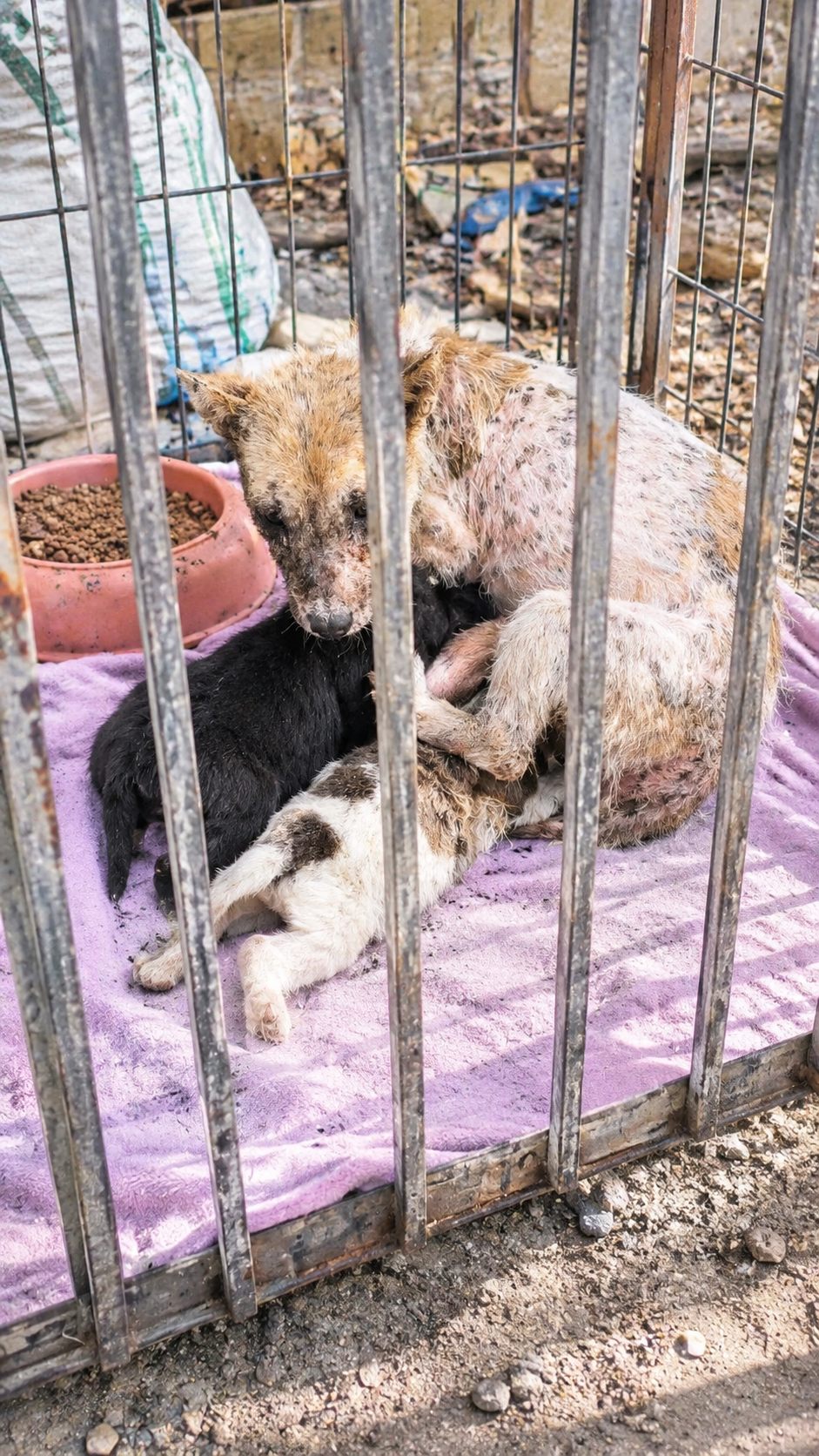
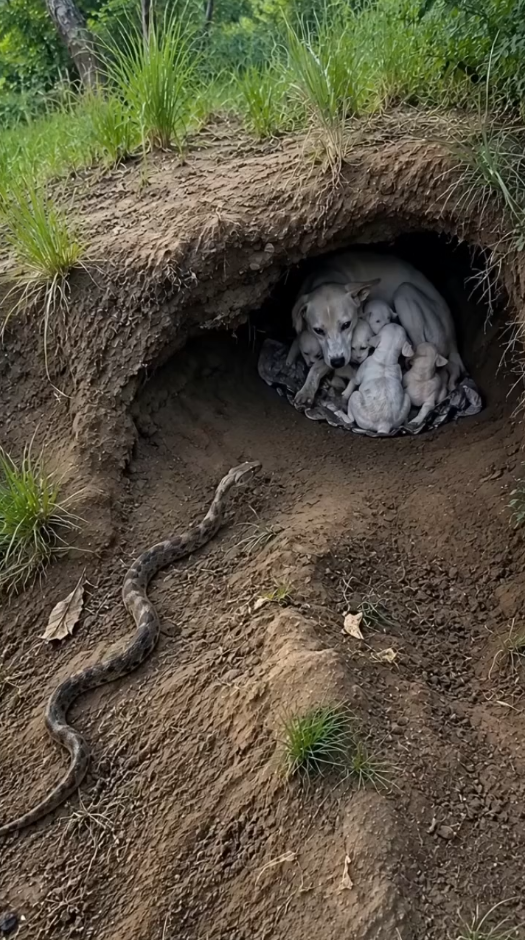
Some rescue stories begin with a dramatic call for help. Others begin with a sound so faint that it could easily disappear into the background.
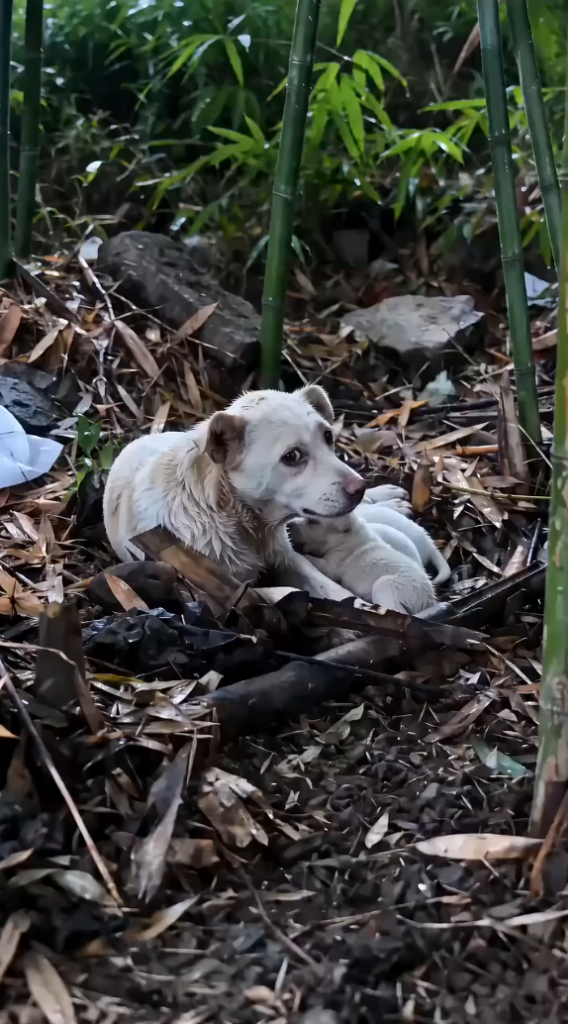
Late one afternoon, soft cries drifted through a dense patch of bamboo. At first, they sounded almost like the wind moving between the leaves. Most people might have continued walking, assuming the noise came from birds or branches brushing against one another.
But one person stopped to listen.
Video Eight Puppies Hidden in the Bamboo Slowly Learn What Kindness Feels Like
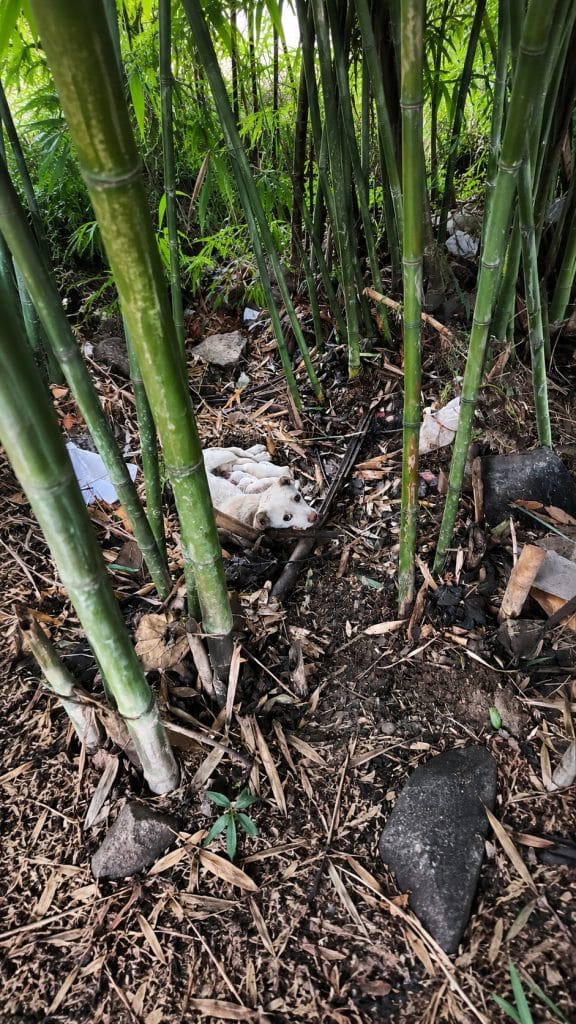
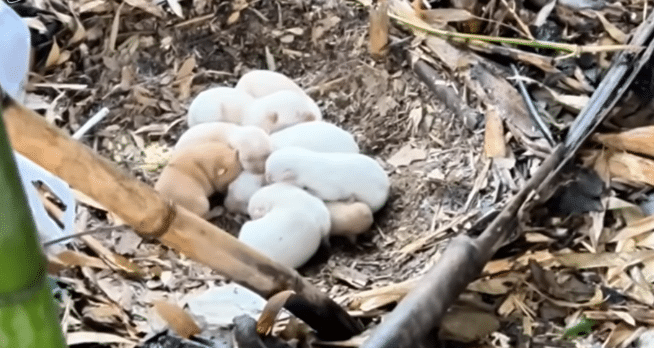
After following the sound through tangled bushes, the rescuer discovered a mother dog curled beside eight tiny puppies. The little family had built a shelter from almost nothing. Dry leaves covered the ground, broken branches formed a thin barrier, and the bamboo offered only limited protection from the changing weather.
The puppies were extremely young. Their eyes had barely opened, their bodies trembled against the cold soil, and they depended entirely on their mother for warmth and nourishment.
She pressed herself around them like a living blanket.
Still, love alone could not protect them from everything.
A Fragile Home Beneath the Bamboo
The mother had chosen the hidden space because it offered privacy.
For a stray dog caring for newborn puppies, privacy can feel like safety. Dense bushes keep people and larger animals at a distance, while fallen leaves provide a place to rest. However, the shelter had serious limitations.
The ground remained cold.
Wind moved through the bamboo.
Rain could reach the puppies from nearly every direction.
Their mother did everything she could, but she also needed to leave occasionally to search for food and water. Each absence left the puppies without her body heat, making the fragile shelter even less secure.
The rescuer immediately understood that moving the family by force could frighten the mother and cause her to flee. Instead, the first goal was simple: improve their surroundings without destroying the small amount of trust that might still be possible.
Old clothes were placed beneath the puppies to create a warmer resting surface.
Later, when the weather worsened, the rescuer returned with a cardboard box and dry blankets. The box offered more protection from rain, while the fabric helped separate the puppies from the damp ground.
It was not an elaborate shelter.
Yet for eight vulnerable lives, it changed everything.
Patience Around a Protective Mother
The mother dog did not welcome human attention.
Whenever the rescuer moved too close, she growled and positioned herself between the person and her puppies. Her body became rigid, and her expression showed that she was prepared to defend her family.
Her reaction was understandable.
She had no reason to assume that strangers were safe. Life outdoors had likely taught her to expect danger, competition, and sudden loss. Protecting the puppies was not aggression without cause. It was instinct strengthened by fear.
The rescuer did not punish her or force physical contact.
Instead, food and fresh water were placed nearby. Then the person stepped away.
The same routine continued the next day.
And the day after that.
Each visit carried the same quiet message: no one was there to take her puppies or cause harm.
Predictability began doing what pressure never could.
It created trust.
The Fourth Day Changed Everything
By the fourth day, the mother made a small but meaningful decision.
She accepted food directly from the rescuer’s hand.
There was no sudden celebration. No one tried to touch her immediately or move closer than she allowed. The moment remained calm, which made it even more important.
For the mother, taking food by hand meant lowering her defenses for a few seconds. She had to step beyond instinct and consider the possibility that this person might be different.
Trust often begins this way.
Not with complete confidence, but with one cautious choice.
The mother still watched every movement. She remained protective and alert. However, fear no longer controlled every interaction.
The rescuer had become a familiar presence rather than an immediate threat.
That change opened the door to better care for the entire family.
When the Mother Stayed Away
Just as the puppies began settling into their improved shelter, a new concern appeared.
Some nights, the mother disappeared for several hours. At times, she did not return until morning.
She may have been searching for food or moving through the area to protect the location of her puppies. Whatever the reason, her long absences left the newborns hungry and cold.
Their cries grew louder after dark.
They pressed against one another inside the box, trying to share what little warmth they had. Without regular feeding, their strength could fade quickly.
The rescuer knew that waiting for the mother was no longer enough.
Goat milk was purchased, and each puppy received careful feeding with a syringe. Because they were so young, the process required patience. The milk had to be offered slowly so they could swallow safely.
One by one, the puppies reached toward the syringe.
Their tiny mouths opened eagerly.
Small tails twitched as they drank.
The feeding sessions became another essential part of their survival. They provided nourishment during the mother’s absences and reduced the pressure on her when she returned.
Tiny Changes Became Major Milestones
During the early days, progress was measured in very small ways.
A puppy felt warmer.
Another drank more milk.
One began lifting its head with greater strength.
These details may seem ordinary, but for newborn animals living outdoors, every improvement matters.
The dry bedding protected their bodies from the cold ground. Regular feeding helped them gain strength. Clean water and food supported the mother, allowing her to continue nursing when she was present.
The rescuer checked the shelter frequently while avoiding unnecessary disturbance.
Care became a balance between helping and respecting the family’s natural bond.
Nothing happened overnight.
The puppies grew through repetition: feeding, sleeping, staying warm, and receiving care whenever they needed it.
Like seedlings beneath the bamboo, they developed quietly until the results became impossible to miss.
Learning to Walk and Explore
As the weeks passed, the puppies became more active.
Their eyes opened fully, revealing curious expressions. Their legs, once too weak to support them, began pushing against the blankets. Early attempts at walking looked more like uncertain wobbles, with tiny bodies leaning in every direction.
They fell often.
Then they stood again.
Soon, the cardboard box could no longer contain their curiosity. They climbed over one another, explored the grass, and followed unfamiliar scents through the safe area around their shelter.
Play became part of their routine.
They chased each other.
They tugged gently at pieces of fabric.
They investigated every leaf as though it were a new discovery.
These moments showed that the puppies were no longer using all their energy simply to stay alive. They finally had enough strength to learn, socialize, and enjoy the world.
An Unexpected Canine Babysitter
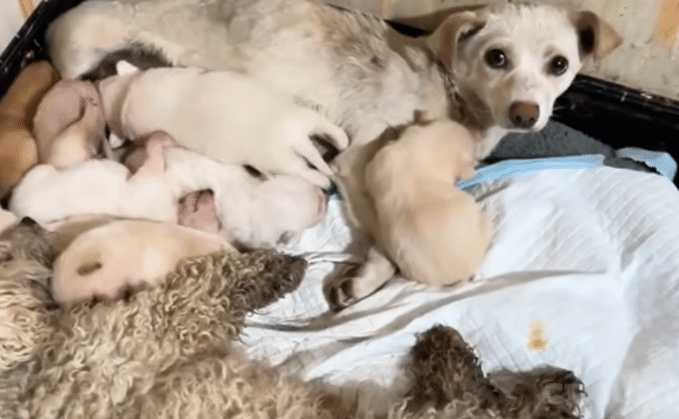
The rescuer’s own dog also became part of the puppies’ lives.
Rather than avoiding the growing group, the older dog remained nearby and interacted with them gently. The puppies followed, watched, and learned from this calm companion.
Adult dogs can provide valuable social guidance to young puppies. Through ordinary interaction, puppies begin learning how to communicate, play appropriately, and respond to boundaries.
The family dog seemed to take on the role of a patient babysitter.
The puppies climbed around, followed closely, and occasionally became overly enthusiastic. Yet the older dog remained steady, offering companionship without overwhelming them.
This relationship expanded their small world.
They were no longer hidden animals with contact limited to their mother. They were becoming part of a safe social environment filled with dependable people and animals.
From Milk to Solid Food
By the fourth week, another milestone arrived.
The puppies began eating solid food.
At first, mealtimes were messy. Tiny paws stepped into bowls, noses became covered in food, and the puppies seemed unsure whether they should eat or play.
They learned quickly.
Solid food supported their growing bodies and made them less dependent on frequent milk feedings. It also gave their mother more freedom to rest and recover.
With full stomachs and increasing energy, the puppies became enthusiastic followers.
Wherever the rescuer walked, a procession of tiny paws moved close behind.
The same puppies who had once cried beneath the rain now hurried through the grass with wagging tails. Their fear of the unfamiliar had been replaced by curiosity and trust.
A sound that had nearly disappeared into the bamboo had grown into the joyful movement of eight healthy young dogs.
Kindness Arrived One Day at a Time
The family’s transformation did not result from one dramatic action.
It came from a series of ordinary choices.
Someone stopped to listen.
Old clothes created a warmer bed.
A cardboard box offered shelter from rain.
Food and water appeared every day.
A frightened mother received patience rather than pressure.
Hungry puppies received careful feeding through the night.
None of these actions seemed enormous on its own. Together, they built a bridge from vulnerability to safety.
That is often how meaningful rescue works.
Compassion does not always arrive with flashing lights or a crowd of witnesses. Sometimes it arrives quietly, carrying a blanket and a bowl of food.
Then it returns tomorrow.
Why This Rescue Story Matters
The mother dog and her puppies remind us that animals living outdoors often survive close to people without being truly seen.
Their cries may blend into traffic, wind, or daily noise. Their shelters may remain hidden behind vegetation, abandoned materials, or buildings. Helping them begins with awareness.
It also requires thoughtful action.
A protective mother may need space before she accepts assistance. Newborn puppies may require specialized feeding and temperature support. Sudden handling or relocation can create additional stress if it is not managed carefully.
In this case, patience became just as important as food.
The rescuer allowed trust to develop naturally. By respecting the mother’s fear and meeting the puppies’ immediate needs, one person helped the entire family move toward a safer future.
The puppies learned that hands could bring nourishment.
Their mother learned that a familiar visitor could be trusted.
Slowly, survival made room for joy.
Summary
Eight newborn puppies were discovered beside their frightened mother inside a fragile shelter beneath dense bamboo. With little protection beyond leaves and branches, the family faced cold ground and worsening rain. A rescuer improved their shelter with old clothes, a cardboard box, and dry blankets while patiently earning the protective mother’s trust through daily food and fresh water. By the fourth day, she accepted food by hand, marking an important emotional breakthrough. When the mother began disappearing for long periods, the rescuer used goat milk and a syringe to feed the hungry puppies safely. Over the following weeks, they gained strength, learned to walk, played with one another, and formed a gentle bond with the rescuer’s dog. By their fourth week, they could eat solid food and happily follow their caregiver through the grass. Their journey shows how steady, respectful compassion can transform fear into trust and a fragile beginning into a life filled with safety, companionship, and joy.