Some places are so quiet that even the wind seems to whisper. Imagine a narrow mountain road stretching through open wilderness, far from towns, homes, or passing crowds. No storefronts, no houses, no signs of daily life. Just a winding path and the stillness of nature.
On one such road, a single dog stood alone.
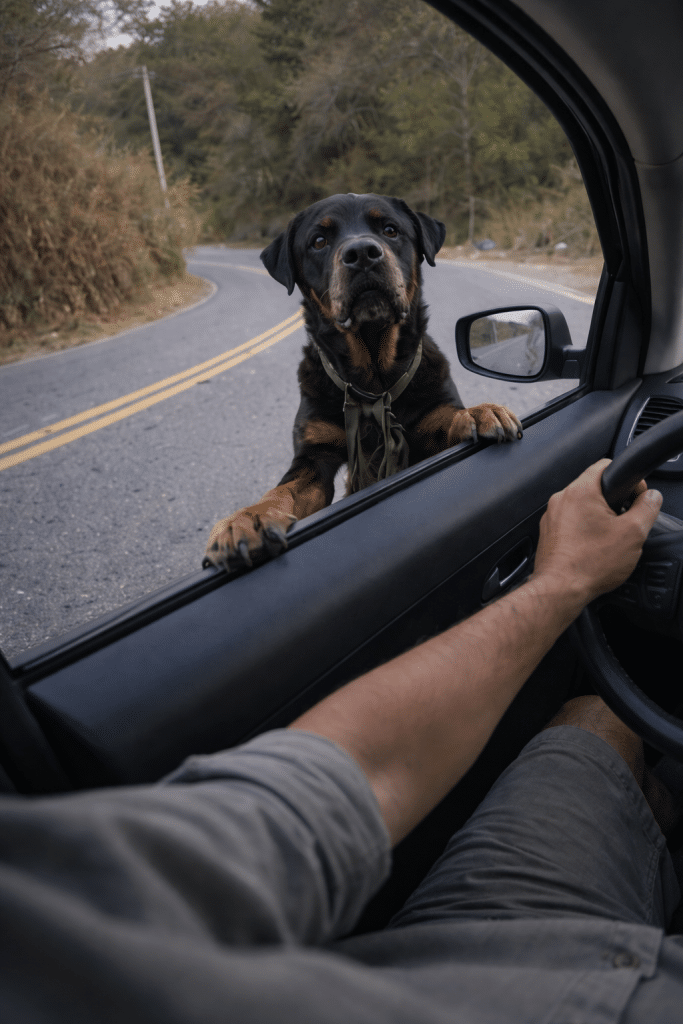
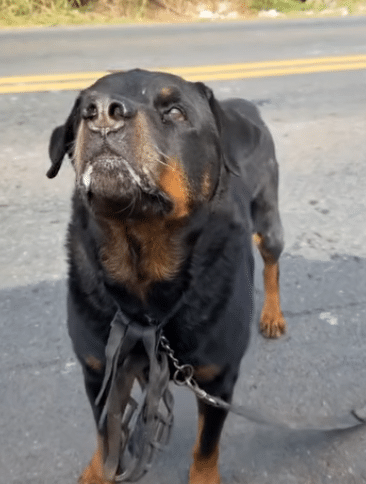
At first glance, the scene looked almost unreal. The dog waited beside the road with a rope tied around his neck and a muzzle covering his mouth. There was no bowl, no water, and no shade nearby. The surrounding landscape stretched endlessly, offering little comfort or protection.
Someone had brought him there and left him behind.
For days, he waited in silence.
Video He Waited on a Silent Mountain Road Still Believing Someone Would Come Back
Every passing car brought hope
A friend of mine was the first person to notice the dog. As he drove along the quiet road, the lonely figure caught his attention. Curious and concerned, he stopped his car and stepped out to take a closer look.
The dog approached cautiously, not with aggression but with curiosity.
My friend offered him some leftover food he had in the car. The dog ate quickly, clearly hungry after spending time alone in such an isolated place. Yet what struck my friend most was not the dog’s appetite.
It was the way he reacted to passing vehicles.
Each time a car drove by, the dog lifted his head and stared at it carefully. His posture suggested expectation rather than fear. He watched each vehicle until it disappeared around the bend, as if he believed someone familiar might step out.
He was waiting.
Waiting for the person who had once been his owner.
My friend knew he could not leave the dog there alone, but he was unable to stay at that moment. Before driving away, he called me and explained what he had seen.
His description was enough to convince me that the dog needed immediate help.
A quiet meeting on the roadside
When I arrived at the mountain road, I quickly spotted him.
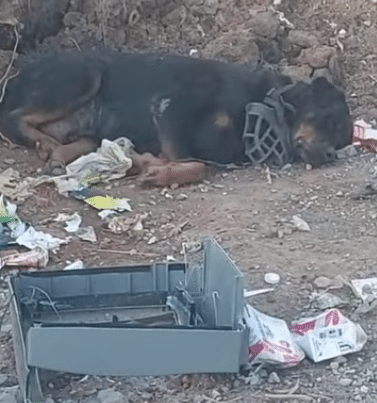
He was lying beside a small pile of discarded trash near the edge of the path. It was not the relaxed rest of a comfortable animal. It looked more like exhaustion after waiting too long.
The moment he noticed me approaching, he stood up and walked quickly in my direction.
He did not bark. He did not show fear. Instead, he moved with urgency, as if trying to communicate something without words.
It felt like a simple request.
Please do not leave me here too.
Despite everything he had experienced, the dog remained calm. His quiet demeanor surprised me. Many animals in stressful situations become defensive or frightened, but he simply watched carefully and waited for reassurance.
That calmness revealed something important.
This was not a dog who had spent his life on the streets.
A dog who once knew a home
When I offered him a small piece of dry kibble, he spotted it immediately and caught it with precision. His quick reaction suggested that he was familiar with regular feeding routines. He understood people, food, and simple commands.
In other words, he had once been part of a home.
At some point, he had known comfort. Someone had cared for him, trained him, and shared daily life with him.
But now he stood alone on a quiet mountain road.
Seeing that contrast made the moment even more emotional. The situation was not simply about hunger or fatigue. It reflected the sudden loss of security that many pets experience when they are left behind.
Standing there beside the road, I made a promise to him.
You will not be alone again.
Taking the first steps toward recovery
The first priority was removing the rope and muzzle that had restricted him. Once they were taken off, the dog seemed visibly relieved. He stretched slightly, as though his body finally felt free again.
We brought him directly to a veterinary clinic to ensure he was healthy.
The examination revealed that although he was thin and dehydrated, his overall health remained stable. The veterinarian provided vaccinations, hydration support, and a full check up to confirm that no hidden medical conditions required immediate attention.
Physically, he was recovering quickly.
Emotionally, he needed something just as important.
Time.
A wave of compassion from the community
After sharing his rescue story online, something remarkable happened. Messages began arriving from people across the community who wanted to help.
Some offered donations to support his care. Others volunteered to foster or adopt him. The response demonstrated how strongly people feel about giving animals a second chance.
Choosing the right foster home required careful consideration. This dog did not simply need food and shelter. He needed patience, stability, and reassurance.
Eventually, I found an experienced foster parent who understood those needs perfectly.
This person had years of experience caring for rescue animals and knew how important it was to build trust slowly.
The transition to a new life began there.
Learning to trust again
During the first days in his foster home, the dog explored his surroundings carefully. Everything was new. Indoor spaces, comfortable bedding, regular meals, and gentle human interaction all formed part of his new routine.
He adapted surprisingly quickly.
Each day, he grew more confident. His tail wagged when his foster parent entered the room. He slept peacefully indoors rather than beside a lonely road. And when mealtime arrived, he ate calmly instead of urgently.
Perhaps the most meaningful change appeared in his behavior around vehicles.
At first, he watched every passing car carefully.
But gradually, that habit faded.
He no longer searched the road for someone who might return.
He had already found a place where people stayed.
A future filled with security
Today, the dog who once waited alone on a mountain road lives a life filled with comfort and stability. His foster parent provides daily care, affection, and structure that help him feel safe.
He wakes up each morning knowing that food, shelter, and companionship will be there.
The anxiety that once filled his quiet gaze has been replaced by calm curiosity. Visitors often notice how gentle and attentive he is, greeting them with relaxed enthusiasm rather than hesitation.
His story reminds us that many animals simply need a chance.
A chance to feel safe again.
Conclusion
The rescue of a dog abandoned on a quiet mountain road demonstrates how a single moment of attention can change the course of a life. Left alone with only a rope and muzzle, the dog waited beside the road hoping someone familiar would return. Instead, a compassionate rescuer arrived and offered him a new beginning.
After receiving veterinary care and finding a supportive foster home, the dog gradually regained his strength and confidence. Community support played an important role in ensuring he received the patience and stability needed to rebuild trust.
Today, he no longer waits beside a lonely road. He lives in a safe environment where people care for him and respond to his needs.
His journey reminds us that kindness, when offered at the right moment, can transform uncertainty into hope and give a once forgotten life the future it deserves.